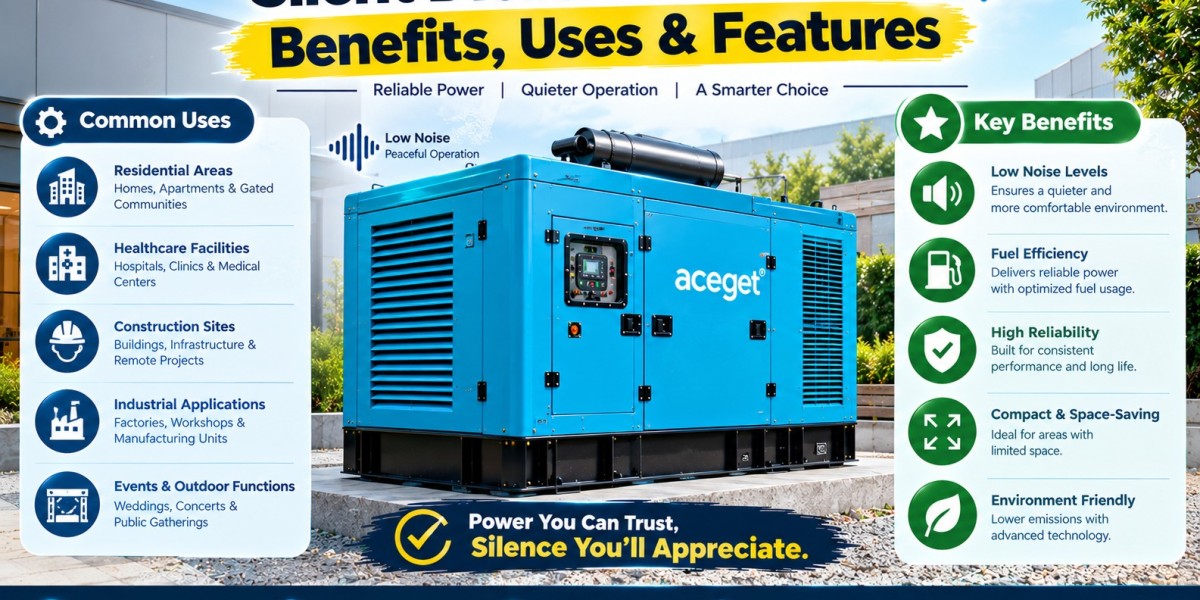

Diesel generators are widely used as a reliable source of backup and primary power. They are commonly found in homes, offices, hospitals, hotels, construction sites, commercial buildings, and industrial facilities. However, one common concern with diesel generators is the noise produced during operation.
A silent diesel generator is designed to reduce this noise while providing dependable power. It uses a specially designed acoustic enclosure that helps control engine and exhaust noise without affecting the normal operation of the generator.
If you are wondering what is a silent diesel generator, its benefits, features, and applications, this guide explains everything in simple terms.
What Is a Silent Diesel Generator?
A silent diesel generator is a diesel-powered generator fitted with a soundproof or acoustic enclosure. This enclosure is designed to reduce the noise generated by the engine, exhaust system, cooling fan, and other moving components.
The basic working of a silent generator is similar to a conventional diesel generator. The diesel engine produces mechanical energy, and the alternator converts that mechanical energy into electrical energy.
The main difference is the addition of a noise-reducing enclosure around the generator.
How Does a Silent Diesel Generator Work?
The working principle of a silent diesel generator is straightforward:
Diesel fuel is supplied to the engine.
The engine burns the fuel and produces mechanical energy.
The engine rotates the alternator.
The alternator converts mechanical energy into electrical energy.
The acoustic enclosure helps reduce the sound produced during operation.
The generated electricity is supplied to connected loads.
The enclosure also needs proper ventilation so that sufficient air can enter and hot air can escape. Good ventilation is important for maintaining the correct operating temperature.
Key Features of a Silent Diesel Generator
A silent diesel generator generally includes several features designed for reliable and quieter operation.
1. Acoustic Enclosure
The soundproof enclosure is the most important feature. It uses noise-reducing materials and a suitable design to lower the sound level produced by the generator.
2. Proper Ventilation
A generator enclosure must allow adequate airflow. Proper ventilation helps prevent excessive heat buildup during operation.
3. Exhaust System
The exhaust system carries combustion gases away from the engine. Suitable exhaust components can also help control operating noise.
4. Control Panel
The control panel allows operators to monitor important generator parameters such as voltage, frequency, engine condition, and operating hours.
5. Easy Maintenance Access
A good enclosure should provide access to important components for routine inspection and maintenance.
Benefits of a Silent Diesel Generator
There are several reasons why businesses and users choose silent generators.
Reduced Noise
The biggest advantage is lower operating noise. This makes the generator more suitable for locations where excessive sound can disturb people.
Suitable for Residential Areas
Silent generators can be useful for residential buildings and other areas where noise control is important.
Better for Commercial Locations
Offices, hotels, hospitals, schools, shops, and commercial buildings can benefit from quieter backup power.
Protection from External Conditions
The enclosure can provide additional protection to generator components from dust and certain external environmental conditions, depending on its design.
Reliable Backup Power
A silent generator provides the same basic power-generation function as other diesel generators while offering improved noise control.
Where Are Silent Diesel Generators Used?
Silent generators are suitable for many applications where reliable electricity and noise control are both important.
Common applications include:
Homes and residential buildings
Offices and commercial buildings
Hospitals and healthcare facilities
Hotels and restaurants
Schools and educational institutions
Construction sites
Shops and retail locations
Industrial facilities
Events and temporary power applications
The right generator should always be selected according to the required electrical load, operating hours, installation environment, and application.
Silent Diesel Generator vs Normal Diesel Generator
The primary difference is noise control.
A conventional generator may produce noticeable engine and exhaust noise during operation. A silent generator uses an acoustic enclosure and related components to reduce this noise.
However, a silent generator is not completely noiseless. The actual noise level depends on the generator size, engine design, enclosure, installation conditions, load, and maintenance.
How to Choose the Right Silent Diesel Generator?
Before purchasing a silent generator, consider the following factors:
Generator Capacity
Calculate the total electrical load you need to operate. Choose a suitable generator capacity instead of selecting a unit only based on physical size.
Operating Hours
Consider how frequently and for how long the generator will operate. Occasional backup requirements are different from regular power requirements.
Installation Location
Check the available space, ventilation, accessibility, noise requirements, and environmental conditions at the installation site.
Fuel Consumption
Compare fuel consumption at different load levels. Efficient operation can help control running costs.
Maintenance Requirements
Choose a generator that allows convenient access to components such as filters, batteries, engine oil, and cooling-system parts.
Silent Diesel Generator Maintenance
Regular maintenance is essential for reliable generator performance. Check the engine oil, coolant, battery, fuel system, air filter, exhaust system, and electrical connections according to the manufacturer's recommended schedule.
The acoustic enclosure should also be inspected regularly. Dust or blockage around ventilation openings can restrict airflow and may cause overheating.
Unusual noise, vibration, smoke, or changes in generator performance should not be ignored. Early inspection can help prevent more serious problems.
What About RECD for DG Set?
Diesel generators produce exhaust emissions during operation, so emission control is another important consideration. A RECD for DG set may be applicable depending on the generator specifications, installation conditions, location, and applicable regulatory requirements.
RECD stands for Retrofit Emission Control Device. It is designed to help control emissions from applicable diesel generator sets.
Before selecting an emission-control system, check the applicable requirements and ensure that the device is properly selected, installed, and maintained.
FAQs
What is a silent diesel generator?
A silent diesel generator is a diesel generator fitted with an acoustic enclosure designed to reduce operating noise.
Is a silent diesel generator completely noiseless?
No. A silent generator is not completely noiseless. It is designed to reduce the noise produced during normal generator operation.
Where can a silent diesel generator be used?
Silent generators can be used in homes, offices, hospitals, hotels, construction sites, commercial buildings, and industrial facilities.
Does a silent generator need regular maintenance?
Yes. Regular maintenance of the engine, alternator, battery, fuel system, cooling system, exhaust, and enclosure ventilation is important.
Can a silent diesel generator be used in industrial applications?
Yes. Silent diesel generators are available in different capacities and can be used for industrial applications when the selected generator matches the required load and operating conditions.
Conclusion
A silent diesel generator is a practical solution when reliable power is required along with better noise control. Its acoustic enclosure helps reduce operating noise, making it suitable for residential, commercial, construction, and industrial applications.
Understanding what is a silent diesel generator, its features, benefits, applications, and maintenance requirements can help you make a better purchasing decision. Always consider generator capacity, operating hours, installation conditions, maintenance, and applicable emission requirements before selecting a unit.