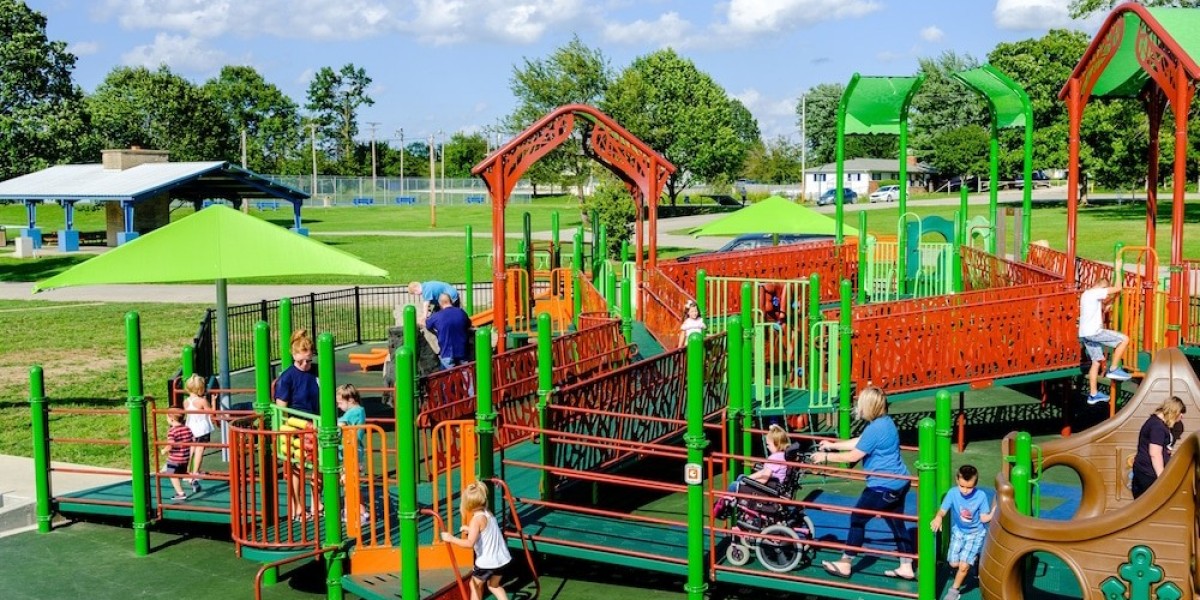

Beyond ADA Compliance: The Foundations of Inclusive Design
Designing a park, school campus, or community space requires investing in high-quality inclusive playground equipment to ensure every child—regardless of physical, sensory, or cognitive ability—can play together side-by-side.
True play inclusion goes beyond basic legal compliance. While standard accessibility guidelines focus primarily on physical access, an intentionally designed inclusive playground creates equitable play experiences. It eliminates social and physical barriers, allowing siblings, friends, and peers of all abilities to move, explore, and connect.
Partnering with specialists who handle the full lifecycle—from site assessment and custom 3D design to equipment supply, surface installation, and certified safety compliance—guarantees that your investment yields a durable, joyful, and fully integrated play environment.
While the Americans with Disabilities Act (ADA) establishes vital legal baselines for public spaces, standard accessibility often falls short of true inclusion. Understanding the distinction between an accessible playground and an inclusive playground is the first step in planning a successful community space.
Accessible vs. Inclusive: Understanding the Difference
An accessible playground focuses on minimum physical access—ensuring a child in a wheelchair can enter the play boundary and reach specific components via ramps or transfer stations. However, if the equipment at the end of that ramp offers limited play value, the child remains an observer rather than a participant.
An inclusive playground integrates play value at every level. It offers multi-sensory challenges, varied movement options, and cooperative activities where children of diverse abilities play together on the same structures.
The Universal Design Principles
Inclusive play relies on Universal Design principles—creating environments usable by all people without the need for adaptation:
Equitable Use: The design is useful and appealing to children with diverse abilities.
Flexibility in Use: Equipment accommodates a wide range of individual preferences and physical abilities.
Simple and Intuitive: Play elements are easy to understand, regardless of the user's experience, knowledge, or language skills.
Perceptible Information: Features communicate necessary operating instructions through sensory modes (tactile, visual, sound).
Low Physical Effort: Allows children to engage comfortably without inducing excessive physical fatigue.
2. Essential Equipment Categories for an Inclusive Playspace
A well-planned commercial layout incorporates diverse play types so children can choose activities matching their energy levels, mobility, and sensory needs.
Inclusive Motion, Swinging, and Sliding
Motion play aids vestibular development, spatial awareness, and balance. Traditional swings and spinners often exclude children who lack core strength or upper-body stability, but inclusive alternatives solve this:
Adaptive and Molded Swings: High-backed, supportive swing seats with secure harness options allow children with limited trunk control to experience swinging alongside standard belt swings.
Flush-to-Ground Motion: Flush-mounted spinners and merry-go-rounds eliminate step-up barriers, allowing wheelchair users to roll directly onto the platform alongside standing peers.
Double-Wide and Embankment Slides: Wide slides allow caregivers or peers to slide side-by-side with a child, while embankment slides built into natural terrain eliminate height-related fall risks and transfer hurdles.
Play Element | Inclusive Feature | Developmental Benefit |
Molded Swings with Harnesses | High-back support and full-body stabilization | Vestibular stimulation & core strengthening |
Flush-Mounted Spinners | Zero-height entrance for wheelchairs & mobility devices | Spatial awareness & social cooperation |
Embankment & Wide Slides | Extra width for side-by-side or assisted sliding | Speed processing & tactile sensation |
Tactile & Musical Panels | Ground-level access with sound and touch interaction | Fine motor skills & cognitive play |
Sensory Play Panels and Quiet Retreat Spaces
Playgrounds can be overwhelming for neurodivergent children, including those with autism spectrum disorder (ASD) or sensory processing sensitivities.
Incorporating ground-level sensory panels—such as chime walls, rain wheels, maze boards, and tactile tracing maps—engages auditory, visual, and tactile senses. Additionally, quiet retreat spaces (such as cozy domes, shaded nooks, or tunnel structures) provide semi-enclosed areas where children can reset without leaving the play site.
3. Safety Surfacing and Seamless Site Accessibility
Equipment selection is only half of the inclusive play equation. The ground beneath the equipment determines whether a child using a wheelchair, walker, or stroller can navigate the park easily.
Poured-in-Place (PIP) Rubber vs. Loose-Fill Surfacing
Loose-fill surfacing like sand or uncompacted wood chips creates severe rolling resistance, making it difficult or impossible for mobility devices to cross.
Seamless unitary surfaces like Poured-in-Place (PIP) Rubberized Surfacing and interlocking rubber tiles offer smooth transitions, high impact absorption, and slip resistance. PIP rubber also allows for custom color patterns, embedded pathway graphics, and visual boundaries that help guide children with low vision or cognitive differences.
Pathways, Ramps, and Transfer Systems
Navigating through the equipment requires wide, flush pathways. Inclusive designs feature pathways at least 60 inches wide to allow two wheelchair users—or a wheelchair user and a walking companion—to pass each other comfortably. Integrated ramps with easy-to-grip handrails allow seamless access to elevated decks, while low-profile transfer steps ensure children can transition from mobility devices onto play components independently.
4. Turnkey Project Lifecycle: From Planning to Installation
Executing an inclusive playground requires coordination across site assessment, regulatory compliance, custom engineering, and certified installation. Partnering with a turnkey provider streamlines the process and ensures high quality at every stage.
Collaborative 3D Design and Community Alignment
Every community project starts with a detailed site evaluation that considers slope, soil, shade, and access points. Experienced playground designers use 3D modeling tools to visualize circulation routes, sensory zones, and equipment heights. This visual planning phase allows schools, park boards, and HOAs to gather community feedback and verify ADA accessibility before manufacturing begins.
Certified Installation and Safety Inspections
Proper installation ensures that equipment performs safely under heavy public use. Turnkey services cover site preparation, concrete footing installation, equipment assembly, and safety surfacing application.
Upon completion, certified inspectors check the play space against ASTM and CPSC standards to verify critical fall heights, pinch-point eliminations, and clear zone requirements.
5. Long-Term Maintenance and Community Value
An inclusive commercial playground is a lasting asset that enriches neighborhoods, schools, and public spaces. Instituting a regular maintenance protocol protects your investment and ensures ongoing safety.
Routine Safety Inspections and Maintenance
Establishing structured inspection schedules prevents wear-and-tear hazards:
High-Frequency Inspections (Weekly/Monthly): Check surface cleanliness, clear debris from pathways, inspect swing hardware for wear, and ensure latching mechanisms function smoothly.
Low-Frequency Inspections (Quarterly/Annually): Conduct comprehensive structural audits of main posts, welds, shade structure connections, and unitary rubber surface integrity.
Fostering Community Equity and Connection
Beyond physical health, inclusive play environments promote social empathy. When children of all abilities interact early in life, they build mutual understanding and break down social stigmas. Inclusive play areas also allow parents, grandparents, and caregivers with disabilities to play alongside their children, creating a welcoming destination for the whole community.
Transform Your Community with Inclusive Play
Building an inclusive playground is an investment in a compassionate, healthy, and connected community. By prioritizing universal design, high-performance safety surfacing, multi-sensory equipment, and professional installation, you create an inviting outdoor space where every child belongs.