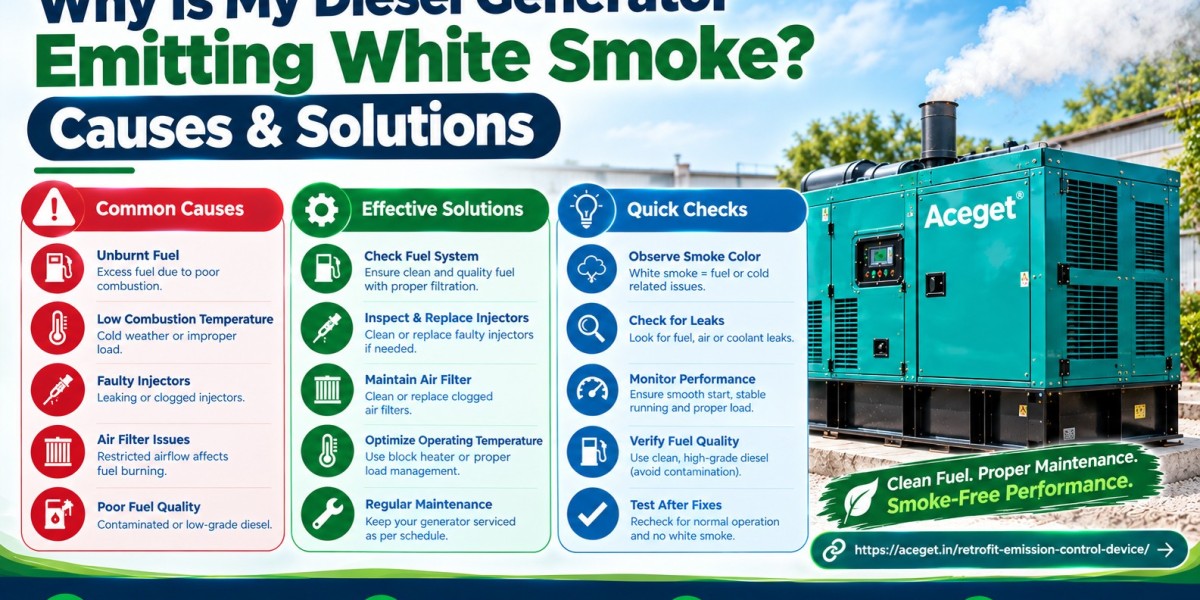

White smoke from a generator can be a sign that the engine is not burning fuel properly. In some cases, it may appear briefly during a cold start and disappear after the engine warms up. However, continuous smoke can indicate a fuel, cooling, compression, or engine problem that needs attention.
If you are wondering why is my diesel generator emitting white smoke, understanding the possible causes can help you identify the problem early and avoid expensive repairs.
What Does White Smoke From a Diesel Generator Mean?
White smoke usually occurs when unburned diesel fuel or coolant enters the combustion process. The exact cause depends on when the smoke appears, how long it lasts, and whether other symptoms are present.
A small amount of white smoke during a cold start may not always be serious. But thick or continuous smoke should not be ignored.
Common Causes of Diesel Generator White Smoke
1. Cold Engine
A cold engine may not reach the temperature needed for complete fuel combustion. This can result in unburned fuel leaving the exhaust as white smoke.
This is more common during cold weather or when the generator has been sitting unused for a long time.
2. Faulty Glow Plugs or Preheating System
Glow plugs or other preheating components help diesel engines start and burn fuel efficiently when the engine is cold.
If they are faulty, the fuel may not ignite properly, causing diesel generator white smoke, especially during startup.
3. Poor Fuel Quality
Contaminated, old, or water-mixed diesel can affect combustion. Water in the fuel system can prevent proper ignition and may cause white smoke.
Always use clean and suitable diesel fuel and keep the fuel tank and storage system properly maintained.
4. Faulty Fuel Injectors
Fuel injectors must deliver the correct amount of fuel at the correct pressure and timing. A damaged or clogged injector can cause poor fuel atomization.
As a result, some fuel may remain unburned and appear as white smoke from the exhaust.
5. Incorrect Injection Timing
Diesel engines require precise fuel injection timing. If injection timing is incorrect, combustion may happen too early or too late.
This can lead to poor engine performance, hard starting, increased fuel consumption, and white smoke.
6. Low Engine Compression
Proper compression is essential for diesel fuel ignition. Worn piston rings, cylinder liners, valves, or other internal engine components can reduce compression.
Low compression can make fuel difficult to burn completely, resulting in persistent white smoke.
7. Coolant Entering the Combustion Chamber
A more serious cause is coolant entering the engine cylinder. This can happen because of a damaged cylinder head gasket, cracked cylinder head, or other internal engine problems.
If white smoke continues after the engine reaches operating temperature and coolant levels are falling, professional inspection is recommended.
How to Diagnose White Smoke From a Generator
Before replacing expensive parts, check the basic symptoms first.
Step 1: Check When the Smoke Appears
Notice whether the smoke appears:
Only during cold starting
After the generator warms up
Under heavy load
Continuously during operation
The timing can help narrow down the possible cause.
Step 2: Check the Fuel
Inspect the fuel for signs of contamination or water. If the fuel is old or contaminated, draining and replacing it may be necessary.
Step 3: Inspect the Cooling System
Check the coolant level and look for visible leaks. A continuous drop in coolant level along with white exhaust smoke may indicate an internal coolant leak.
Step 4: Check the Fuel Injection System
If the basic checks do not solve the problem, inspect the injectors and injection timing. These components should generally be checked by a qualified technician.
Step 5: Check Engine Compression
If white smoke continues, a compression test can help identify internal engine wear or compression-related problems.
For a more detailed guide on identifying and troubleshooting white smoke, you can refer to our complete guide on generator white smoke diagnosis.
How to Fix Diesel Generator White Smoke
The correct solution depends on the underlying cause. Common repairs may include:
Replacing contaminated diesel fuel
Cleaning or replacing fuel filters
Repairing faulty fuel injectors
Checking injection timing
Repairing the preheating system
Fixing coolant leaks
Replacing a damaged head gasket
Repairing worn engine components
Performing an engine compression test
Avoid replacing major components without proper diagnosis. Finding the actual cause first can save both time and repair costs.
Can White Smoke Damage a Diesel Generator?
Continuous white smoke should not be ignored. If the cause is poor combustion, the engine may experience reduced efficiency and increased fuel consumption.
If coolant is entering the combustion chamber, continued operation can potentially lead to more serious engine damage. Therefore, persistent smoke should be investigated as soon as possible.
Preventing White Smoke From a Diesel Generator
Regular maintenance can reduce the chances of smoke-related problems. Follow the generator manufacturer's maintenance schedule and pay attention to:
Fuel quality and fuel storage
Fuel filter condition
Injector performance
Engine oil level and condition
Coolant level
Cooling system leaks
Battery and starting system
Engine compression
Regular generator servicing
Proper maintenance also helps improve fuel efficiency and extend the working life of the generator.
RECD for DG Set and Generator Emissions
An RECD for DG set is designed to help control particulate emissions from diesel generator exhaust systems. It can support emission-control requirements when the appropriate system is selected, installed, and maintained correctly.
However, an emission-control device does not replace engine troubleshooting. If your generator is producing white smoke because of poor combustion, coolant leakage, faulty injectors, or internal engine wear, the underlying mechanical problem should be diagnosed and repaired first.
When Should You Call a Generator Technician?
Contact a qualified technician if:
White smoke continues after the engine warms up
The generator is losing coolant
The engine is difficult to start
Fuel consumption has increased
The engine is running roughly
Generator power output has decreased
Smoke becomes thick or continuous
You notice unusual engine sounds
Early diagnosis can prevent a small problem from becoming a major engine repair.
FAQs
Is white smoke from a diesel generator normal?
A small amount of white smoke during a cold start can be normal in some situations. If it continues after the engine warms up, the generator should be inspected.
What is the most common cause of white smoke?
Cold starting, poor fuel combustion, faulty injectors, incorrect injection timing, and low engine compression are common causes. Coolant entering the combustion chamber is another important possibility.
Can bad diesel fuel cause white smoke?
Yes. Contaminated, old, or water-mixed fuel can interfere with proper combustion and may result in white exhaust smoke.
Can low compression cause white smoke?
Yes. Low compression can prevent diesel fuel from igniting properly, leading to incomplete combustion and white smoke.
Does an RECD for DG set stop white smoke?
Not necessarily. An RECD for DG set is an emission-control solution. It does not repair mechanical or combustion problems that are causing white smoke.
Conclusion
Understanding why is my diesel generator emitting white smoke can help you identify problems before they become expensive repairs. While temporary white smoke during a cold start may not always be serious, continuous diesel generator white smoke can indicate fuel, injector, compression, timing, or coolant-related problems.
Regular servicing, clean fuel, proper cooling-system checks, and timely troubleshooting can keep your generator reliable and efficient. For emission control, an appropriate RECD for DG set can also support cleaner generator operation, but the engine's underlying problem should always be addressed first.