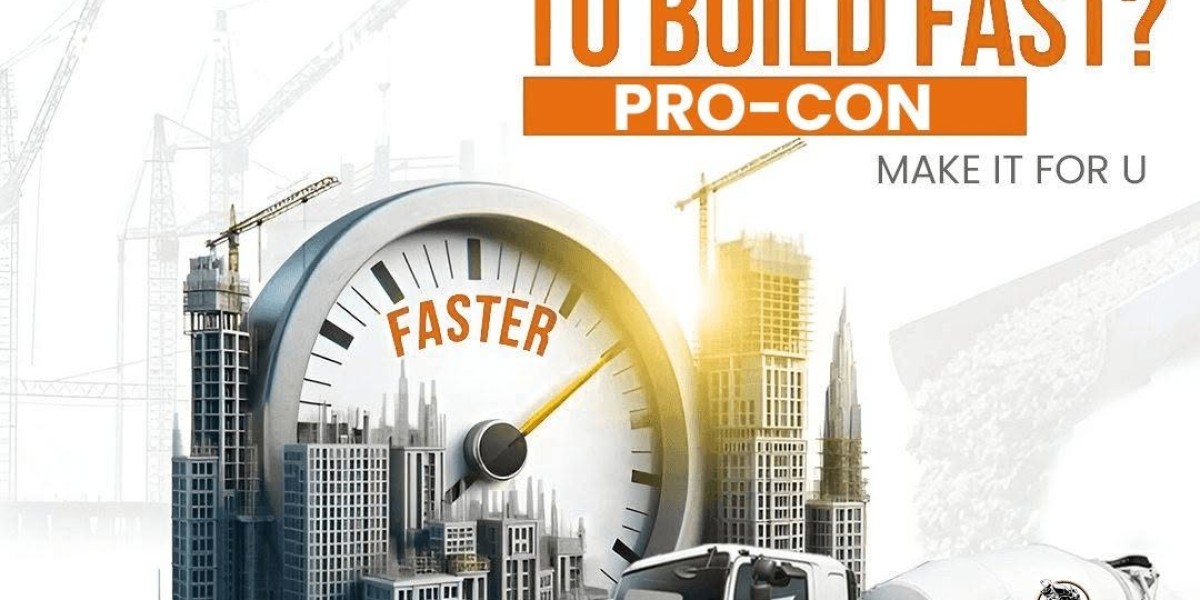

As modern skylines expand across Pakistan, structural engineering standards are evolving rapidly to meet the demands of rapid urbanization. From high-rise commercial plazas and residential towers to major civil infrastructure, the longevity and safety of any development rest on its foundational building material: concrete. While architectural designs and luxury interior finishes define a building's visual appeal, its structural frame depends on unyielding compressive strength and durability. Transitioning away from traditional, manual site mixing toward factory-controlled solutions like certified ready made concrete Karachi ensures that structural engineers, developers, and builders construct resilient, long-lasting developments.
1. Load-Bearing Capacity and Compressive Power
The primary structural role of concrete is to absorb heavy vertical and lateral forces. Buildings must withstand substantial dead loads from structural weight, live loads from occupants and equipment, and dynamic environmental forces like wind shear and seismic activity.
Key aspects of concrete strength include:
High Compressive Resistance: Concrete excels at bearing massive downward loads, making it the ideal partner for tensile steel rebar matrices in reinforced concrete elements.
Structural Uniformity: Factory-batched concrete delivers consistent compressive strength grades across every foundation raft, load-bearing column, and floor slab.
Seismic Ductility: Properly engineered concrete mixes absorb and distribute ground vibrations during earthquakes, protecting building frames against sudden brittle failures.
Relying on scientifically batched concrete establishes a reliable structural foundation that preserves real estate value and safeguards human lives.
2. Preventing Permeability and Internal Corrosion
A building's durability is directly linked to how well its structural core resists environmental degradation. Inconsistent site-mixed concrete with high water-cement ratios contains microscopic voids and interconnected capillary networks. Over time, moisture, carbon dioxide, and airborne salts penetrate these pores, rusting internal steel reinforcement and causing surface spalling or structural failure.
Quality concrete production protects structural elements through:
Controlled Water-Binder Ratios: Computerized load cells regulate water addition precisely, creating a dense, low-porosity concrete matrix.
Specialized Admixture Integration: Blending superplasticizers and waterproofing agents improves fluid workability without diluting strength.
Steel Encapsulation: Dense concrete creates an impermeable protective barrier around internal steel rebar, preventing moisture penetration and rust expansion.
Shielding internal steel reinforcement from atmospheric moisture significantly extends a building's operational lifespan.
3. Fire Resistance and Environmental Thermal Mass
Beyond load support, concrete provides natural protection against thermal and environmental hazards. Unlike wood or structural steel—which can lose load-bearing capacity when exposed to intense heat—concrete is inherently non-combustible and fire-resistant. It acts as a natural shield, slowing the spread of flames during emergency situations. Furthermore, concrete's high thermal mass regulates internal building temperatures, reducing energy consumption for heating and cooling in harsh climates.
4. Technical QA and Long-Term Value Creation
Ensuring structural concrete quality requires continuous technical validation. Leading suppliers perform on-site slump tests to verify workability before discharge, followed by standardized 7-day and 28-day compressive cube testing in certified laboratories. This complete quality documentation provides structural auditors, developers, and financial stakeholders with verifiable proof of building safety.
Conclusion
Concrete plays an irreplaceable role in building strong, durable structures that withstand environmental exposure, heavy loads, and the test of time. Transitioning away from manual, unmonitored site mixing toward computerized factory production shields high-rises, commercial hubs, and housing projects from structural micro-cracking and premature material fatigue. Partnering with established industry specialists to source certified ready made concrete Karachi equips engineering teams with high-grade material reliability, expert technical support, and lasting structural confidence.
Survey No. 423, Ibrahim Hydri, behind Bol head quarter, Korangi creek road, Karachi-74900
info@procon.pk
+92 21 111 250 250