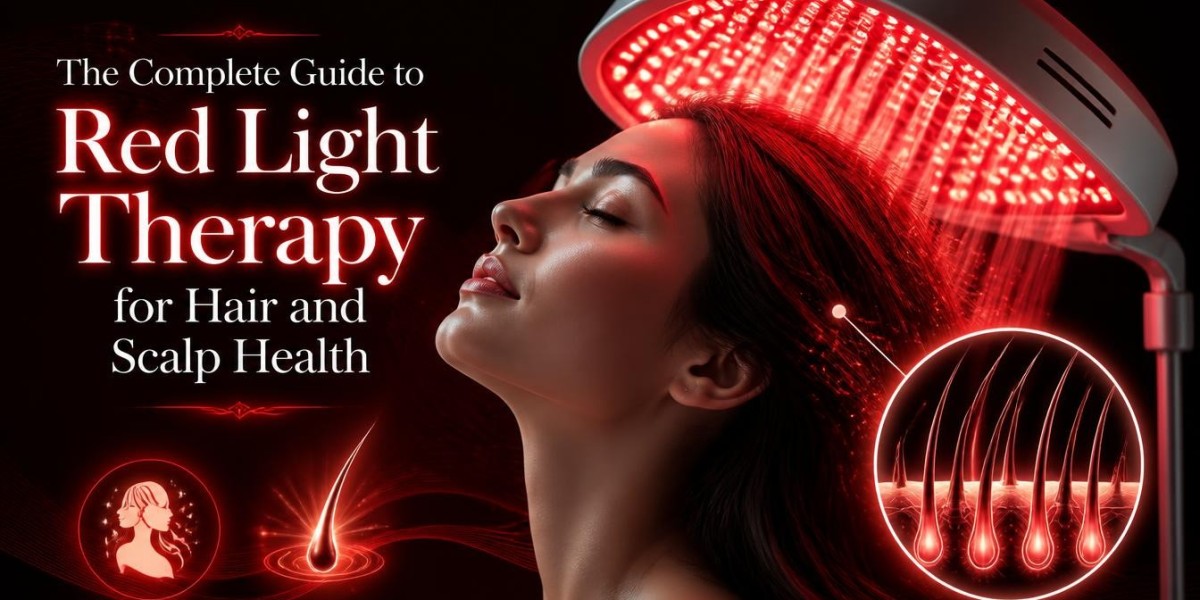

Healthy-looking hair starts with a healthy scalp. As interest in non-invasive hair-care solutions continues to grow, red light therapy for hair has become a popular option for people concerned about thinning hair and hair loss. Also known as low-level light therapy (LLLT) or photobiomodulation, this treatment uses specific wavelengths of red or near-infrared light to interact with cells in the treated area.
But how does red light therapy work, what are its potential benefits, and is it suitable for everyone? This complete guide explains the basics of red light therapy for hair and scalp health and what you should know before adding it to your routine.
What Is Red Light Therapy for Hair?
Red light therapy is a non-invasive treatment that uses red or near-infrared light rather than ultraviolet (UV) light. Hair-focused devices are available in several forms, including caps, helmets, combs, and other specialized devices.
The treatment is sometimes used to support people experiencing androgenetic alopecia, commonly called male or female pattern hair loss. Research has found evidence that low-level light therapy can increase hair density in people with androgenetic alopecia, although results can vary.
Unlike surgical hair restoration, red light therapy does not involve incisions or injections.
How Does Red Light Therapy Work?
The exact biological process is still being researched. Photobiomodulation is thought to influence cellular activity when cells absorb certain wavelengths of light.
In hair research, scientists are particularly interested in how this light exposure may affect the activity of hair follicles and the hair-growth cycle. Clinical studies suggest that low-level light therapy can support increased hair density in some people with pattern hair loss.
It is important to understand that red light therapy is not a guaranteed cure for hair loss. Different types of hair loss have different causes, and the evidence is considerably stronger for androgenetic alopecia than for many other forms of alopecia.
Potential Benefits of Red Light Therapy for Hair
1. May Support Hair Density
One of the main reasons people explore red light therapy is its potential effect on hair density. A 2025 systematic review and meta-analysis included 38 studies involving 3,098 patients and found significant improvements in hair density among people with androgenetic alopecia who received low-level laser or LED therapy compared with placebo.
This does not mean everyone will experience the same results, but it provides encouraging evidence for this particular type of hair loss.
2. May Help Hair Look Fuller
Changes in hair density can affect the overall appearance of thinning areas. Some research has also reported improvements in hair thickness or diameter following low-level light therapy.
For someone dealing with gradual thinning, supporting existing follicles may help create a healthier-looking appearance over time.
3. Non-Invasive Treatment Option
Red light therapy does not require surgery, needles, or downtime. This makes it appealing to people looking for a convenient addition to their hair-care routine.
The American Academy of Dermatology notes that some studies have found repeated red-light treatments can produce some hair regrowth, particularly in hereditary hair loss.
4. Can Be Used at Home
Many red light therapy hair devices are designed for home use. However, treatment schedules vary by device. Following the manufacturer's instructions is important because using a device more frequently does not necessarily mean better results.
The American Academy of Dermatology recommends selecting a device specifically designed for the concern being treated and following its instructions carefully.
Red Light Therapy and Scalp Health
The scalp provides the environment in which hair follicles grow, so maintaining good scalp-care habits is an important part of an overall hair routine.
Red light therapy should not replace basic scalp care. Gentle cleansing, avoiding excessive heat and harsh chemical treatments, maintaining good nutrition, and addressing scalp problems can all contribute to healthier-looking hair.
If your scalp is persistently itchy, painful, inflamed, or unusually flaky, it is better to determine the cause rather than relying on red light therapy alone.
How Often Should You Use Red Light Therapy?
Consistency is an important part of using red light therapy. It is not generally considered a one-time treatment. Clinical studies have evaluated repeated treatments over periods ranging from several weeks to months, and the American Academy of Dermatology notes that people may need regular treatments for months before seeing results.
Your specific schedule should depend on the device you use. Always follow its instructions for treatment duration and frequency.
Remember that hair grows slowly, so patience and realistic expectations are essential.
Is Red Light Therapy Safe?
Red light therapy appears to have a generally favorable short-term safety profile when used correctly. The American Academy of Dermatology reports that common side effects are generally mild, such as temporary discomfort or skin irritation.
However, red light therapy is not appropriate for everyone. Certain medications and conditions can increase sensitivity to light. The AAD recommends speaking with a dermatologist before using an at-home device if you have concerns about your skin or hair health.
If your device recommends eye protection, use the recommended protection rather than substituting ordinary sunglasses.
Choosing a Red Light Therapy Hair Device
If you are considering an at-home device, look beyond marketing claims. Consider whether the device is specifically designed for hair loss, whether its instructions are clear, and whether it has appropriate regulatory clearance for its intended use.
The AAD also points out that "FDA cleared" refers to the device's regulatory status and safety considerations; it does not guarantee that a device will produce dramatic hair-growth results.
A dermatologist can also help determine whether red light therapy makes sense for your particular type of hair loss.
Red Light Therapy Is Not a Quick Fix
One of the most important things to remember about red light therapy for hair is that results take time. Hair follicles follow a natural growth cycle, and visible changes cannot normally be expected overnight.
Research supports red light therapy as a promising non-invasive option for androgenetic alopecia, but researchers continue to investigate the best wavelengths, treatment schedules, and device characteristics.
It is also important to identify the underlying reason for hair loss. Sudden or severe shedding may have a different cause from gradual hereditary hair thinning and may require a different treatment approach.
Final Thoughts
Red light therapy for hair and scalp health is an increasingly researched approach for people looking for a non-invasive way to support healthier-looking hair. Current evidence is particularly encouraging for androgenetic alopecia, with studies showing potential improvements in hair density following consistent low-level light therapy.
However, red light therapy is not a universal solution for every type of hair loss. The best results come from choosing an appropriate device, following its instructions consistently, maintaining realistic expectations, and understanding the underlying cause of hair thinning.
If you are experiencing persistent or unexplained hair loss, consider speaking with a qualified dermatologist before starting a new treatment. A professional evaluation can help you choose an approach that fits your individual hair and scalp needs.