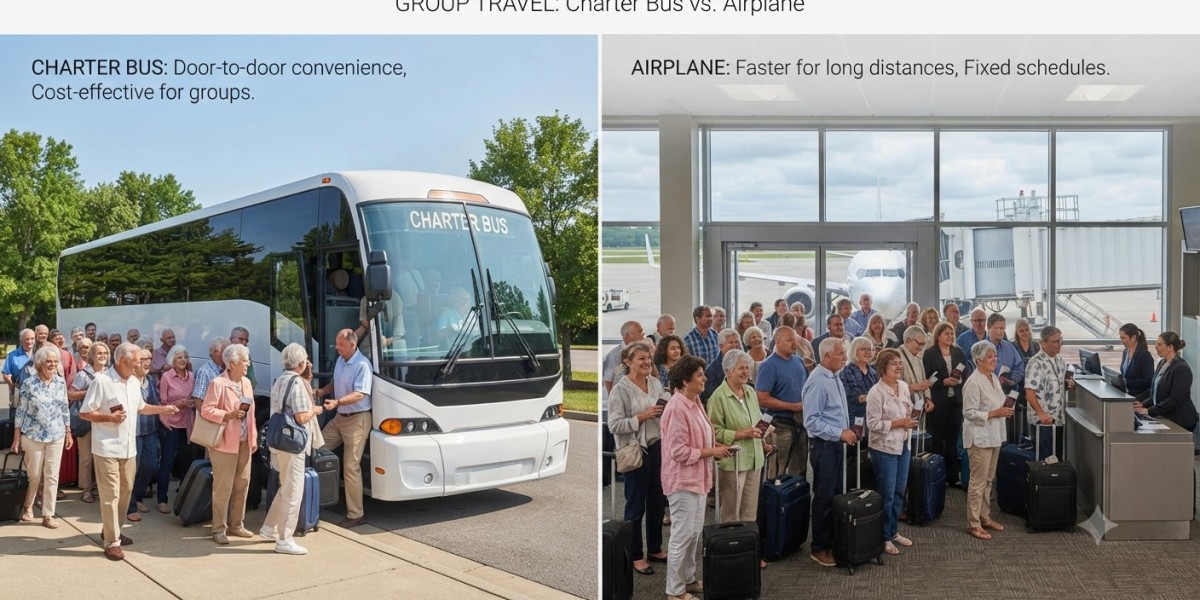

Planning transportation for a large group requires more than simply choosing the fastest way to reach a destination. Travelers need to consider the total cost, comfort, convenience, luggage, scheduling, and transportation once they arrive. For groups of families, students, employees, athletes, or event guests, the choice often comes down to traveling by road or taking a flight. A detailed comparison of large group transportation options can help organizers understand which method makes the most sense for their trip.
While flying is often the preferred choice for very long distances, charter buses can offer significant advantages for regional and medium-distance group travel. Understanding the differences can make it easier to plan a trip that works for both the group's schedule and budget.
Cost: Which Option Is More Affordable?
Cost is one of the most important factors when arranging transportation for a large group. With air travel, every passenger generally needs an individual ticket. The final price can increase further with checked baggage, seat selection, airport parking, and transportation between airports and the final destination.
A charter bus is priced differently. Instead of purchasing individual tickets, the group typically rents an entire vehicle. The total rental cost can then be shared among passengers.
For a group of 20, 30, or 50 people, dividing one transportation cost among everyone can make a charter bus an economical option, especially for shorter and medium-distance journeys.
Travel Time: Look Beyond the Flight Duration
An airplane is much faster than a bus while in the air, but the total travel experience includes several additional steps. Travelers may need to drive to the airport, arrive early, check luggage, pass through security, wait at the gate, board the aircraft, collect baggage, and arrange transportation after landing.
A charter bus can provide direct transportation from a convenient pickup location to the destination. Passengers board once and remain together throughout the journey.
For trips within a few hundred miles, the difference in total door-to-door travel time may be smaller than expected when airport procedures are included.
Convenience for Large Groups
Managing a large group at an airport can be complicated. Travelers may become separated during check-in, security screening, boarding, or baggage collection. Different flight schedules can also make it difficult for everyone to arrive together.
A charter bus simplifies the process by keeping the group in one vehicle. Everyone follows the same itinerary and arrives at the destination together.
This can be especially helpful for:
Corporate Groups
Employees attending conferences, meetings, retreats, and company events can travel together without arranging separate airport transfers.
School Groups
Teachers and organizers can maintain better group coordination while students travel together from the pickup location to the destination.
Sports Teams
Athletes can travel with coaches and equipment without having to coordinate multiple flights or worry about separating sports gear from the group.
Wedding Parties
Guests and wedding parties can travel between hotels, ceremonies, receptions, and other locations using one coordinated transportation service.
Comfort During the Journey
Comfort is another area where charter buses can be appealing. Depending on the vehicle, passengers may have access to reclining seats, air conditioning, onboard restrooms, Wi-Fi, power outlets, and entertainment systems.
Instead of concentrating on driving, passengers can relax, talk with other travelers, work, watch entertainment, or simply enjoy the journey.
Airplanes provide their own comfort features, but passengers generally have less space to move around and fewer opportunities to socialize with the rest of their group.
Luggage and Group Equipment
Large groups often carry more luggage than individual travelers. Sports teams may need equipment, wedding groups may have additional bags, and corporate travelers may carry presentation materials.
Airlines have specific baggage policies, and additional luggage can increase the cost of the trip.
Charter buses generally provide dedicated luggage storage underneath the passenger cabin. This can make transporting multiple bags and group equipment more convenient.
Before booking, organizers should confirm that the selected vehicle has enough storage for the group's belongings.
Flexible Departure Times
Airlines operate according to predetermined schedules. If a flight does not fit your itinerary, the group may need to adjust its plans around another departure.
Charter transportation offers greater flexibility because the group can arrange its departure around its own schedule. Pickup locations can also be selected based on where travelers are staying or meeting.
This is particularly useful for events that involve multiple destinations or activities throughout the day.
Door-to-Door Transportation
One of the biggest advantages of charter bus travel is direct transportation.
Airports are not always close to hotels, venues, campuses, stadiums, or other destinations. After a flight, a large group may need rental cars, taxis, rideshares, or another shuttle.
A charter bus can often pick up passengers at a designated location and take them directly to the destination. This reduces the number of transportation arrangements organizers need to manage.
Group Safety and Coordination
Keeping everyone together is important for many types of group travel. A charter bus provides one central transportation arrangement, making passenger coordination easier.
Organizers should still choose a reputable charter bus provider and confirm that the company uses qualified commercial drivers and properly maintained vehicles.
For school trips, corporate events, sports travel, and other organized journeys, having everyone travel together can also make communication and scheduling easier.
When Flying Is the Better Choice
Flying is not always the wrong option. For extremely long-distance domestic trips, the time savings can be substantial. Air travel can also be more practical for international journeys or small groups traveling across the country.
If the group has a strict schedule and needs to cover thousands of miles quickly, flying may provide the most efficient solution.
The best decision depends on the distance, group size, budget, and itinerary.
When a Charter Bus Makes More Sense
Charter buses are particularly useful for groups traveling moderate distances together. When everyone is heading to the same destination, one vehicle can simplify transportation planning.
A charter bus can also be a better choice when the itinerary includes several stops. Instead of arranging separate flights and ground transportation for each destination, the group can use one vehicle throughout the trip.
This makes charter buses popular for school tours, family reunions, corporate retreats, church groups, sporting events, weddings, and sightseeing trips.
Charter Bus vs. Flying: Which Should You Choose?
There is no universal answer because every group has different needs. Flying generally wins when speed and long-distance travel are the main priorities. Charter buses can be more attractive when affordability, flexibility, comfort, and group coordination are more important.
Before making a decision, calculate the complete cost of both options. Include airfare, baggage, airport transportation, parking, and local transportation when comparing flights. For a charter bus, consider the rental rate, trip distance, number of passengers, travel dates, and required amenities.
Looking at the complete journey instead of one individual expense will give your group a much more accurate comparison.
Final Thoughts
Choosing between a charter bus and an airplane depends on what matters most to your group. Air travel provides speed, while charter bus transportation provides flexibility and keeps everyone together.
For medium-distance trips involving larger groups, a charter bus can offer an efficient combination of comfort, convenience, and shared transportation costs. For very long-distance or international journeys, flying may be the more practical solution.
By comparing the total costs, travel times, luggage requirements, scheduling needs, and destination logistics, group organizers can choose the transportation option that provides the best overall experience.