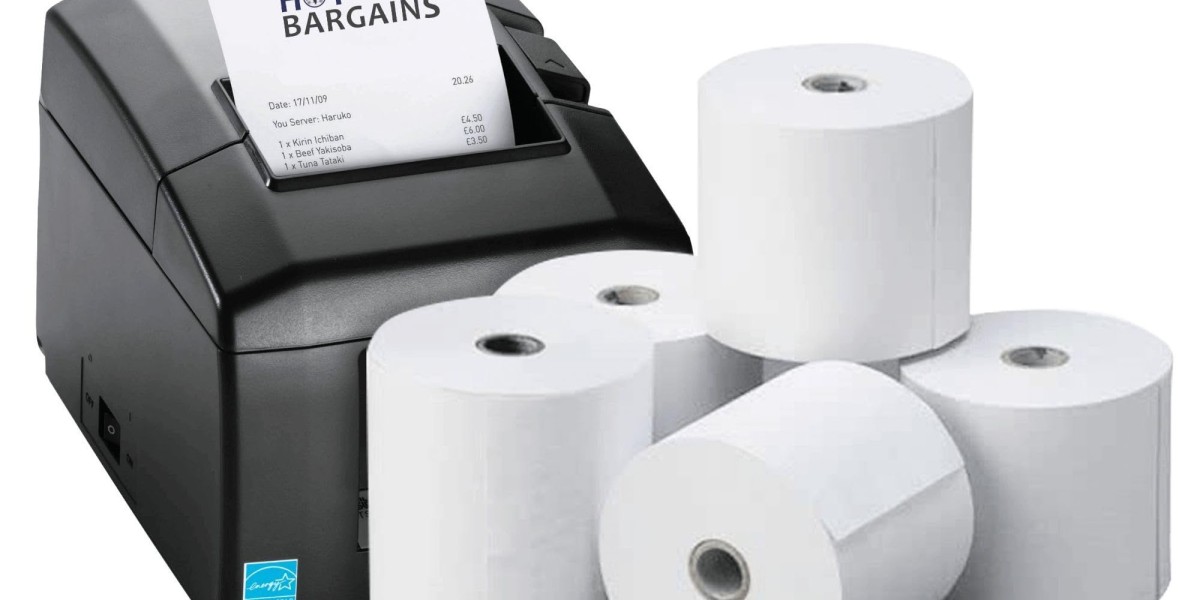

Understanding Thermal Paper for Receipts, Labels and Daily Printing Needs
Thermal paper plays an important role in businesses that require quick and reliable printing every day. From retail receipts and restaurant orders to payment terminals and barcode labels, thermal paper rolls for POS printers provide a practical printing solution without requiring traditional ink cartridges. This heat-sensitive paper technology allows businesses to produce clear prints instantly, making it a popular choice for shops, offices, warehouses and service providers. Unlike standard printer paper, thermal paper contains a special coating that reacts to heat from a thermal printhead. This process creates text, numbers and images directly on the paper surface. Because of its speed, low maintenance requirements and easy replacement process, thermal printing continues to be widely used across different industries.
How Does Thermal Paper Operate?
Thermal paper is a specially manufactured paper designed for thermal printers. Its surface contains a chemical coating that changes colour when exposed to controlled heat. Instead of using ink or toner, the printer head activates specific areas of the coating to create the required print.
This printing method offers several advantages for businesses:
Fast printing speed for high-volume transactions
No need for ink cartridges or ribbons
Quiet operation compared to traditional printers
Compact printer designs for limited spaces
Simple replacement of paper rolls
Thermal technology is commonly found in point-of-sale systems, card payment machines, ticket printers and label printing equipment.
Different Uses of Thermal Paper in Business
Businesses across multiple sectors depend on thermal printing because it supports quick transactions and accurate record keeping.
Retail Receipts and POS Systems
Retail stores use thermal paper mainly for customer receipts. Cash registers and POS systems require paper that feeds smoothly and produces readable transaction details. A good-quality roll helps prevent faded text, paper jams and inconsistent printing.
Restaurants and Food Services
Restaurants use thermal rolls for customer bills, kitchen order printers and takeaway receipts. In busy environments, reliable printing is important because staff need clear information without delays.
Payment Terminals
Card machines commonly use smaller thermal paper rolls due to their compact design. These rolls must match the device specifications to ensure smooth feeding and proper printing.
Labels and Barcode Applications
Thermal printing is also used for product labels, inventory management and barcode systems. Clear and accurate printing helps businesses track products and manage stock efficiently.
Key Factors That Affect Thermal Paper Quality
Not every thermal paper roll offers the same performance. Paper quality, coating technology and roll specifications can influence the final printing result.
Important factors include:
Feature | Importance |
Paper coating | Determines print clarity and heat response |
Roll size | Ensures compatibility with the printer |
Paper thickness | Affects feeding and handling |
Storage quality | Helps maintain paper condition |
Print durability | Influences how long text remains visible |
Choosing suitable paper depends on the printer model and the purpose of printing. A receipt printer may require different specifications compared to a barcode label printer.
Thermal Paper Roll Sizes and Compatibility
Thermal printers are available in many different formats, which means paper rolls are not universal. The correct roll size depends on the printer's internal mechanism and holder design.
Common considerations include:
Roll Width
The width must match the printer slot. A roll that is too wide or too narrow may not feed correctly.
Roll Diameter
The outer diameter determines how much paper fits inside the printer. Larger rolls may reduce replacement frequency, while smaller rolls are useful for portable devices.
Core Size
The inner core needs to fit the printer spindle or holder. Incorrect core dimensions can affect paper movement.
Checking these specifications helps businesses avoid compatibility issues and unnecessary waste.
Advantages of Using Thermal Printing Technology
Thermal printing remains popular because it provides a simple and efficient way to handle everyday printing requirements.
Businesses benefit from:
Reduced maintenance compared with ink-based printers
Faster transaction processing
Lower equipment complexity
Professional-looking receipts
Convenient roll replacement
For companies handling hundreds or thousands of transactions, using reliable thermal paper rolls can help improve daily workflow, reduce interruptions and maintain smooth printing operations.
Storage and Handling of Thermal Paper
Proper storage helps maintain thermal paper performance. Since the coating reacts to heat, unsuitable conditions can affect the paper before it is used.
Thermal rolls should be stored away from:
Direct sunlight
Excessive heat sources
High humidity
Strong chemicals
Excessive pressure or friction
Keeping rolls in a cool and dry environment helps preserve print quality and prevents unwanted colour changes.
Thermal Paper for Modern POS Environments
Modern businesses rely heavily on digital payment systems and automated transactions. Although many records are now stored electronically, printed receipts remain important for customers and businesses.
Thermal paper supports modern POS environments because it works efficiently with:
Retail checkout systems
Restaurant ordering systems
Mobile payment devices
Ticketing solutions
Inventory equipment
The combination of speed and reliability makes thermal printing suitable for businesses that value operational efficiency.
Environmental Considerations of Thermal Paper
Businesses are increasingly paying attention to sustainable practices. Thermal paper manufacturers continue to improve production methods and develop options with reduced environmental impact.
When selecting paper, businesses may consider:
Responsible sourcing practices
Recycling requirements
Packaging materials
Supplier standards
Proper disposal and responsible purchasing decisions can support better waste management.
Why Choosing the Right Thermal Paper Matters
Using unsuitable paper can affect printer performance and customer experience. Low-quality rolls may produce unclear prints, create excessive dust or cause feeding problems.
The right thermal paper should provide:
Clear and consistent printing
Smooth printer operation
Proper size compatibility
Suitable durability for the application
For more related posts or blogs click here
For businesses, selecting the correct roll is not only about printing text. It also supports smoother operations and better customer service.
Frequently Asked Questions
What is thermal paper mainly used for?
Thermal paper is mainly used for receipts, payment slips, tickets, labels and other short-format printing applications where fast printing is required.
Does thermal paper need ink?
No. Direct thermal paper uses a heat-sensitive coating that reacts with the printer head, so it does not require ink cartridges or ribbons.
How long does thermal paper printing last?
The lifespan depends on paper quality and storage conditions. Exposure to heat, sunlight and chemicals can reduce print visibility.
Are all thermal paper rolls compatible with every printer?
No. Thermal rolls differ in width, diameter and core size. Businesses should check printer specifications before purchasing.
Can thermal paper be used for barcode printing?
Yes, thermal paper is commonly used for barcode labels and inventory applications where clear scanning is required.
Why do thermal receipts fade?
Thermal receipts can fade due to heat exposure, sunlight, friction or unsuitable storage conditions.
Is thermal paper still useful for businesses?
Yes. Many businesses continue using thermal paper because it provides fast, reliable and convenient printing for daily operations.