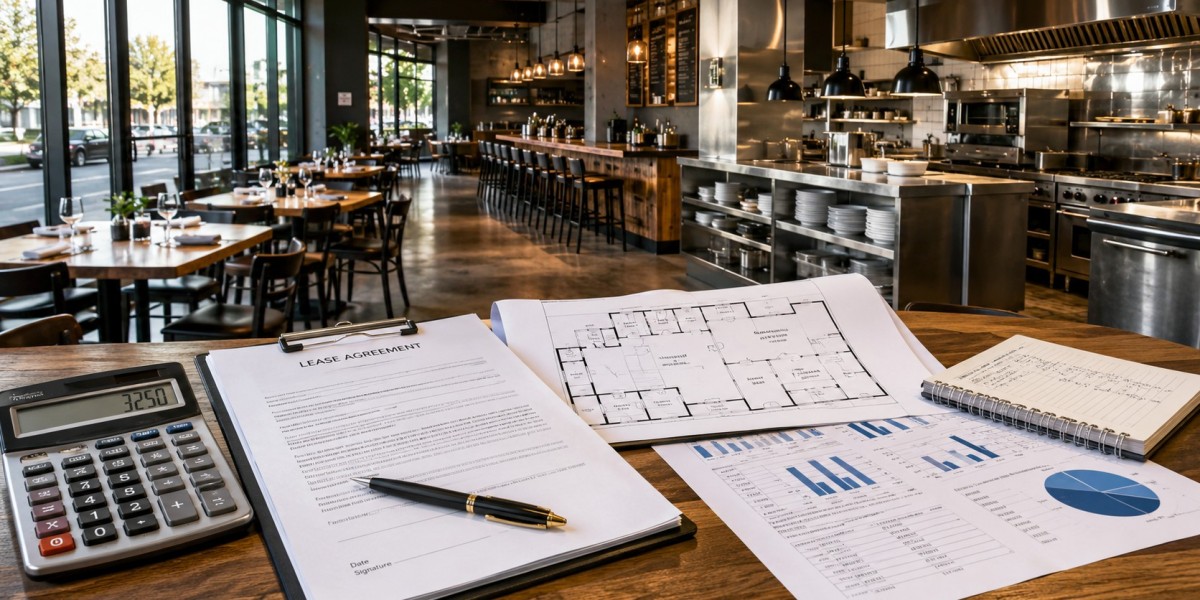

If you are planning to open a restaurant, one of the first questions you may ask is, how much does it cost to rent out a restaurant Restaurant rent is one of the biggest ongoing expenses for a food business, and choosing the wrong property can put significant pressure on your budget.
The cost of renting a restaurant depends on many factors, including location, property size, local real estate prices, restaurant condition, lease terms, customer traffic, and the type of commercial property. A small restaurant in a neighborhood shopping center may have a very different rental cost from a large restaurant in a busy downtown district.
Understanding restaurant rent before signing a lease is essential. You need to determine not only whether you can afford the monthly rent but also whether the location can generate enough sales to make the occupancy cost financially sustainable.
In this guide, we will explain the major factors that determine restaurant rental costs, additional expenses to consider, how to calculate affordable rent, and how location research can help you make a smarter decision.
What Determines the Cost to Rent a Restaurant?
There is no single price for restaurant rent. Commercial property prices vary significantly from one market to another.
Some of the most important factors include:
Location
Restaurant size
Local commercial real estate demand
Property condition
Customer traffic
Visibility
Parking availability
Lease structure
Property type
Restaurant infrastructure
Neighborhood demographics
A restaurant located on a high-traffic street in a popular commercial district will typically have different rental economics than a restaurant located in a less busy area.
For this reason, restaurant owners should evaluate the property's potential revenue alongside the proposed rent.
Location Has a Major Impact on Restaurant Rent
Location is one of the biggest factors affecting commercial restaurant rental costs.
Properties in busy urban districts, shopping centers, entertainment areas, tourist destinations, and high-demand commercial corridors can command higher rents because businesses are paying for access to customers and visibility.
However, a higher-rent location is not automatically a better location.
A restaurant paying significantly higher rent needs enough sales volume to justify the additional occupancy cost. A less expensive property with strong demographics, convenient access, and lower competition could potentially provide better financial results.
When comparing locations, consider:
Population density
Household income
Daytime population
Foot traffic
Vehicle traffic
Nearby businesses
Competitor restaurants
Parking
Accessibility
Visibility
The goal is to find a location where the rent is appropriate for the sales potential.
Restaurant Size and Rental Cost
The size of the restaurant also directly affects rent.
A larger restaurant may provide more seating, kitchen capacity, storage, and operational space, but it also increases the amount of space you must pay for every month.
Before choosing a large property, determine how much space your concept actually needs.
Consider the requirements for:
Dining area
Commercial kitchen
Food preparation
Storage
Restrooms
Bar area
Office space
Employee areas
Delivery and pickup operations
For example, a small fast-casual restaurant focused heavily on takeout may not need the same amount of dining space as a full-service restaurant.
Paying for unused space can reduce profitability.
Understanding Restaurant Lease Structures
The advertised rent is not always the complete occupancy cost. Restaurant leases can have different structures, and understanding the lease is essential before signing.
Base Rent
Base rent is the primary amount paid to the landlord for occupying the property.
It may be quoted as a monthly amount or as a price per square foot per year.
For example, if a property is priced at $30 per square foot annually and has 2,000 square feet, the annual base rent would be:
2,000 × $30 = $60,000 per year
That equals approximately:
$5,000 per month
However, actual occupancy costs can be higher depending on the lease.
Percentage Rent
Some restaurant leases may include percentage rent, where the tenant pays additional rent based partly on sales.
This structure is more common in certain retail environments and shopping centers.
If your lease includes percentage rent, understand exactly how the calculation works before agreeing to the terms.
Triple Net Lease
Under a triple net, or NNN, lease, the tenant may be responsible for expenses in addition to base rent, such as property taxes, insurance, and maintenance costs.
This means the advertised base rent may not represent your total monthly occupancy expense.
Always ask the landlord for a complete estimate of all expected lease-related costs.
Additional Costs Beyond Monthly Rent
When asking how much does it cost to rent out a restaurant, it is important to look beyond the monthly rent.
Restaurant tenants may encounter several additional expenses.
Security Deposit
Landlords commonly require a security deposit before the lease begins. The amount can vary depending on the property, landlord, tenant qualifications, and lease agreement.
Utilities
You may be responsible for electricity, gas, water, sewer, internet, and waste disposal.
Restaurants can have significant utility requirements because of refrigeration, cooking equipment, ventilation, lighting, HVAC systems, and other equipment.
Insurance
Commercial property and liability insurance may be required by the landlord.
The exact coverage and cost depend on your business, property, location, and insurance requirements.
Maintenance
Depending on the lease structure, tenants may be responsible for certain repairs and maintenance.
This could include HVAC systems, plumbing, grease traps, electrical components, equipment, or other property-related systems.
Common Area Maintenance
In shopping centers or multi-tenant properties, tenants may contribute toward common-area expenses.
These costs can include parking lot maintenance, landscaping, security, lighting, and other shared services.
Renovation and Build-Out
A restaurant that requires significant renovation can require a substantial upfront investment.
Potential expenses include:
Flooring
Walls and ceilings
Plumbing
Electrical work
Kitchen installation
Ventilation
Fire safety systems
Restrooms
Lighting
Signage
Dining furniture
A property that already has a restaurant-ready kitchen may reduce some construction expenses.
How Much Rent Can a Restaurant Afford?
One of the most important questions is not simply how much rent costs, but how much does it cost to rent out a restaurant.
Restaurant owners often evaluate occupancy costs as a percentage of projected sales.
For example, suppose your restaurant expects annual sales of $1,000,000. If total occupancy expenses are $100,000 per year, occupancy costs would represent:
$100,000 ÷ $1,000,000 × 100 = 10%
This gives you a way to compare potential properties based on projected revenue rather than looking at rent in isolation.
Your ideal occupancy-cost percentage depends on your concept, market, operating model, margins, and other expenses.
It is important to consider the full financial picture, including:
Food costs
Labor
Utilities
Insurance
Marketing
Repairs
Technology
Supplies
Taxes
Loan payments
Occupancy expenses
A property with cheap rent can still be expensive if it produces insufficient sales.
Use a Restaurant Rent Calculator
Calculating restaurant rent manually can become difficult when you are comparing several properties with different sizes, rental rates, and costs.
A restaurant rent calculator can help estimate potential occupancy expenses and make comparisons easier.
Restaurant Site Finder provides a restaurant rent calculator that can help restaurant owners evaluate rental costs when planning a new location.
Using a calculator alongside market research can help you understand how rent may affect your projected restaurant finances before committing to a property.
How to Compare Two Restaurant Rental Properties
Suppose you are considering two properties.
Property A
Smaller space
Lower rent
Moderate traffic
Limited parking
Fewer competitors
Property B
Larger space
Higher rent
Strong visibility
High traffic
Excellent parking
More competition
It would be a mistake to choose Property A simply because its rent is lower.
Instead, estimate the potential sales and operating costs for each property.
If Property B can realistically generate significantly higher sales while keeping occupancy costs manageable, the higher rent may be justified.
This is why restaurant site selection should consider both how much does it cost to rent out a restaurant.
Tips for Negotiating Restaurant Rent
Restaurant owners may be able to negotiate certain lease terms with landlords.
Potential negotiation areas include:
Base rent
Rent increases
Lease duration
Free-rent period
Security deposit
Tenant improvement allowance
Renewal options
Maintenance responsibilities
Signage rights
Exclusive-use provisions
A tenant improvement allowance can be especially valuable when the restaurant requires significant build-out.
Before signing, review the lease carefully and understand which expenses are your responsibility.
Professional legal and commercial real estate advice can also be valuable when negotiating a major restaurant lease.
Common Mistakes When Renting a Restaurant
Choosing Based Only on Cheap Rent
Low rent does not necessarily mean low business risk. A poorly located restaurant can struggle to attract customers.
Ignoring Additional Occupancy Costs
Always calculate rent plus other property-related expenses rather than looking only at base rent.
Renting Too Much Space
Unused space creates unnecessary costs. Choose a property that fits your operational requirements.
Underestimating Build-Out Costs
A property may look affordable until you discover that the kitchen, plumbing, ventilation, electrical systems, or other infrastructure requires major upgrades.
Not Studying the Market
Before signing a lease, research the local customer base, competition, traffic, accessibility, and sales potential.
How Location Analysis Can Help
Restaurant rent should always be evaluated together with the location's business potential.
A strong site selection process examines the relationship between rental cost and factors such as customer demand, demographics, competition, traffic, accessibility, and nearby businesses.
Restaurant Site Finder can be useful when researching potential restaurant locations and evaluating market opportunities. Combining location intelligence with financial calculations can help restaurant operators make more informed decisions.
Instead of asking only, "Is this rent affordable?" ask:
"Can this location generate enough revenue to make this rent worthwhile?"
That question provides a much stronger foundation for restaurant site selection.
Conclusion
So, how much does it cost to rent out a restaurant? The answer depends heavily on the property's location, size, market conditions, lease structure, condition, and revenue potential.
Restaurant owners should consider much more than the advertised monthly rent. Security deposits, utilities, maintenance, common-area expenses, insurance, taxes, and build-out costs can all affect the total cost of occupying a property.
Restaurant Site Finder before signing a lease, estimate your expected sales, calculate occupancy costs, study the trading area, analyze competitors, and evaluate whether the location matches your target customers.
Using tools such as a restaurant rent calculator and location analysis platform can make the process easier. With careful research and realistic financial projections, you can find a restaurant property that balances rental cost with long-term business potential.