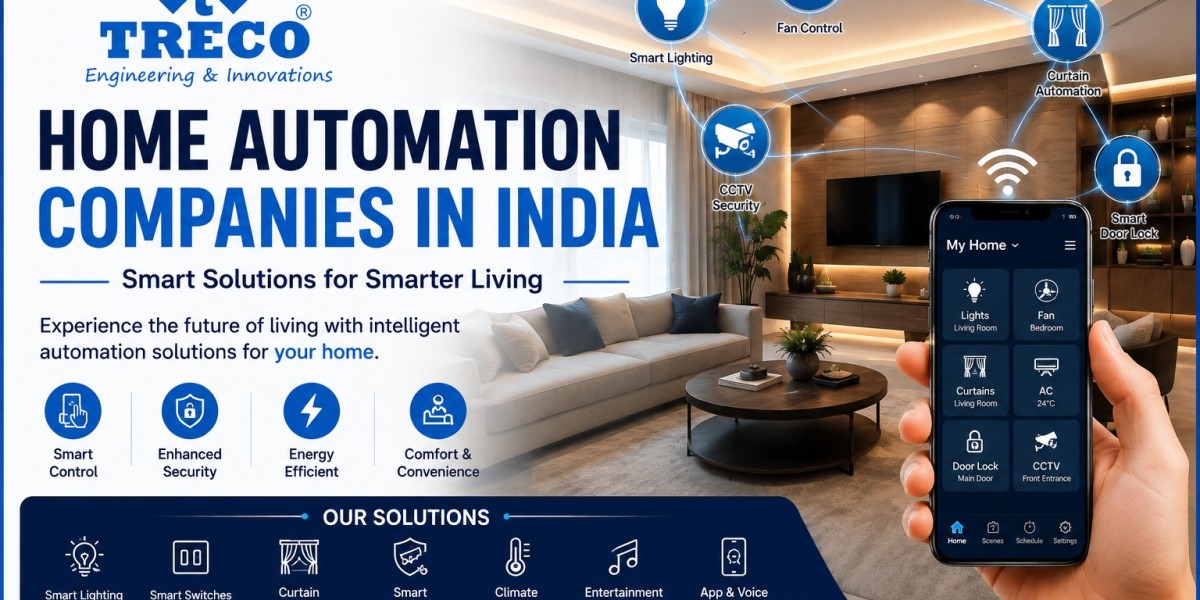

Smart homes are no longer limited to luxury apartments or futuristic showrooms. From smart lighting and Wi-Fi touch switches to automated curtains, security systems, and voice-controlled appliances, home automation is becoming a practical part of modern Indian homes.
But with so many home automation companies in India, choosing the right one can be confusing. Should you select a product brand, a professional system integrator, or a company that provides a complete end-to-end solution?
The answer depends on your home, budget, wiring, lifestyle, and the level of automation you actually need. This guide explains what to look for and how to compare the best home automation companies in India before making a decision.
Why Home Automation Is Growing in India
India's smart home market is moving beyond basic smart bulbs and speakers. Homeowners are increasingly looking for connected lighting, security, climate control, entertainment, energy management, and centralized control.
According to IBEF, India's smart home market was valued at around ₹8,000 crore in 2023 and is projected to reach approximately ₹36,000 crore by 2028. The growth is being supported by increasing digital adoption, changing lifestyles, urbanization, and demand for smart and energy-efficient products.
In reality, the biggest attraction isn't technology for its own sake. It's convenience.
Imagine arriving home and having the lights, air conditioning, curtains, and selected appliances respond automatically. Or turning everything off with one command before going to bed. That's where professional automation becomes genuinely useful.
What Do Home Automation Companies in India Offer?
A professional home automation company India homeowners choose should ideally provide more than individual smart devices. A complete solution can combine multiple systems into one connected environment.
Common automation solutions include:
Smart lighting automation – Control lights through touch panels, mobile apps, sensors, schedules, or voice commands.
Smart touch switches – Replace conventional switches with connected Wi-Fi or wired control systems.
Curtain and blind automation – Open and close curtains according to schedules, scenes, or sunlight.
Climate control – Automate air conditioners, thermostats, fans, and related equipment.
Home security – Integrate smart locks, video doorbells, cameras, motion sensors, and alerts.
Entertainment automation – Control televisions, speakers, projectors, and home theatre equipment.
Energy management – Monitor and automate selected loads to improve energy efficiency.
Scene control – Create routines such as “Movie,” “Good Morning,” “Away,” or “Night.”
The important point is integration. Buying ten smart products doesn't automatically create a smart home if those products don't work well together.
Types of Home Automation Companies You’ll Find
Not all top home automation companies in India operate in the same way. Understanding the difference makes comparison much easier.
1. Smart Device Brands
These companies generally sell individual products such as smart bulbs, plugs, cameras, switches, locks, and sensors.
They're suitable for homeowners who want affordable, room-by-room automation and prefer DIY installation or simple setups.
2. Professional Home Automation Integrators
Integrators design and install complete automation systems. They can combine lighting, curtains, HVAC, security, entertainment, and other systems according to the property.
This approach is usually better for villas, premium apartments, new construction, and homeowners looking for centralized control.
3. Electrical and Building Automation Brands
Large electrical technology companies also offer smart-home and building-control solutions. Their advantage can include established product ecosystems, engineering expertise, and extensive distribution networks.
For larger projects, however, the installer or integrator's expertise can be just as important as the brand printed on the device.
How to Compare the Best Home Automation Companies in India
Don't choose a company simply because its website looks impressive. Before signing a project, compare these factors:
Technology and Compatibility
Ask which communication technologies and ecosystems the company supports. Depending on the project, this could include Wi-Fi, Zigbee, Bluetooth, KNX, Matter, or proprietary systems.
Compatibility matters because you don't want today's automation investment to become difficult to expand later.
Installation Quality
Professional installation is critical for wired automation and larger projects. Ask whether the company provides:
Site surveys
Electrical planning
System design
Professional installation
Testing and commissioning
User training
After-Sales Support
Smart homes contain electronics, software, networks, and electrical components. So support matters.
Find out about warranty coverage, maintenance, troubleshooting, software updates, and replacement policies before purchasing.
Scalability
Your requirements may change after a year or two. A good system should allow you to add more lights, sensors, curtains, security devices, or rooms without rebuilding everything.
Product Safety and Standards
Don't ignore product quality when comparing prices. BIS provides a searchable platform for Indian Standards and certification-related information, while certain products are subject to compulsory certification requirements depending on applicable regulations.
Why Professional Integration Matters
One common mistake is assuming that home automation is simply about installing smart switches.
A properly designed system considers electrical loads, network coverage, device compatibility, user experience, automation logic, security, and future expansion.
For example, a homeowner might want lights to turn on when motion is detected. A professional integrator can take that idea further by creating conditions based on time, occupancy, ambient lighting, and room usage.
BIS's IoT handbook also describes smart-home automation as an application of interconnected devices, sensors, and actuators that can communicate and respond to information, including applications such as smart lighting, security, and energy efficiency.
Frequently Asked Questions
Which are the best home automation companies in India?
There isn't one company that's best for every homeowner. The right choice depends on technology, budget, product compatibility, installation expertise, project size, and after-sales support. Compare the complete solution rather than looking only at brand recognition.
How much does home automation cost in India?
The cost varies significantly depending on the number of rooms, products, wiring, control systems, security requirements, and level of customization. A basic setup can be relatively affordable, while a fully integrated villa automation project can require a much larger investment.
Is home automation useful for existing homes?
Yes. Wireless and retrofit solutions can automate many existing homes without major electrical modifications. However, wired systems may be preferable during new construction or renovation when electrical planning can be done from the beginning.
Is smart home automation difficult to use?
A well-designed system shouldn't be. The best systems simplify everyday tasks through intuitive apps, touch panels, voice commands, sensors, and automated scenes.
Final Thoughts
The growing number of home automation companies in India gives homeowners more choices than ever, but it also makes comparison more important. Don't select a company only because it offers the cheapest package or the longest feature list.
Look at the complete picture: technology, compatibility, installation, reliability, scalability, safety, and after-sales service.
Ultimately, the best smart home isn't the one with the most devices. It's the one where technology quietly works in the background and makes everyday living more comfortable, secure, efficient, and convenient.