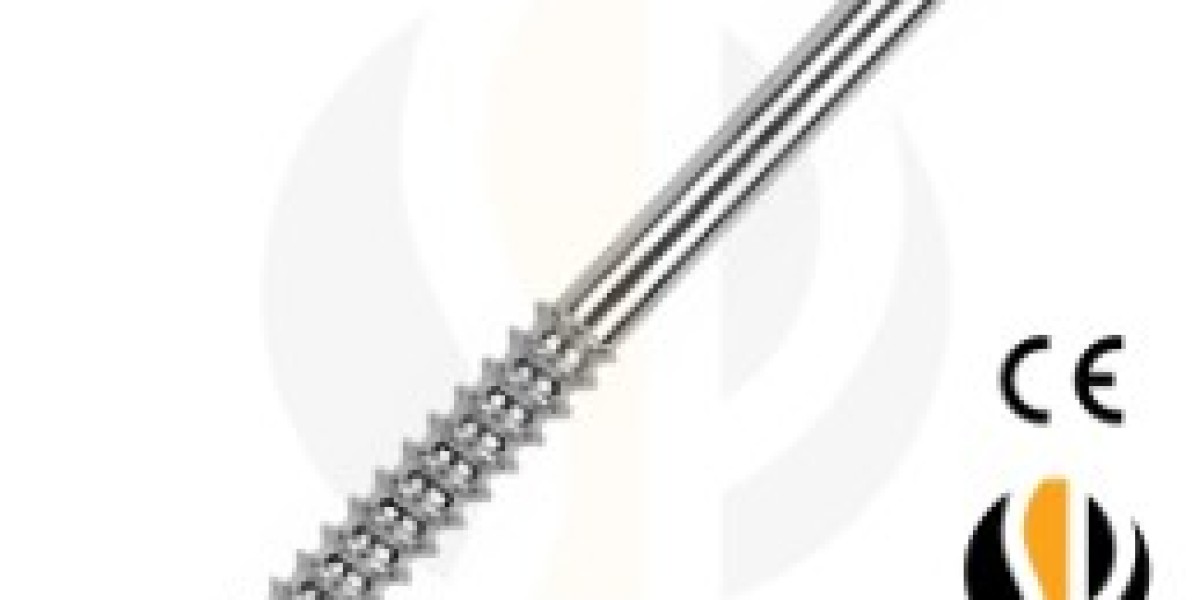

3.5mm Malleolar Screws are commonly used fixation devices in orthopedic trauma procedures involving the ankle and malleolar region. Their design provides surgeons with an option for stabilizing selected fractures while maintaining controlled compression and reliable fixation. Successful use depends on appropriate implant selection, fracture assessment, surgical planning, and proper technique.
This article discusses the general surgical considerations and techniques associated with 3.5mm Malleolar Screws, including patient assessment, implant selection, preparation, insertion, fixation principles, and postoperative considerations.
What Are 3.5mm Malleolar Screws?
3.5mm Malleolar Screws are orthopedic fixation screws designed for use in selected fracture fixation procedures around the ankle. Depending on their specific design, they may be used to secure fracture fragments and provide compression across a fracture site.
The 3.5mm designation generally refers to the nominal diameter of the screw. However, the exact dimensions, thread configuration, head design, material, and available lengths can vary between manufacturers and screw systems.
For healthcare professionals evaluating implant options, stahlmann pro provides orthopedic implant and surgical instrument solutions intended for various trauma and orthopedic applications.
Common Surgical Applications
Malleolar screws may be considered in procedures involving fractures of the ankle, particularly when a screw can provide appropriate stabilization of a fracture fragment.
Potential applications can include:
- Selected medial malleolar fractures
- Fixation of suitable lateral malleolar fracture fragments
- Fragment fixation where screw compression is appropriate
- Supplemental fixation alongside plates
- Selected osteotomy or reconstructive procedures where appropriate
The exact application depends on fracture morphology, bone quality, fragment size, soft tissue condition, and the surgeon's preferred fixation strategy.
Preoperative Assessment
Careful preoperative evaluation is essential before selecting a 3.5mm screw. Radiographs are commonly used to understand fracture alignment and displacement, while CT imaging may be useful for complex ankle fractures or fractures with multiple components.
Important factors to evaluate include:
Fracture Pattern
The orientation and size of the fracture fragment influence screw direction, length, and fixation strategy. The surgeon should determine whether the fragment can safely accommodate the selected screw without causing fragmentation.
Bone Quality
Bone density can affect screw purchase and fixation strength. Patients with compromised bone quality may require modifications to the fixation strategy or additional stabilization.
Soft Tissue Condition
Swelling, bruising, skin condition, and soft tissue injury should be assessed before surgery. Significant swelling may influence surgical timing and incision planning.
Neurovascular Status
A documented neurovascular examination before surgery provides an important baseline and assists with postoperative assessment.
Selecting the Appropriate Screw
Choosing the correct implant requires consideration of several characteristics.
Diameter: A 3.5mm screw may be appropriate for particular fracture fragments, but the diameter must correspond to the anatomy and fixation requirements.
Length: The screw should provide sufficient purchase while avoiding unnecessary penetration of surrounding structures.
Thread design: Thread configuration influences how the screw engages bone and how compression or fixation is achieved.
Head configuration: The screw head should work appropriately with the intended surgical technique and, where applicable, countersinking or plate compatibility.
Material: Implant material should be compatible with the intended clinical application and manufacturer specifications.
Surgeons should always follow the specific instructions for use provided with the implant system.
Surgical Preparation
Before insertion, the operative field is prepared according to standard orthopedic surgical protocols. Appropriate positioning provides access to the fracture while allowing fluoroscopic assessment when required.
The surgical team should verify:
- Correct patient and operative site
- Appropriate imaging
- Correct implant size and length
- Required surgical instruments
- Availability of alternative screw sizes
- Sterility and implant packaging integrity
Preoperative planning can help reduce unnecessary implant exchanges during surgery.
General Insertion Technique
The exact technique varies according to fracture type and implant design. A typical screw fixation procedure may involve fracture reduction, guidewire placement, drilling where required, screw measurement, and controlled insertion.
1. Achieve Fracture Reduction
The fracture is carefully reduced using an appropriate technique. Restoration of anatomical alignment is particularly important in intra articular ankle fractures because malalignment can affect joint mechanics.
Temporary fixation may be used to maintain reduction while definitive fixation is performed.
2. Establish the Screw Trajectory
The planned screw trajectory should provide adequate purchase in the intended bone while avoiding important anatomical structures.
Fluoroscopy can help confirm the trajectory in appropriate cases.
3. Prepare the Bone
Depending on the screw system and technique, drilling or other preparation may be required. The appropriate drill diameter should be selected according to the manufacturer's surgical instructions.
Care should be taken to avoid excessive drilling, thermal injury, or unnecessary removal of supporting bone.
4. Determine Screw Length
A depth gauge or approved measurement method can be used to determine the appropriate screw length.
Accurate measurement helps provide sufficient fixation without excessive protrusion beyond the intended bone.
5. Insert the Screw
The screw is inserted using the appropriate driver. Controlled insertion helps maintain fracture reduction and minimizes the risk of stripping the screw head or damaging the implant.
When compression is intended, the surgeon should ensure that the selected screw configuration and technique are appropriate for achieving compression across the fracture.
6. Confirm Fixation
After insertion, fracture alignment and implant position should be assessed. Imaging may be used to confirm satisfactory placement and ensure that the screw does not extend into the ankle joint or other unintended structures.
Avoiding Common Technical Problems
Several technical issues can compromise fixation.
Incorrect Screw Length
A screw that is too short may provide inadequate purchase, while excessive length may create soft tissue irritation or risk injury to nearby structures.
Poor Screw Trajectory
An incorrect trajectory can reduce fixation quality or result in unintended penetration. Careful preoperative planning and imaging can help reduce this risk.
Loss of Reduction
Fracture reduction should be maintained during drilling and screw insertion. Temporary fixation may help stabilize the fracture while definitive fixation is performed.
Excessive Tightening
Over tightening can potentially damage bone, particularly when bone quality is poor. Screw insertion should therefore be controlled according to the fixation objective and implant instructions.
Role of Imaging
Intraoperative imaging can be valuable during ankle fracture fixation. Multiple views may be required to evaluate fracture reduction and screw position.
The surgeon should assess:
- Fracture alignment
- Joint congruity
- Screw trajectory
- Screw length
- Hardware position
- Relationship to surrounding anatomy
Final imaging should confirm that fixation meets the planned surgical objectives.
Postoperative Considerations
Postoperative management depends on the fracture, fixation stability, soft tissue condition, patient factors, and surgeon preference.
Potential considerations include:
- Monitoring wound condition
- Assessing neurovascular status
- Managing postoperative swelling and pain
- Determining appropriate weight bearing
- Follow up radiographs
- Monitoring fracture healing
- Evaluating hardware position
Weight bearing should be determined by the treating surgeon based on fixation stability and fracture healing.
Advantages of Appropriate Screw Fixation
When properly selected and positioned, malleolar screws can provide several fixation benefits. These may include targeted stabilization of fracture fragments, controlled compression, relatively straightforward insertion, and compatibility with other fixation methods.
However, no fixation device is appropriate for every fracture. Implant selection should always be based on the patient's anatomy and fracture characteristics rather than screw diameter alone.
Considerations When Choosing an Implant System
Hospitals and orthopedic teams evaluating stahlmann pro products should consider factors such as available screw dimensions, instrumentation compatibility, implant materials, documentation, and the manufacturer's instructions for use.
Consistency between the implant and its dedicated instruments can help support an organized surgical workflow. Surgical teams should also ensure that staff are familiar with the relevant instrumentation before beginning a procedure.
Conclusion
3.5mm Malleolar Screws can play an important role in selected ankle fracture fixation procedures. Successful application requires more than choosing the correct screw diameter. Fracture morphology, bone quality, implant length, screw trajectory, reduction quality, and intraoperative imaging all contribute to fixation outcomes.
Careful preoperative planning and adherence to the manufacturer's instructions for use are essential. Surgeons should select implants according to the specific clinical situation and use appropriate fixation techniques to achieve stable fracture management.