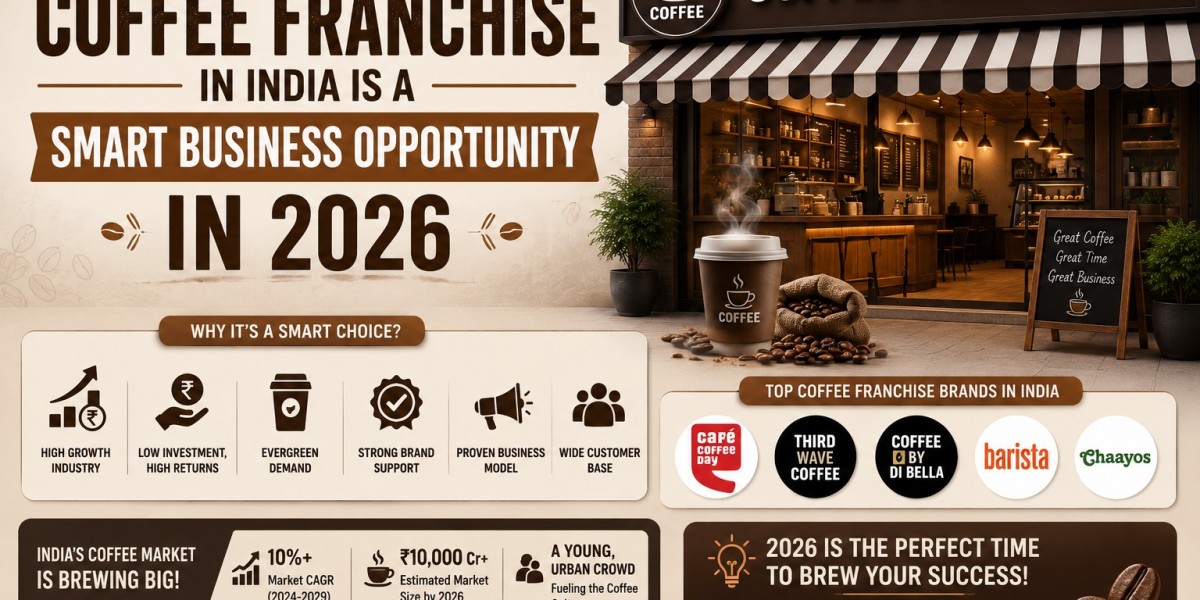

India’s café culture has changed significantly in recent years. Coffee is no longer limited to a morning beverage or something enjoyed occasionally at restaurants. Today, cafés have become popular places for meetings, casual conversations, remote work, social gatherings, and relaxation. With changing consumer preferences and growing demand for convenient food and beverages, the café industry continues to attract aspiring entrepreneurs.
For investors looking for a business model with an established structure and consumer demand, a coffee franchise in India can be an attractive option in 2026. Franchising allows entrepreneurs to operate under an established brand while receiving support in areas such as operations, training, marketing, and product development.
Growing Coffee Culture Across India
Coffee consumption in India is evolving beyond traditional coffee-drinking regions. Metropolitan cities, emerging urban centres, and even smaller towns are witnessing an increase in café visits. Younger consumers are particularly interested in premium beverages, attractive café environments, quick snacks, and experiences that can be shared on social media.
This shift is creating opportunities for businesses that can provide quality coffee along with a comfortable and appealing environment. From students and professionals to families and tourists, cafés can attract different customer groups throughout the day.
The expansion of food delivery platforms has also made it easier for cafés to serve customers beyond their physical locations. A well-managed outlet can therefore combine dine-in, takeaway, and delivery channels to increase its potential customer base.
Why Franchising Can Be Advantageous
Starting an independent café requires entrepreneurs to develop almost everything from the ground up. This may include creating a brand identity, developing recipes, selecting suppliers, establishing operating procedures, designing the outlet, and building customer awareness.
A franchise model can simplify many of these challenges. Entrepreneurs typically receive access to an established business format and operational guidelines. Depending on the franchise agreement, support may cover staff training, store setup, menu planning, marketing, procurement, and ongoing business assistance.
For first-time business owners, this structured approach can reduce some of the uncertainty associated with launching a new café.
Strong Demand for Café Experiences
Modern consumers often choose cafés for more than just coffee. The overall experience can influence where and how frequently they visit. Comfortable seating, attractive interiors, reliable Wi-Fi, convenient locations, friendly service, and a diverse menu can all contribute to customer loyalty.
A successful coffee franchise in India can benefit from this growing preference for experience-driven dining. Entrepreneurs can target specific customer segments based on location. For example, outlets near colleges may attract students, while cafés near corporate offices can focus on professionals looking for quick meals, coffee breaks, or informal meetings.
Understanding the local audience is therefore essential when selecting a franchise location.
Multiple Revenue Opportunities
Coffee shops can generate revenue from several product categories rather than depending entirely on coffee sales. Depending on the brand and business model, the menu may include hot and cold beverages, specialty coffees, teas, sandwiches, desserts, bakery products, snacks, and seasonal offerings.
This diversified menu can increase the average customer transaction value. A customer visiting for a coffee may also purchase a snack or dessert, creating an opportunity to increase revenue per visit.
Takeaway orders and online delivery can provide additional sales channels. Catering for small corporate meetings, events, or private gatherings may also create supplementary business opportunities for suitable outlets.
Support for New Entrepreneurs
One of the biggest challenges for first-time entrepreneurs is understanding the daily operational requirements of a food and beverage business. A franchise can provide a predefined system that helps the owner understand how the outlet should function.
Training may cover areas such as beverage preparation, customer service, inventory management, hygiene standards, staff responsibilities, and billing procedures. Marketing assistance can also help a new outlet establish visibility in its target market.
However, entrepreneurs should carefully review the exact support offered before signing a franchise agreement. Not every franchise provides the same level of assistance, so investors should compare their options thoroughly.
Importance of Location
Location remains one of the most important factors influencing café performance. A strong brand may still struggle if an outlet is placed in an area with limited foot traffic or poor accessibility.
Potential locations should be evaluated based on factors such as visibility, parking availability, nearby businesses, residential density, educational institutions, offices, shopping areas, and competition.
Rent is another important consideration. A high-traffic location may attract more customers but could also involve significantly higher occupancy costs. Entrepreneurs should therefore evaluate expected sales against rent, staffing, utilities, raw materials, marketing, and other operating expenses.
Technology Is Reshaping Café Businesses
Technology is playing an increasingly important role in the food and beverage sector. Digital payments, online ordering, loyalty programmes, inventory management systems, customer databases, and delivery platforms can improve operational efficiency.
Franchise outlets can also use social media to promote new products, limited-time offers, seasonal beverages, and customer experiences. Digital marketing can be particularly useful for reaching younger audiences.
Data from sales and customer interactions can help business owners understand which products perform well and when demand is highest. Such information can support better inventory planning and reduce unnecessary wastage.
What Investors Should Consider Before Starting
Although the café industry offers opportunities, it is not automatically profitable. Entrepreneurs need to conduct proper research before investing. The initial franchise fee is only one part of the total investment.
Other expenses may include outlet interiors, equipment, rent deposits, licenses, staff salaries, inventory, technology, utilities, marketing, and working capital. Investors should prepare a realistic financial plan covering both startup and ongoing costs.
It is also important to understand the franchise agreement, royalty structure, renewal terms, territory restrictions, supplier requirements, and exit conditions. Speaking with existing franchisees can provide useful insight into the actual experience of operating the business.
Why 2026 Could Be a Good Time to Enter
The combination of expanding café culture, changing consumer habits, digital ordering, and demand for convenient social spaces makes the sector interesting for entrepreneurs in 2026.
A coffee franchise in India can offer a balance between brand support and entrepreneurial ownership. Instead of spending years building brand recognition from scratch, franchise owners can work within an established framework while focusing on local operations, customer relationships, and business growth.
The key is to choose a brand whose products, pricing, support system, and business model match the target market.
Final Thoughts
India’s evolving café culture presents meaningful opportunities for entrepreneurs who understand their customers and manage costs carefully. A franchise model can provide a practical starting point for individuals who want to enter the food and beverage industry without developing every aspect of the business independently.
Before investing, entrepreneurs should compare brands, study the market, evaluate locations, understand the complete investment requirement, and assess the level of franchisor support.
For the right entrepreneur, a coffee franchise in India in 2026 can become more than a café—it can develop into a scalable business built around a growing culture of coffee, convenience, and community.