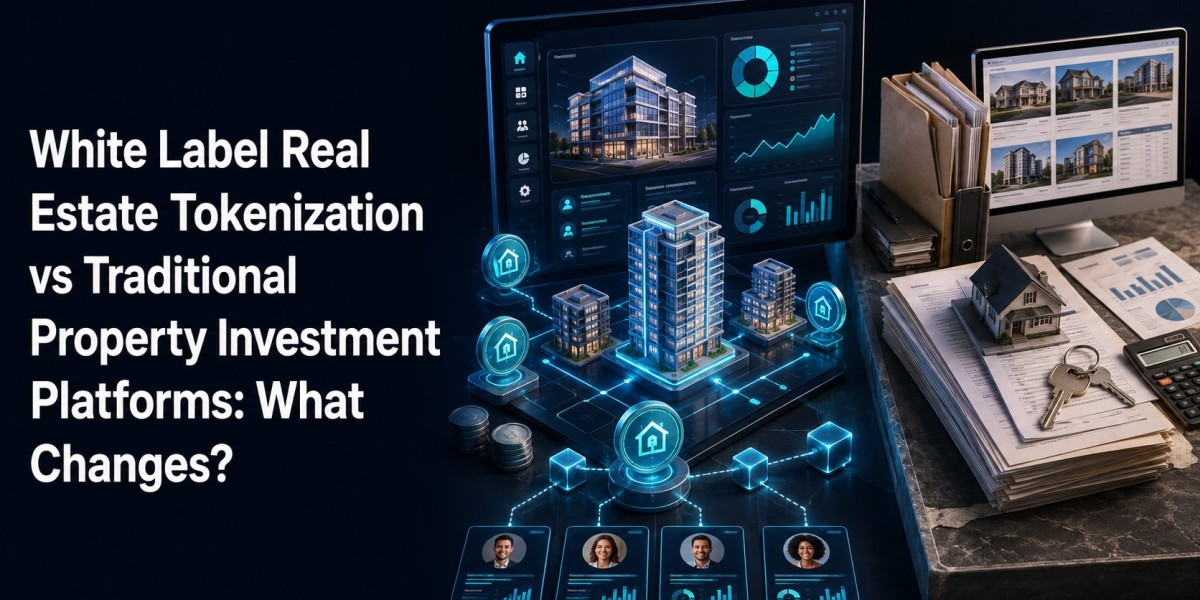

Real estate investment has traditionally depended on property funds, investment portals, private syndicates, brokers, and other digital platforms that connect investors with property opportunities. These models have served the market for years, but blockchain-based property ownership is introducing another way to structure and manage real estate investments. White Label Real Estate Tokenization allows businesses to launch a branded platform where eligible property interests can be represented through digital tokens and managed through blockchain infrastructure.
The difference is not simply about replacing a traditional website with blockchain technology. The underlying investment structure, investor access, ownership records, transaction processes, compliance controls, and secondary trading options can all change. A traditional platform usually manages investment records through centralized databases and conventional financial processes. A tokenization platform can record ownership or economic rights on a blockchain while using smart contracts for specific operational functions.
For businesses considering this model, understanding these differences matters before selecting a platform strategy. The following comparison looks at what changes when a traditional property investment platform moves toward a White Label Real Estate Tokenization Platform.
1. How Property Ownership Is Represented
Traditional property investment platforms generally represent an investor's interest through contracts, fund units, shares, membership interests, or internal account records. The investor may receive documents confirming their participation, while the platform maintains records in its own database.
With real estate tokenization, the property interest can be represented through digital tokens. Depending on the legal structure, the token may represent ownership in a legal entity holding the property, a contractual claim, revenue participation, or another form of economic interest.
This creates a different relationship between the investment record and the technology managing it. A White Label Tokenization Platform can connect token balances with investor accounts and blockchain records. However, the legal rights attached to each token still need to be defined through appropriate agreements and jurisdiction-specific structures.
2. Investor Onboarding Takes a Different Form
Traditional property platforms usually collect investor information through account registration, identity checks, payment processing, suitability assessments, and document signing. Much of this process occurs through centralized systems.
A tokenized platform follows a similar regulatory path but adds blockchain-specific components. Investors may need to connect a blockchain wallet, receive an approved wallet status, and complete checks before acquiring tokens. Some platforms may use custodial wallets so investors do not need to manage blockchain credentials themselves.
White Label Real Estate Tokenization Services can include investor onboarding modules that connect identity verification, compliance checks, wallet management, payment processing, and investor permissions within one platform environment.
The important point is that tokenization does not remove investor verification. It changes how verified investors interact with the investment infrastructure.
3. Fractional Property Investment Can Become More Practical
Traditional property investment often requires a relatively high minimum investment. A property may be divided through a fund or syndication structure, but the investment units still depend on conventional financial arrangements.
Tokenization can divide eligible property interests into a larger number of digital units. For example, a commercial property could be associated with 100,000 tokens, with each token representing a defined economic interest under the legal structure.
This does not automatically mean that every property becomes accessible to every investor. Regulations, offering rules, investor eligibility, minimum investment requirements, and jurisdictional restrictions still apply.
The major difference is that digital token units can provide a more granular way to represent fractional interests.
4. Transaction Processing Changes
Traditional property investment platforms generally depend on bank transfers, payment processors, manual reconciliation, and centralized databases. After an investment is completed, platform administrators update ownership records and maintain transaction histories.
A tokenized system can use blockchain transactions for token issuance, transfers, and ownership records. Smart contracts can also apply predefined rules to certain transactions.
For example, a smart contract may restrict transfers to approved wallets. It may also record token movements according to the platform's rules.
This can reduce some manual recordkeeping, but it does not remove the need for administrative oversight. Real estate transactions involve legal documents, tax considerations, property management, banking, and regulatory reporting that exist outside the blockchain.
5. Secondary Trading May Follow a Different Model
One of the most discussed differences between traditional property investment platforms and tokenized platforms is secondary trading.
Traditional property investments can be difficult to transfer before an exit, redemption event, property sale, or fund-defined liquidity event. Some platforms may provide resale mechanisms, but these depend heavily on the investment structure and applicable regulations.
A tokenized platform can include a secondary marketplace where eligible investors trade tokens subject to transfer restrictions. A White Label Real Estate Tokenization Platform may include marketplace functionality, order management, wallet verification, investor permissions, and transaction records.
However, tokenization does not guarantee liquidity. A secondary market needs sufficient participants, legal permission, suitable market infrastructure, and investor demand. A token can be technically transferable while still having limited market activity.
6. Records and Ownership Tracking Become More Integrated
Traditional systems usually store investment records in private databases. Administrators control the database and provide account statements or reports to investors.
Blockchain-based systems introduce a shared transaction ledger. Token transfers can be recorded on-chain, allowing authorized parties to verify transaction history according to the selected blockchain design.
The platform may still maintain an off-chain database for investor profiles, compliance information, property documents, reporting, and operational data. Therefore, tokenization does not necessarily mean that every piece of information moves onto the blockchain.
White Label Real Estate Tokenization Development typically involves connecting on-chain token records with off-chain business systems. This combination is important because real estate requires both blockchain infrastructure and conventional operational systems.
7. Smart Contracts Add Programmable Rules
Traditional property platforms rely heavily on application logic, administrators, contracts, and database rules. Tokenized platforms can add smart contracts to manage certain token-related activities.
A smart contract may define issuance limits, transfer restrictions, token balances, distribution calculations, or approved wallet requirements. The exact functions depend on the platform's legal and business model.
This can reduce repetitive manual actions in selected areas. At the same time, smart contracts require careful testing because programming errors can affect transactions or token balances.
A White Label Real Estate Tokenization Platform should therefore include contract review, security testing, permission controls, and procedures for handling exceptional situations.
8. Compliance Becomes More Technology-Dependent
Compliance already plays a major role in traditional property investment platforms. Investor identity, eligibility, documentation, tax information, financial regulations, and reporting requirements all need attention.
Tokenization adds another layer. The platform may need wallet screening, transfer restrictions, token-holder eligibility checks, transaction monitoring, and rules governing who can hold or transfer specific tokens.
A White Label Real Estate Tokenization Development project should therefore begin with the intended jurisdiction and legal structure rather than starting with the blockchain technology alone.
The technology should reflect the compliance framework. For instance, if tokens can only be transferred between verified investors, the platform must have a reliable way to verify wallet ownership and investor status.
9. Platform Architecture Becomes More Complex
A conventional property investment platform may include a website or application, user accounts, property listings, payment processing, document management, an administration panel, and a database.
A tokenization platform can contain these components plus blockchain connectivity, smart contracts, wallet infrastructure, token management, blockchain transaction monitoring, and potentially a secondary marketplace.
This creates additional technical considerations. The platform needs to coordinate blockchain transactions with property data, investor records, payment systems, compliance tools, and administrative functions.
For businesses that do not want to develop every component internally, White Label Real Estate Tokenization Services can provide pre-existing platform infrastructure that can be configured for a particular business model and brand.
10. Business Launch Time Can Differ
Creating a traditional investment platform from the ground up can require considerable development work. The same is true for a fully custom tokenization platform, particularly when blockchain infrastructure and smart contracts are included.
A white-label model approaches the process differently. Instead of developing every platform component from the beginning, a business can start with an existing tokenization framework and configure branding, user flows, property categories, token models, administrative functions, and other requirements.
White Label Real Estate Tokenization can therefore reduce the amount of initial product development compared with creating an entirely new platform. The actual timeline still depends on compliance requirements, integrations, jurisdiction, token structure, testing, and the amount of modification required.
11. Revenue Models Can Expand
Traditional property investment platforms can generate revenue through listing fees, management fees, transaction charges, subscription plans, asset management fees, or other business arrangements.
A tokenized platform can use similar revenue models while adding fees associated with token issuance, trading, marketplace transactions, asset administration, or other platform services.
The revenue opportunity depends on the business structure rather than tokenization alone. A company should define who pays each fee, when it is charged, and what service the fee represents before launching the platform.
12. Investor Experience Changes, but Real Estate Fundamentals Remain
From the investor's perspective, the interface may still look familiar. An investor can browse properties, review investment details, complete verification, invest funds, and monitor holdings.
The difference appears in how ownership interests are represented and managed behind that interface. Token balances can provide a digital representation of an investment interest, while blockchain transactions can record transfers.
Yet tokenization does not change the fundamental performance of the underlying property. Rental income, occupancy, property expenses, market conditions, debt, maintenance, taxes, and property valuation continue to influence investment outcomes.
Blockchain changes the investment infrastructure, not the physical economics of the building.
13. What Businesses Should Consider Before Choosing a Model
Businesses comparing traditional property investment software with tokenization should begin with their intended investment structure. The first question is not whether blockchain is popular. It is whether tokenization provides a useful structure for the assets, investors, transactions, and regulatory environment involved.
The business should evaluate the type of properties it plans to list, target investor groups, expected investment sizes, ownership structure, distribution model, transfer restrictions, payment methods, compliance requirements, and potential secondary-market plans.
Technical requirements should then be mapped against those business conditions.
For companies seeking faster entry into the market, a White Label Tokenization Platform may provide a practical starting point. Businesses seeking highly specialized workflows may consider greater platform modification or a fully custom development approach.
14. White Label vs Traditional Platform at a Glance
The two models differ across several areas:
| Area | Traditional Property Platform | Tokenized Property Platform |
|---|---|---|
| Ownership records | Centralized database and legal documents | Blockchain token records plus legal documents |
| Investment units | Shares, fund units, contracts, or memberships | Digital tokens representing defined rights |
| Investor access | Conventional account system | Account plus wallet or custodial wallet |
| Transfers | Usually limited and manually managed | Can be programmed through token rules |
| Secondary trading | Depends on platform and investment structure | Can include a compliant token marketplace |
| Smart contracts | Usually absent | Can manage selected token functions |
| Compliance | Conventional financial checks | Financial checks plus blockchain-specific controls |
| Transaction records | Platform database | Blockchain plus off-chain records |
| Development model | Custom software or existing property software | Custom or White Label Real Estate Tokenization Platform Development |
The table shows that the main difference is not simply the presence of blockchain. Tokenization introduces another layer for representing, transferring, and managing investment interests.
Conclusion
White Label Real Estate Tokenization and traditional property investment platforms serve similar broad goals, but they approach ownership records, investor access, transactions, compliance, and potential secondary trading in different ways. Traditional platforms rely mainly on centralized databases and conventional investment structures, while tokenized platforms combine legal ownership structures with blockchain-based digital representations. For businesses considering a property investment platform, the right choice depends on the assets, investor group, jurisdiction, compliance requirements, operating model, and expected transaction flow. A white-label approach can provide an existing technical foundation without requiring every platform component to be developed from the beginning. Blockchain App Factory provides White Label Real Estate Tokenization Services for businesses looking to establish tokenized property investment platforms with functions covering token management, investor onboarding, property listings, compliance workflows, wallets, and marketplace capabilities.
FAQs
1. What is White Label Real Estate Tokenization?
White Label Real Estate Tokenization refers to using an existing tokenization platform framework that a business can present under its own brand for issuing and managing digital representations of eligible real estate interests.
2. How is a tokenized property platform different from a traditional investment platform?
A tokenized platform can represent investment interests through blockchain-based tokens, while a traditional platform generally relies on centralized databases, contracts, fund units, or other conventional ownership records.
3. Does real estate tokenization guarantee liquidity?
No. Tokenization can provide infrastructure for secondary trading, but liquidity depends on investor demand, legal permissions, market participation, asset quality, and the platform's trading structure.
4. Is blockchain required for fractional real estate investment?
No. Fractional real estate investment can be structured without blockchain. Tokenization adds blockchain-based infrastructure for representing and managing eligible investment interests.
5. What does a White Label Tokenization Platform usually include?
Depending on the provider, it can include property listings, investor accounts, token issuance, wallet management, compliance features, payment integration, administration tools, smart contracts, and secondary-market functions.
6. Why choose White Label Real Estate Tokenization Development?
Businesses may choose this approach when they want to reduce the amount of development required for a new tokenization platform and start from an existing technical framework.
7. Can investors trade real estate tokens?
They may be able to trade tokens when the investment structure, regulations, platform rules, and marketplace arrangements permit such transfers.
8. Does tokenization replace legal property documents?
No. Legal agreements remain important because the token's rights must correspond to a legally recognized ownership or economic structure.
9. What is involved in White Label Real Estate Tokenization Platform Development?
It can involve platform configuration, branding, token contract integration, investor management, property management, compliance workflows, wallet functions, payment systems, administration tools, testing, and deployment.
10. Should a business choose a traditional platform or tokenization?
The decision depends on the business model, asset structure, target investors, jurisdiction, compliance requirements, expected transaction volume, and whether blockchain-based ownership and transfer functions provide practical value.