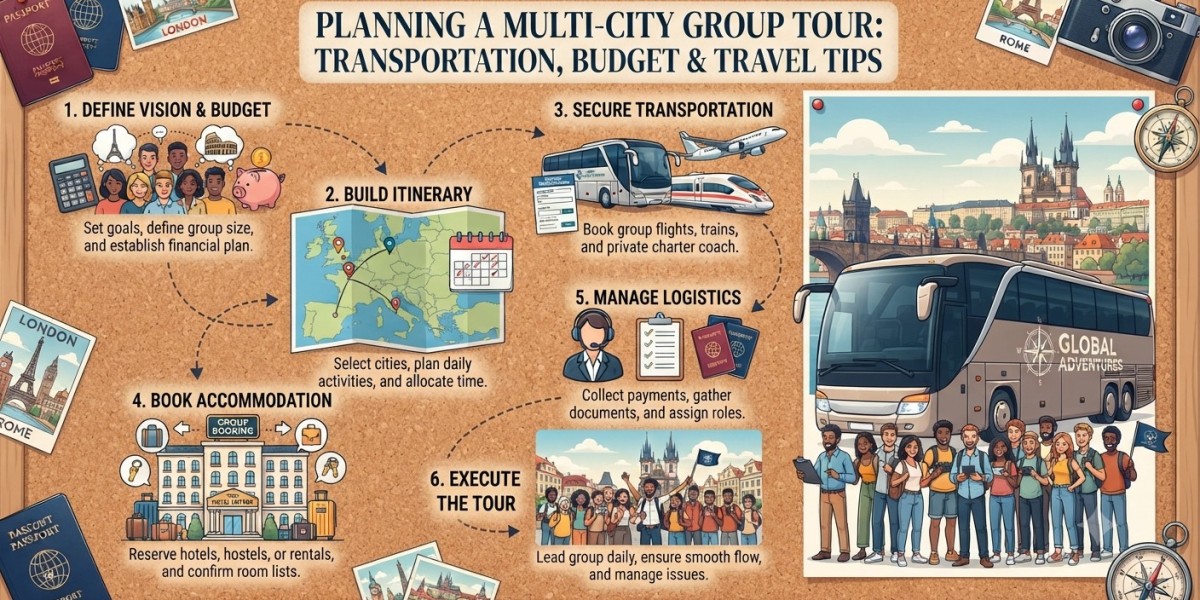

Planning a Multi-city group tour can be an exciting way to experience several destinations together. Whether you are organizing a corporate trip, school tour, family vacation, sports journey, wedding celebration, or group getaway, visiting multiple cities requires careful preparation.
A successful group tour depends on more than choosing interesting destinations. You also need to coordinate transportation, accommodations, activities, meals, schedules, and expenses. With a realistic itinerary and reliable group transportation, you can make the journey more comfortable and organized for everyone.
Start With a Clear Group Tour Plan
Determine Your Group's Needs
Before choosing destinations, determine how many people will travel, how long the trip will last, and what type of experience your group wants. A school group may prioritize educational attractions, while a corporate group may need meeting facilities and flexible schedules.
Consider the ages, mobility needs, interests, and preferences of your travelers. These details will influence your choice of transportation, hotels, activities, and daily schedule.
Set Your Travel Dates
Choose travel dates that work for the majority of your group. Check major events, festivals, holidays, and peak tourism periods in your planned destinations.
Traveling during busy periods can affect hotel availability, attraction reservations, traffic, and charter bus rental costs. Booking important services early can give your group more options.
Choose a Practical Multi-City Route
Select Destinations That Work Together
When planning multi-city group travel, avoid selecting destinations simply because they are popular. Instead, create a route that makes geographical sense.
Map the distance between each city and estimate how long the group will spend traveling. A route with fewer unnecessary detours can provide more time for sightseeing and relaxation.
Build Travel Time Into the Itinerary
Long-distance travel can take longer than expected because of traffic, construction, weather, rest breaks, and passenger boarding.
When creating your itinerary, avoid scheduling important activities immediately after a long drive. Give your group enough time to arrive, check into accommodations, and get comfortable.
Choose the Right Transportation
Consider a Charter Bus Rental
Transportation is one of the biggest considerations for a multi-city group tour. Coordinating several personal vehicles can be challenging when traveling with a large group.
A charter bus rental allows everyone to travel together while a professional driver handles the driving and navigation. This can make long-distance travel easier and help keep the group on the same schedule.
Depending on your group size, you may be able to choose a vehicle with comfortable reclining seats, air conditioning, luggage storage, Wi-Fi, power outlets, and an onboard restroom.
Match the Bus to Your Group Size
The right vehicle depends on the number of travelers and the length of the trip. A smaller group may need a minibus, while a larger group may require a full-size motorcoach.
Discuss your passenger count, luggage requirements, route, and trip duration with your charter bus company before making a reservation. This helps ensure that the selected vehicle meets your group's needs.
Create a Realistic Group Travel Budget
Estimate All Major Expenses
A detailed group travel budget should include more than transportation and hotels. Consider meals, attractions, parking, tolls, activities, and other trip-related expenses.
Transportation costs can depend on mileage, travel dates, vehicle type, trip duration, and the number of passengers. Request a detailed quote so your group understands what is included.
Divide Costs Fairly
If travelers are sharing expenses, determine how costs will be divided before the trip begins. Some groups divide transportation and accommodation costs equally, while others assign certain expenses to individual travelers.
Discuss the payment structure early to avoid confusion during the journey.
Keep an Emergency Fund
Unexpected expenses can occur during any group tour. Traffic delays, itinerary changes, additional parking, weather disruptions, or last-minute activities may affect the budget.
Setting aside a small emergency fund gives your group more flexibility if plans change.
Book Accommodations in Advance
Look for Group-Friendly Hotels
Choose hotels that are convenient for your itinerary and suitable for the size of your group. Staying near major attractions can reduce unnecessary transportation time.
Ask about group rates, room availability, parking, breakfast, meeting spaces, accessibility, and cancellation policies.
Coordinate Hotel Changes
Moving between cities can be tiring for a large group. Keep hotel changes organized by confirming check-in and check-out times in advance.
Share each property's address and contact information with travelers so everyone knows where they will be staying.
Plan Activities Without Overloading the Schedule
Balance Sightseeing and Free Time
A successful multi-city group tour should include enough activities to keep travelers interested without making every day exhausting.
Select major attractions in each destination and leave some free time for shopping, dining, relaxing, or independent sightseeing.
Make Group Reservations Early
Popular attractions can become crowded during peak seasons. Large groups may also need special admission arrangements.
Contact attractions ahead of time to ask about group reservations, guided tours, admission policies, and available time slots.
Keep Everyone Informed
Create a Central Communication System
Communication is essential for group travel planning. Create one central communication channel for schedule updates, pickup information, hotel details, and emergency announcements.
Give every traveler access to the final itinerary before departure.
Set Clear Meeting Times
Large groups can easily become separated in busy cities. Establish specific meeting points and departure times for every major activity.
Encourage travelers to arrive several minutes early so the group can stay on schedule.
Prepare for Unexpected Travel Delays
Allow Extra Time
Traffic, road construction, weather, and other unexpected conditions can affect a multi-city group trip. Build extra time into your itinerary rather than creating a schedule with no flexibility.
Your driver can also help monitor road conditions and adjust the route when appropriate.
Create Backup Activities
Have alternative plans for outdoor attractions or activities that may be affected by weather. A backup museum, indoor attraction, shopping area, or group dining experience can help keep the itinerary moving.
Flexibility is especially important when several cities are included in the same trip.
Review Your Plans Before Departure
Confirm Transportation and Reservations
Before the trip begins, confirm your charter bus rental, hotel reservations, attraction bookings, restaurant reservations, and major activities.
Check the pickup location, departure time, passenger count, luggage requirements, and complete route with your transportation provider.
Share the Final Itinerary
Send travelers a final itinerary containing departure times, destinations, hotel information, activities, meeting locations, and important contact details.
Encourage everyone to arrive early at the first pickup location and keep essential travel items accessible.
Make Your Multi-City Group Tour Easier
A well-planned multi-city group tour combines a practical route, realistic budget, comfortable accommodations, enjoyable activities, and reliable transportation. Starting the planning process early gives you more time to compare options and coordinate everyone involved.
For larger groups, charter bus transportation can simplify travel between destinations by keeping passengers together and reducing the need to coordinate multiple vehicles. With careful planning, clear communication, and a flexible itinerary, your group can enjoy a smoother and more memorable journey across multiple cities.