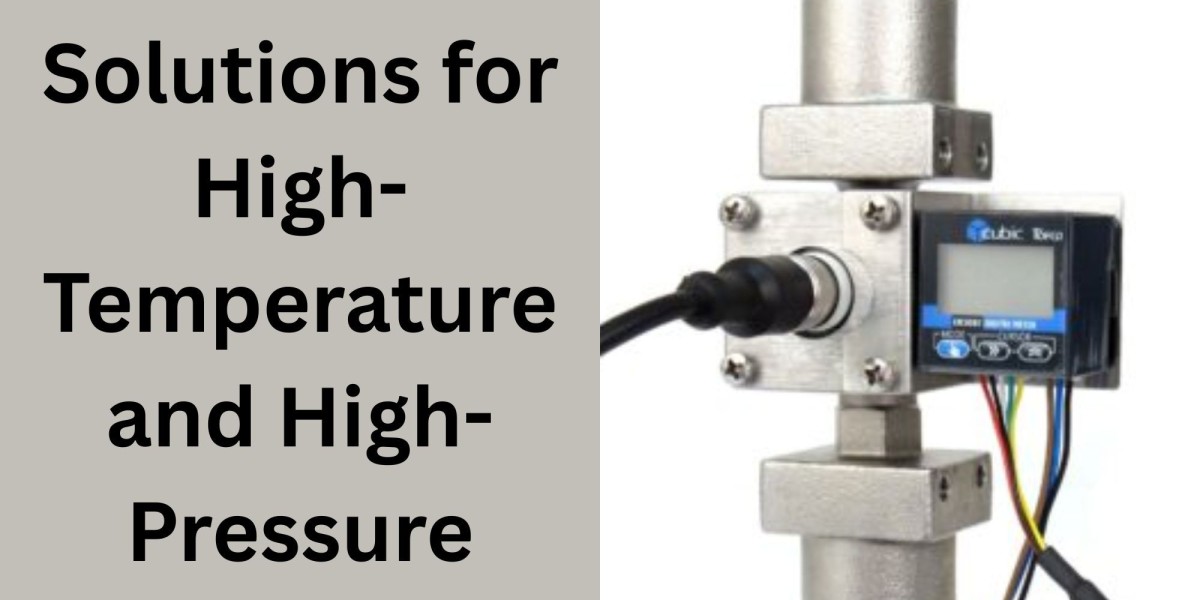

Flow measurement is a critical function in industrial operations where accuracy directly impacts safety, efficiency, and overall product quality. Precise flow data helps industries maintain control over production processes, manage energy consumption, and prevent system failures. Among the many flow measurement technologies available today, vortex-based sensing has gained widespread acceptance due to its reliability and adaptability in challenging operating conditions. This technology is especially valued in environments where temperature and pressure fluctuate significantly.
Vortex-based flow measurement relies on fundamental fluid-dynamics principles rather than complex mechanical systems. By eliminating moving parts, this approach reduces wear, minimizes maintenance requirements, and improves long-term stability. In many industrial applications, the vortex sensor is preferred because it consistently delivers accurate readings even under extreme temperatures and pressures. Its straightforward construction and dependable signal output make it suitable for continuous monitoring in harsh environments such as power plants, chemical facilities, and high-pressure steam systems.
1. Working Principle of Vortex Sensors
Vortex sensors operate by detecting alternating flow patterns that form when a fluid encounters an obstruction in the pipeline. As the liquid flows past this obstruction, it creates vortices on alternating sides, forming a repeating pattern. The frequency at which these vortices are generated is directly related to the fluid velocity, allowing the flow rate to be calculated with high accuracy.
One of the most important advantages of this working principle is the absence of moving components. Without rotating or mechanical parts, the sensor experiences minimal physical wear, even during continuous operation. This design ensures long-term measurement stability and makes vortex sensors particularly effective in applications where flow conditions vary frequently or remain intense for extended periods.
2. Design Features for High-Temperature Environments
Vortex sensors designed for high-temperature applications must withstand extreme thermal stress without losing accuracy or structural integrity. To achieve this, manufacturers use durable materials such as high-grade stainless steel and specialized alloys that resist expansion, deformation, and corrosion. These materials help ensure the sensor maintains its shape and measurement performance even under sustained heat.
In addition to material selection, thermal isolation is critical for protecting sensitive internal components. Robust housing designs and insulation techniques help shield electronics from excessive heat, preventing signal drift or failure. These features make vortex sensors suitable for use in steam systems, thermal processing plants, and other environments where high temperatures are a constant operational challenge.
3. Performance Under High-Pressure Conditions
High-pressure environments place significant mechanical stress on flow measurement devices, requiring sensors that can maintain accuracy and durability under intense force. Vortex sensors are engineered with reinforced bodies that withstand elevated pressures without compromising measurement performance. Their rigid construction prevents pressure fluctuations from distorting the sensing mechanism.
The measurement method itself remains stable even as pressure levels change. Because vortex frequency is primarily influenced by flow velocity rather than pressure, the sensor continues to provide consistent readings. This stability makes vortex sensors a reliable choice for pressurized pipelines, compressed gas systems, and high-pressure industrial processes where precision is essential.
4. Accuracy and Reliability in Harsh Industrial Settings
Industrial environments often expose sensors to vibration, contaminants, moisture, and sudden temperature changes. These factors can negatively affect many measurement technologies, leading to signal noise or drift. Vortex sensors are specifically designed to minimize the impact of such external disturbances, ensuring dependable performance over long periods.
Their robust construction and stable signal output contribute to high measurement accuracy even in harsh conditions. Resistance to mechanical stress and environmental interference allows vortex sensors to operate continuously without frequent recalibration. This reliability helps reduce downtime, improve process consistency, and support long-term operational efficiency.
5. Industrial Applications Requiring Extreme Condition Monitoring
Vortex sensors are widely used in industries where flow measurement under extreme conditions is essential. Power generation facilities rely on them for accurate steam flow monitoring, which is critical for energy efficiency and system safety. Chemical processing plants use vortex sensors to control gas and liquid flows during high-temperature, high-pressure reactions.
Oil and gas operations also rely on vortex sensors to monitor compressed gases and process fluids in demanding environments. Their adaptability allows them to function across a wide range of applications, from HVAC systems to industrial boilers. This versatility supports process optimization and ensures consistent performance in industries where reliable data is vital.
6. Installation and Maintenance Considerations
Proper installation is crucial for achieving accurate and repeatable measurements with vortex sensors. Adequate straight-pipe lengths upstream and downstream of the sensor help stabilize flow patterns before measurement occurs. Correct alignment and positioning further reduce turbulence, ensuring the sensor captures clean and consistent data.
Maintenance requirements for vortex sensors are minimal because they have no moving parts. Routine inspections and periodic checks are usually sufficient to maintain performance. This low-maintenance design reduces operational costs, making vortex sensors a practical long-term solution for industrial flow measurement.
7. Conclusion: Reliable Flow Measurement in Extreme Conditions
Vortex sensors offer a reliable and efficient solution for flow measurement in high-temperature, high-pressure processes. Their rugged design, stable accuracy, and resistance to harsh operating conditions make them well-suited for demanding industrial applications. By combining durability with precision, vortex sensors support consistent process control and improved system reliability.
When the appropriate sensor configuration is selected and proper installation practices are followed, industries can achieve accurate flow monitoring even in the most extreme environments. As industrial processes continue to demand higher performance and reliability, vortex sensors remain a trusted technology for maintaining operational efficiency and safety.