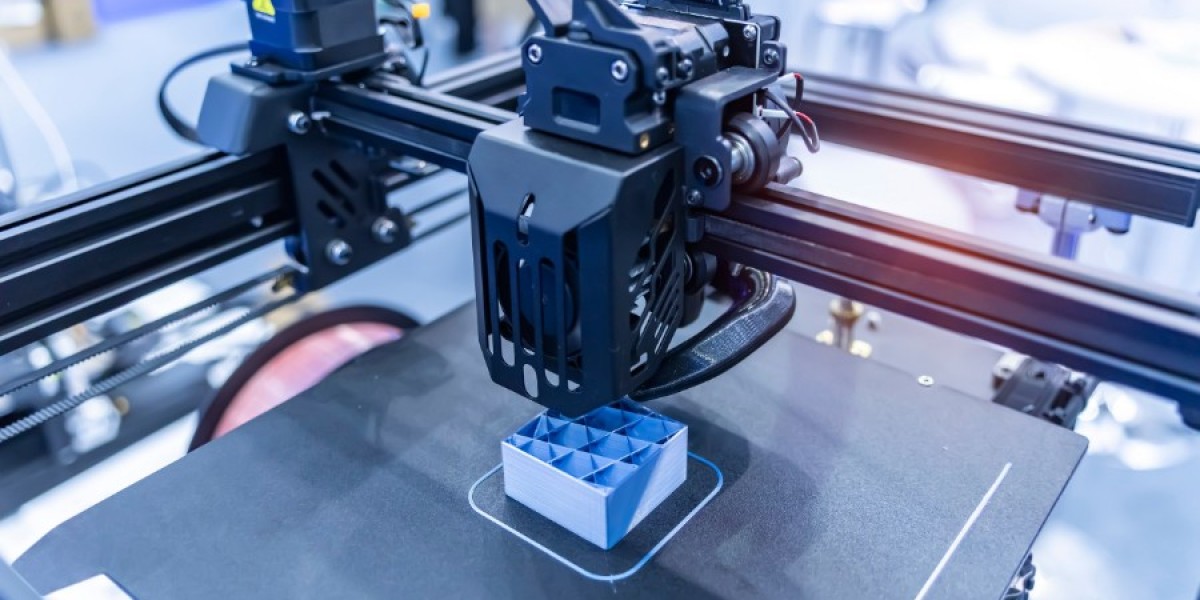

Aerospace 3D printing has moved from an experimental manufacturing technique to an increasingly practical tool for producing prototypes, tooling, lightweight components, replacement parts, and complex structures. The technology, commonly referred to as additive manufacturing, builds components layer by layer from digital designs, reducing the need for conventional machining, molds, and extensive assembly in suitable applications.
According to the market figures provided for this analysis, the global aerospace 3D printing market was valued at approximately USD 4.53 billion in 2025. It is projected to expand at a 15.70% CAGR from 2026 to 2035, reaching approximately USD 19.47 billion by 2035.
The appeal of additive manufacturing is particularly strong in aerospace because aircraft and spacecraft manufacturers constantly seek lower weight, greater fuel efficiency, shorter production cycles, and components capable of performing under demanding operating conditions. A small reduction in component weight can have implications for aircraft efficiency, while consolidating several parts into one printed component can reduce assembly requirements and potential failure points.
At the same time, aerospace is one of the most demanding environments for advanced manufacturing. Components may need to withstand extreme temperatures, vibration, pressure, fatigue, corrosion, or radiation depending on their application. Certification, process repeatability, material traceability, and quality assurance therefore matter as much as the ability to print a geometrically complex part.
The industry's development is consequently less about replacing conventional manufacturing altogether and more about identifying where additive manufacturing provides a genuine technical or economic advantage.
Additive Manufacturing Is Becoming a Strategic Aerospace Tool
Aerospace 3D printing uses digital manufacturing technologies to produce components directly from three-dimensional designs, enabling geometries and production approaches that can be difficult or expensive to achieve using conventional processes.
The technology is particularly valuable when manufacturers need complex internal structures, low-volume components, rapid design iterations, or parts that would otherwise require multiple manufacturing and assembly stages.
Traditional aerospace manufacturing can involve machining large amounts of material away from a metal billet. Additive manufacturing reverses that logic by depositing or selectively consolidating material only where it is required. The resulting reduction in material waste can be significant for expensive aerospace alloys such as titanium.
Design freedom is another major advantage. Engineers can create lattice structures, internal channels, topology-optimized geometries, and consolidated assemblies that are difficult to manufacture using subtractive techniques.
For example, a component previously assembled from several individual parts may potentially be redesigned as a single printed structure. This can reduce fasteners, joints, and assembly labor while potentially improving weight and reliability.
The technology also changes the economics of low-volume production. Conventional manufacturing often becomes more economical at scale because tooling and setup costs are distributed across many components. Additive manufacturing can be attractive when production volumes are relatively low because it can reduce tooling requirements and allow manufacturers to move directly from a digital model to production.
These advantages are particularly relevant to aerospace, where aircraft programs can remain in production for decades but may require relatively small quantities of specialized components at any given time.
Powder Bed Fusion and Other Technologies Define the Manufacturing Landscape
The aerospace 3D printing market encompasses powder bed fusion, polymerization, material extrusion or fused deposition modeling (FDM), and other additive manufacturing technologies. Each process addresses different combinations of material, precision, production volume, and component requirements.
Powder bed fusion is particularly important for aerospace metal manufacturing. Processes such as selective laser melting and electron beam melting selectively fuse powdered materials layer by layer to create complex components. The approach can produce intricate geometries and is compatible with several engineering metals used in aerospace applications.
Metal additive manufacturing is especially attractive for titanium, nickel-based superalloys, aluminum alloys, and other materials where conventional machining can generate substantial waste or require complicated manufacturing sequences.
Polymerization technologies use light to cure liquid photopolymer materials into solid structures. These systems are generally more relevant to prototyping, models, tooling, and selected aerospace applications where polymer properties meet performance requirements.
Material extrusion, including FDM, deposits thermoplastic material through a heated nozzle. Its relatively accessible equipment and material flexibility make it useful for prototypes, fixtures, jigs, models, and selected non-critical aerospace components.
The market also includes technologies outside these principal categories, including specialized metal deposition and hybrid manufacturing approaches. Directed energy deposition, for example, can deposit material onto an existing component and has potential relevance for repair, remanufacturing, and large-format structures.
Technology selection ultimately depends on the part rather than the printer alone. Engineers must consider material characteristics, dimensional accuracy, surface finish, production volume, post-processing requirements, certification needs, and total manufacturing cost.
This is why aerospace additive manufacturing increasingly involves an integrated workflow encompassing design software, materials, printers, process monitoring, post-processing, inspection, and engineering services.
Materials, Printers and Software Form an Integrated Ecosystem
The aerospace 3D printing market extends beyond printing equipment because successful production depends on the interaction between materials, machines, software, engineering expertise, and quality-control systems.
Metal powders are a particularly important part of the ecosystem. Their particle size distribution, shape, purity, flow characteristics, and chemical composition can influence print quality and repeatability. Manufacturers therefore need tight control over material specifications and traceability.
Polymer materials also play an important role, especially for prototypes, tooling, cabin components, fixtures, and other applications where high-temperature or structural metal performance is unnecessary.
Printers represent another major part of the market. Industrial systems are increasingly designed around higher build volumes, improved process monitoring, greater automation, and more repeatable production conditions.
Software is equally important because additive manufacturing begins with a digital model. Design engineers can use generative design and topology optimization to create geometries specifically suited to additive production. Simulation tools can then help predict thermal behavior, deformation, residual stress, and other potential manufacturing issues.
The digital nature of additive manufacturing also creates opportunities for process traceability. Sensors and monitoring systems can record information during production, potentially helping manufacturers identify anomalies and strengthen quality-control processes.
Services complete the ecosystem. Aerospace manufacturers may work with specialized additive manufacturing service providers for design optimization, prototyping, printing, testing, certification support, or production of specialized parts.
This service model can reduce the need for aerospace companies to invest immediately in complete additive manufacturing infrastructure. It also gives smaller suppliers access to industrial printing capabilities without carrying the full capital burden of equipment ownership.
Aircraft, Spacecraft and UAVs Are Expanding the Addressable Market
Aerospace 3D printing is being applied across aircraft, spacecraft, and unmanned aerial vehicles (UAVs), although the requirements and adoption patterns differ considerably between platforms.
Aircraft manufacturing represents a major opportunity because weight reduction and part consolidation can generate meaningful operational benefits. Printed components can be incorporated into cabin interiors, environmental-control systems, brackets, ducts, tooling, and increasingly sophisticated structural or engine-related applications where qualification requirements are satisfied.
A particularly important use case is tooling. Aerospace production requires numerous fixtures, jigs, templates, and assembly aids. Printing these tools can reduce lead times compared with conventional fabrication, especially when designs change frequently.
Spacecraft create another strong application environment. Space systems often involve small production runs, complex geometries, and stringent weight requirements. Additive manufacturing can enable engineers to consolidate components or create geometries optimized for thermal management and structural performance.
Rocket propulsion is another area receiving significant attention. Complex channels within propulsion components can be difficult to manufacture conventionally, whereas additive manufacturing can create intricate internal passages. This can support innovative approaches to combustion and cooling-system design.
UAVs offer a different opportunity. Smaller aircraft can benefit from rapid prototyping, lightweight structures, and localized manufacturing. Designers can iterate airframe and component concepts relatively quickly, which is particularly useful for systems undergoing frequent design changes.
The common theme is flexibility. Aerospace platforms are increasingly designed around digital engineering processes, and additive manufacturing fits naturally into workflows where components can be modified digitally and produced without extensive retooling.
Tooling, Prototyping and Functional Parts Are Driving Commercial Adoption
The market's application landscape spans tooling, prototyping, and functional parts, with the balance gradually shifting as aerospace manufacturers gain confidence in qualified additive processes.
Prototyping remains one of the easiest entry points. Engineers can print physical representations of new designs quickly, allowing teams to evaluate fit, ergonomics, assembly, airflow, or other characteristics before committing to expensive production tooling.
Rapid prototyping can shorten design cycles because engineers can move repeatedly between digital modeling, physical testing, and design modification. This is especially valuable for new aircraft systems and spacecraft where development programs involve extensive engineering iteration.
Tooling offers another commercially attractive application. Printed jigs, fixtures, drill guides, molds, and assembly aids can often be manufactured faster than traditionally fabricated alternatives. Some can also be redesigned to reduce weight, making them easier for workers to position and handle.
Functional parts represent the largest long-term opportunity but also involve the highest technical and regulatory barriers. These components must meet demanding mechanical, thermal, fatigue, and safety requirements.
Aerospace original equipment manufacturers (OEMs) and suppliers are therefore gradually qualifying specific additive processes and components rather than treating 3D printing as a generic manufacturing substitute.
Maintenance, repair, and overhaul (MRO) represents another important avenue. Aircraft remain in service for many years, and replacement parts may become difficult or expensive to source. Digital inventories combined with additive manufacturing could potentially allow certain qualified replacement components to be produced closer to where they are needed.
However, digital inventories also create questions around cybersecurity, intellectual property, design authentication, and quality assurance. A digital file becomes a production asset that requires protection just as physical tooling and engineering documentation do.
OEMs and MRO Providers Are Building New Manufacturing Models
The aerospace 3D printing market is being shaped by both original equipment manufacturers and MRO organizations, with each group using additive manufacturing to address different operational priorities.
OEMs are increasingly interested in additive manufacturing because it can support lightweight designs, component consolidation, rapid development, and production flexibility. Integrating additive processes during the initial design stage can provide greater benefits than simply attempting to print an existing conventionally manufactured part.
MRO providers have different priorities. Their interest often centers on replacement parts, repair technologies, tooling, and maintaining aircraft with long operational lifecycles.
The distinction is commercially important. An OEM may prioritize design optimization and production scalability, whereas an MRO organization may prioritize availability, lead time, inventory reduction, and the ability to manufacture or repair parts close to the maintenance location.
This could contribute to a gradual change in aerospace supply chains. Instead of maintaining large physical inventories of every low-demand component, companies may increasingly explore hybrid inventories in which frequently used parts are stocked while selected qualified components are produced on demand.
Nevertheless, additive manufacturing does not eliminate supply-chain requirements. Certified materials, validated machines, qualified operators, inspection systems, and controlled digital files are all necessary.
The strongest adoption model is therefore likely to combine conventional and additive manufacturing according to part characteristics, rather than replacing established processes indiscriminately.
North America Leads While Other Regions Build Additive Capabilities
Regional development reflects the concentration of aerospace manufacturers, defense spending, space programs, additive manufacturing expertise, and industrial investment.
North America remains a major center for aerospace additive manufacturing, supported by a large aerospace and defense industry and an established ecosystem of printer manufacturers, material suppliers, engineering companies, and research institutions. The United States is particularly influential in metal additive manufacturing for aircraft, propulsion, defense, and space applications.
Europe also has a strong position, supported by major aircraft and engine manufacturers, advanced industrial engineering capabilities, and growing investment in sustainable manufacturing. European aerospace companies are evaluating additive manufacturing as part of broader efforts to reduce material consumption and improve production efficiency.
The Asia Pacific region is becoming increasingly important as countries expand aerospace manufacturing, defense capabilities, commercial aviation infrastructure, and additive manufacturing capacity. China, Japan, South Korea, India, and other regional markets have opportunities to develop both domestic production capabilities and specialized aerospace supply chains.
Latin America represents a smaller but developing market, where aerospace manufacturing clusters and MRO activity can create opportunities for additive tooling and replacement parts.
The Middle East and Africa also offer potential through expanding aviation fleets, MRO investment, defense programs, and localization strategies. Adoption will depend heavily on technical capabilities, certification infrastructure, and access to specialized materials and equipment.
Regional competition is therefore not simply about printer sales. Countries and aerospace clusters increasingly seek complete additive manufacturing ecosystems covering research, material production, engineering, certification, production, and maintenance.
Certification and Production Consistency Remain Key Market Challenges
Aerospace 3D printing offers significant technical advantages, but certification, quality assurance, and process consistency remain among the industry's most important barriers to wider adoption.
A printed part can behave differently depending on build orientation, machine parameters, powder characteristics, thermal conditions, post-processing, and other variables. Two components produced from the same digital design must therefore be demonstrated to have sufficiently consistent properties before they can be used in safety-critical applications.
This makes process qualification essential. Aerospace manufacturers need documented manufacturing procedures, material traceability, inspection techniques, and repeatable production parameters.
Post-processing can also be significant. Metal components may require heat treatment, machining, surface finishing, hot isostatic pressing, or other processes to achieve the desired material and dimensional characteristics.
Inspection presents its own challenges because some defects may be internal and invisible to conventional visual inspection. Non-destructive testing and advanced imaging can therefore become integral parts of the additive manufacturing workflow.
Cost is another consideration. Industrial additive equipment, high-quality materials, post-processing systems, skilled personnel, and certification programs can require substantial investment.
Cybersecurity is an increasingly important issue as well. Because production begins with digital engineering files, unauthorized modification or distribution of a design could have serious consequences.
These factors explain why aerospace adoption tends to proceed incrementally. Manufacturers generally target applications where additive manufacturing provides a clear advantage and where the technical requirements can be validated with confidence.
Competition Is Expanding Across Printers, Materials and Aerospace Engineering
The competitive landscape includes additive manufacturing equipment manufacturers, materials companies, software developers, aerospace suppliers, engineering-service providers, and major aerospace and defense companies developing proprietary capabilities.
The companies covered in the supplied market scope include Stratasys Ltd, 3D Systems, Inc., EOS GmbH Electro Optical Systems, Norsk Titanium US Inc., Ultimaker BV, Materialise NV, Aerojet Rocketdyne Holdings Inc., Velo3D Inc., Desktop Metal Inc. (ExOne), MTU Aero Engines AG, Lockheed Martin Corporation, and Safran Group, among others.
Companies compete across different layers of the value chain. Printer manufacturers focus on machine performance, build volume, process reliability, automation, and material compatibility. Software companies compete through design optimization, simulation, workflow management, and production monitoring.
Aerospace manufacturers and engine companies have a different objective: integrating additive manufacturing into qualified production processes and using it to solve specific engineering problems.
Stratasys is known for polymer additive manufacturing technologies, while 3D Systems operates across multiple additive manufacturing technologies and industrial applications.
EOS has a strong position in industrial polymer and metal additive manufacturing, while Materialise provides software and manufacturing services supporting digital additive workflows.
Aerospace companies such as Lockheed Martin and Safran have also pursued additive manufacturing as part of broader aerospace engineering and production strategies.
The competitive advantage increasingly comes from the entire production ecosystem rather than from the printer itself. Material qualification, process knowledge, software, certification experience, customer support, and aerospace-specific engineering capabilities can all influence purchasing decisions.
The Aerospace 3D Printing Market Is Moving Toward Production
The aerospace 3D printing market is transitioning from an emphasis on prototyping toward a broader role encompassing qualified tooling, functional components, repair applications, and digitally enabled production.
Based on the market figures supplied for this analysis, the sector is expected to expand from USD 4.53 billion in 2025 to approximately USD 19.47 billion by 2035, representing a 15.70% CAGR from 2026 to 2035.
The strongest opportunities are likely to emerge where additive manufacturing solves a specific aerospace problem: reducing component weight, consolidating assemblies, shortening lead times, manufacturing low-volume parts, creating complex internal structures, or enabling more flexible MRO operations.
Metal powder bed fusion is expected to remain particularly important for complex aerospace components, while polymer-based processes will continue to support prototyping, tooling, fixtures, and selected production applications. Software and process monitoring will become increasingly important as manufacturers seek repeatability and certification.
The market's future will ultimately depend on economics as much as technology. Aerospace manufacturers will adopt additive manufacturing at scale when the combined benefits of weight, performance, lead time, inventory, design freedom, and supply-chain flexibility outweigh equipment, material, post-processing, and qualification costs.
Rather than replacing conventional manufacturing, 3D printing is becoming another tool in the aerospace engineer's manufacturing toolkit. Its greatest value lies in matching the right process to the right component and building the quality infrastructure needed to make digitally manufactured parts as dependable as traditionally produced aerospace hardware.