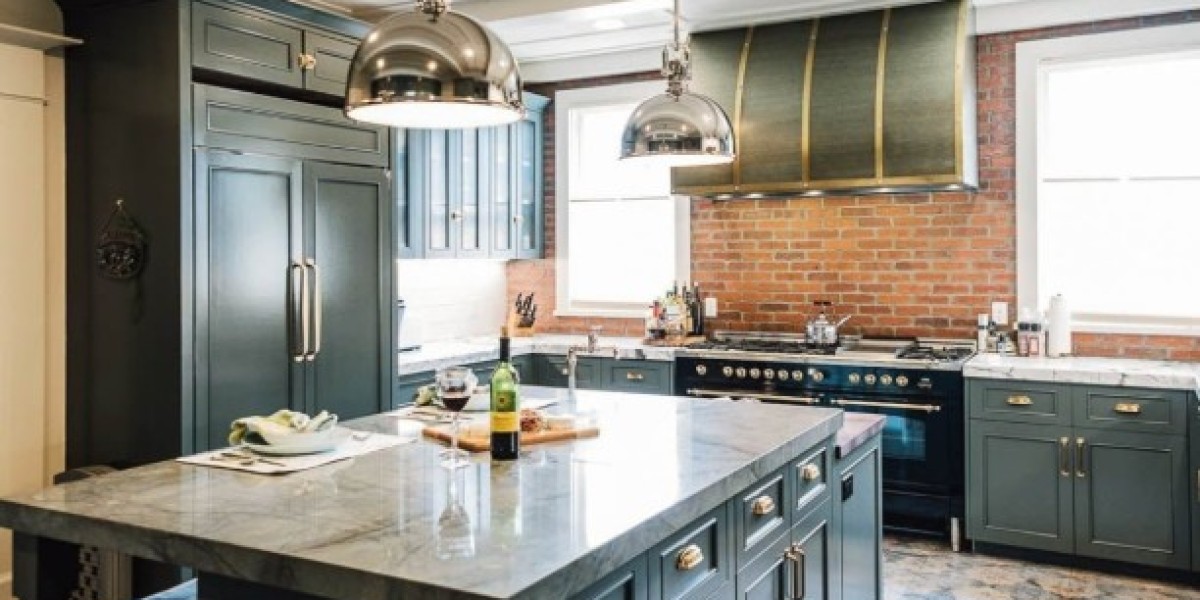

Choosing a large range hood insert requires more than matching the ventilation unit to the width of the cooking surface. The insert must fit correctly inside the custom enclosure, provide sufficient capture coverage, and work with a properly designed duct system. A 42 range hood insert is generally intended for wide cooking areas and custom hood designs where stronger ventilation and broader coverage are needed. Current sizing guidance shows that a 42-inch custom opening typically accommodates a 40-inch insert, leaving the clearance needed for installation.
What Is a Range Hood Insert?
A range hood insert is the functional ventilation component installed inside a custom hood enclosure. Rather than displaying the entire appliance, the insert can be concealed behind cabinetry or a purpose-built surround.
The unit generally contains the blower, filters, lighting and controls. This arrangement gives homeowners greater flexibility over the visible appearance of the hood while retaining dedicated mechanical ventilation. Inserts are available in multiple widths and depths, making them suitable for both standard residential kitchens and larger cooking configurations.
For larger cooking surfaces, choosing the right insert size is particularly important because inadequate coverage can allow smoke, steam and grease to escape around the edges.
What Insert Fits a 42-Inch Opening?
A 42 range hood insert custom hood opening does not normally require a 42-inch-wide insert. The current sizing rule for inserts is to select a unit approximately two inches narrower than the finished cabinet or enclosure opening. Therefore, a 42-inch opening typically requires a 40-inch insert.
The basic relationship is:
Custom Hood Opening | Typical Insert Width |
30 inches | 28 inches |
36 inches | 34 inches |
42 inches | 40 inches |
48 inches | 46 inches |
54 inches | 52 inches |
60 inches | 58 inches |
This two-inch difference provides approximately one inch of clearance on each side. However, the manufacturer's actual dimensions should always be checked before the enclosure is fabricated because nominal sizes do not necessarily represent the precise exterior dimensions.
Is a 42-Inch Insert Right for a 36-Inch Range?
A wider insert can provide useful capture coverage over a large cooking surface. Current guidance for inserts states that these models are suitable for approximately 36- to 42-inch cooktops and are designed to create a broader capture area across the cooking surface.
For example, a 36-inch range can be paired with a larger custom hood to provide additional coverage beyond the edges of the appliance. This can be particularly useful when cooking produces substantial smoke or when the kitchen has an open layout.
The final size should still account for the available enclosure space, cooktop configuration and manufacturer's installation requirements.
Why Depth Matters as Much as Width
Width determines how much of the cooking surface can be covered from side to side, but depth affects front-to-back capture.
A shallow insert may leave the front burners or cooking area insufficiently covered. Current insert configurations are available with different depth options, including 15, 18 and 21 inches, allowing the ventilation system to be matched more closely to the custom enclosure.
Before choosing a model, measure the cooking surface from front to back and compare it with the insert's actual depth. Interior framing, ductwork and electrical components should also be considered because they can reduce the usable space inside a custom hood.
How Much CFM Does a 42-Inch Insert Need?
CFM, or cubic feet per minute, measures the volume of air a blower can move. A larger insert does not automatically require the highest possible CFM, but wide cooking surfaces often benefit from stronger ventilation.
Curren 42 range hood insert options include 600- and 1,200-CFM configurations, while broader insert guidance recommends selecting airflow according to cooking style, range output and ductwork.
For gas cooking, one commonly used calculation is approximately 100 CFM for every 10,000 BTUs of cooking output. Electric cooking can be estimated differently, using the width of the cooking surface as one factor. These calculations are only starting points because duct length, elbows, cooking habits and other installation conditions affect actual performance.
Why Ductwork Affects Ventilation
A powerful blower cannot perform efficiently if the duct system restricts airflow.
Long duct runs, multiple elbows, undersized ducting and abrupt transitions can create resistance and reduce effective ventilation. The duct diameter should therefore be compatible with the selected blower, and the route should be planned before the custom hood is built.
Current range hood guidance specifically recommends checking the duct collar size and location on the insert's specification sheet. For higher-CFM systems, larger ducting may be required; current planning guidance, for example, identifies 10-inch ducting as necessary for systems rated at 1,100 CFM or more.
Ducted vs. Ductless Ventilation
A ducted insert sends cooking exhaust outside through a dedicated ventilation system. This approach removes smoke, odors, grease and moisture from the kitchen rather than returning filtered air to the room.
Ductless ventilation instead filters the air and recirculates it. While this can be useful where exterior ducting is not possible, it does not physically remove cooking contaminants from the building.
For high-output cooking, ducted ventilation is generally the more suitable configuration because it provides a direct exhaust path. The feasibility of ducting should be considered before the custom hood design is finalized.
What Filters Should You Use?
Baffle filters are commonly used in higher-performance range hood systems. Their metal construction provides a durable method for capturing grease from cooking exhaust.
Filter maintenance is essential for maintaining airflow. Grease accumulation can restrict the filter surface and reduce ventilation efficiency over time. Depending on the manufacturer's instructions, stainless-steel baffle filters may be removable for regular cleaning, including dishwasher cleaning on compatible models.
Households that frequently fry, sear or cook foods that produce substantial grease may need to clean filters more often than households with lighter cooking routines.
How High Should a Large Insert Be Installed?
Installation height affects the hood's ability to capture rising cooking exhaust. If the insert is positioned too high, smoke and heat have more opportunity to disperse before reaching the capture area.
The appropriate clearance depends on the cooking appliance, hood design and manufacturer instructions. Gas and electric cooking surfaces can have different clearance requirements, so the insert should not be installed based on a generic measurement alone.
The height should be established before the custom enclosure is constructed. This allows the contractor to coordinate the insert, cabinetry, cooking surface and ductwork without making structural changes later.
What Should You Check Before Building the Custom Hood?
The insert should be selected before the enclosure is fabricated. This allows the cabinetmaker or contractor to work from the actual product dimensions instead of relying on the nominal size.
Check:
Insert width and depth
Finished enclosure opening
Duct collar diameter
Duct collar position
Blower capacity
Electrical requirements
Mounting points
Filter dimensions
Required cooking-surface clearance
Internal framing clearance
The manufacturer's specification sheet is particularly important because it provides the actual dimensions and installation requirements needed for fabrication.
Common Installation Mistakes
One of the most frequent mistakes is ordering an insert that is the same width as the custom opening. A 42-inch opening generally requires a 40-inch insert rather than a 42-inch unit.
Ignoring depth is another problem. Even when the width is correct, an insert that does not provide sufficient front-to-back coverage may not capture exhaust effectively.
Other issues include:
Building the enclosure before selecting the insert
Forgetting interior framing
Using undersized ductwork
Installing excessive duct bends
Failing to check electrical requirements
Choosing CFM without considering the duct system
Ignoring filter maintenance
Failing to verify installation clearances
Addressing these details during the planning stage can prevent expensive modifications after construction begins.
Outdoor Ventilation Requires Different Planning
Outdoor kitchens present additional ventilation challenges because wind can interfere with smoke capture. Grills can also generate more smoke and grease than many indoor cooking applications.
Outdoor hood guidance recommends wider coverage, greater depth and substantially higher airflow for demanding grilling environments. Current outdoor ventilation information identifies inadequate smoke removal, weather exposure, poor capture and noise as four major problems that can affect outdoor hood performance. This means an indoor insert should not automatically be repurposed for an outdoor kitchen. Outdoor ventilation equipment needs to be designed for exposure to moisture, temperature changes and the heavier demands associated with grilling.
How Can Outdoor Vent Problems Be Prevented?
The four common outdoor ventilation problems can be addressed through appropriate equipment selection and installation planning.
Inadequate smoke removal: Choose an airflow capacity appropriate for the grill and cooking intensity rather than relying on an indoor hood.
Weather-related corrosion: Outdoor equipment needs construction and components designed to withstand moisture, temperature fluctuations and other environmental conditions.
Poor capture coverage: Wider and deeper hood designs can help compensate for wind and the way smoke moves in an open environment.
Noise and performance problems: Correct blower selection and properly designed ductwork can help balance extraction power with acoustic comfort.
Maintenance for Long-Term Performance
A large insert requires regular maintenance just like a smaller ventilation system. Filters should be cleaned according to the manufacturer's recommendations, while the interior and exterior surfaces should be inspected for grease accumulation.
The duct system should also be checked when airflow decreases unexpectedly. A drop in performance can result from dirty filters, duct restrictions, blower issues or changes in the ventilation configuration.
Keeping the ventilation path clean allows the blower to operate more effectively and helps maintain consistent capture performance.
Conclusion
Selecting the right insert for a large cooking surface requires careful consideration of opening dimensions, depth, airflow, ductwork and installation height. A 42-inch custom opening typically accommodates a 40-inch insert, while the appropriate CFM depends on the cooking appliance, output, cooking habits and duct configuration. Outdoor kitchens require additional attention because wind, weather and high-temperature grilling can create ventilation challenges that are less common indoors. Understanding the 4 Range Hood Outdoor Vent Problems—inadequate smoke removal, corrosion, insufficient capture and performance or noise issues—can help homeowners plan a more effective outdoor ventilation system.