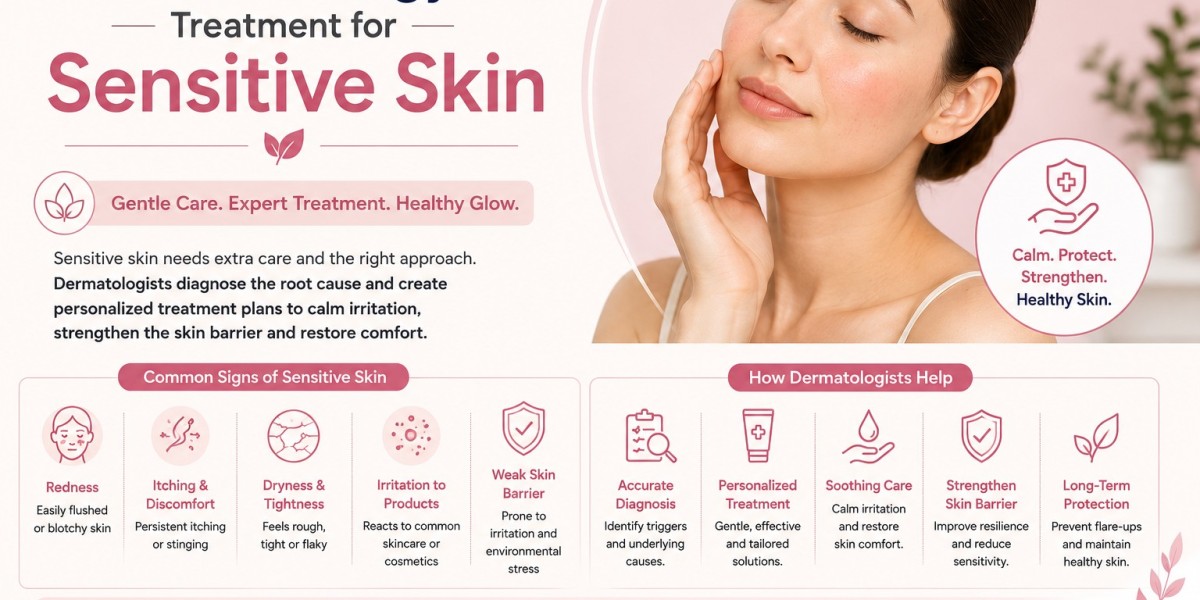

Sensitive skin can feel uncomfortable even after exposure to everyday products or environmental changes. Some people experience frequent redness, itching, burning, dryness, or stinging after using skincare products, cosmetics, soaps, or fragrances. For others, sensitivity may be connected to an underlying skin condition.
Sensitive skin itself is not always a specific medical diagnosis. Similar symptoms can occur with eczema, contact dermatitis, rosacea, allergies, a damaged skin barrier, or other dermatological conditions. This makes identifying the cause an important part of choosing appropriate care. Professional sensitive skin diagnosis and treatment can help identify possible causes of recurring sensitivity and determine an appropriate treatment and skincare approach.
What Does Sensitive Skin Mean?
People commonly use the term "sensitive skin" when their skin reacts easily to products, weather conditions, or other environmental factors.
Symptoms may develop immediately after exposure or appear gradually.
Common signs include redness, itching, burning, stinging, dryness, tightness, flaking, or general discomfort.
However, these symptoms do not always mean that someone naturally has sensitive skin. They may indicate an underlying condition that requires a different treatment approach.
A dermatological assessment can help distinguish between general sensitivity and a specific skin disorder.
What Causes Sensitive Skin?
There is no single cause of sensitive skin.
One common factor is disruption of the skin barrier. The outer layer of the skin helps retain moisture and protect against external irritants. When this barrier is weakened, substances that would normally cause little difficulty may trigger irritation.
Environmental conditions can also contribute. Cold weather, low humidity, heat, excessive sun exposure, and pollution may make some people's skin feel more reactive.
Skincare habits are another possible factor. Frequent exfoliation, harsh cleansers, fragranced products, or combining multiple active ingredients can sometimes contribute to irritation.
Underlying dermatological conditions should also be considered when symptoms persist.
Sensitive Skin and Eczema
Eczema is a common inflammatory skin condition that can make the skin dry, itchy, and sensitive.
People with atopic dermatitis often have an impaired skin barrier, making it easier for moisture to escape and irritants to affect the skin.
Treatment may include regular moisturising, gentle cleansing, avoiding known triggers, and prescribed anti-inflammatory medication during flare-ups.
Because eczema can be chronic, maintaining the skin barrier between flare-ups is often an important part of management.
Sensitive Skin and Contact Dermatitis
Contact dermatitis develops when the skin reacts to substances it touches.
Irritant contact dermatitis occurs when a substance directly damages the skin barrier. Frequent handwashing, detergents, chemicals, harsh soaps, and some skincare products can contribute.
Allergic contact dermatitis occurs when the immune system reacts to a specific allergen.
Possible allergens include fragrances, preservatives, cosmetics, metals, hair products, and other substances.
Identifying whether irritation is allergic or non-allergic can help determine the appropriate treatment.
Can Skincare Products Cause Sensitivity?
Yes. Even products marketed for skincare can cause irritation in some people.
Fragrances, exfoliating acids, retinoids, alcohol-based products, essential oils, and certain preservatives may cause problems for sensitive individuals.
Using several active ingredients at the same time can also make it difficult to determine which product is causing irritation.
When the skin becomes sensitive, simplifying the skincare routine can sometimes be useful.
A dermatologist can help determine which products may be appropriate based on the person's skin condition rather than relying only on marketing labels such as "gentle" or "natural."
How Does a Dermatologist Evaluate Sensitive Skin?
Evaluation usually begins with understanding when and how symptoms occur.
A dermatologist may ask about skincare products, cosmetics, medicines, allergies, occupation, sun exposure, and recent changes to the skincare routine.
The skin is then examined for signs of dryness, inflammation, dermatitis, rosacea, infection, or other conditions.
In many cases, medical history and physical examination provide enough information.
When allergic contact dermatitis is suspected, patch testing may sometimes be considered to identify particular allergens.
Treatment Starts with the Underlying Cause
There is no single medicine for every person with sensitive skin.
Treatment depends on why the skin is reacting.
If eczema is responsible, controlling inflammation and supporting the skin barrier may be necessary. Contact dermatitis may require identifying and avoiding an irritant or allergen.
If a skincare product is causing irritation, simplifying the routine and stopping the responsible product may help.
This diagnosis-based approach can be more useful than repeatedly trying products labelled for sensitive skin without understanding what is causing the symptoms.
Supporting the Skin Barrier
Maintaining the skin barrier is one of the most important aspects of caring for sensitive skin.
Regular moisturising can help reduce moisture loss and support the skin's protective function.
Creams and ointments are available in different formulations, and the most appropriate choice depends on the individual's skin type and condition.
Applying moisturiser after washing, while the skin is still slightly damp, may help retain moisture.
For people with reactive skin, products with fewer unnecessary ingredients may sometimes be easier to tolerate.
Choosing a Gentle Cleanser
Cleansing removes dirt, oil, sweat, and other substances from the skin, but excessive cleansing can contribute to dryness.
Very hot water, harsh soaps, aggressive scrubbing, and frequent washing may damage the skin barrier.
A gentle cleanser and lukewarm water are often more appropriate for sensitive skin.
After washing, the skin should be dried gently rather than rubbed aggressively.
The goal is to keep the skin clean without unnecessarily removing the natural oils that help support the skin barrier.
Introduce New Products Carefully
Adding several new skincare products at the same time can make it difficult to identify the cause if irritation develops.
Introducing products individually allows the skin's response to be observed more easily.
People with a history of reactions may also benefit from testing a new product on a small area before using it more widely, although this does not reliably predict every type of allergic reaction.
If a product repeatedly causes burning, redness, itching, or swelling, discontinue it and seek professional advice if symptoms persist.
Avoid Excessive Exfoliation
Exfoliation can help remove dead surface skin cells, but too much exfoliation can damage the skin barrier.
Frequent use of scrubs, exfoliating acids, peels, or other active products may lead to dryness, burning, redness, and increased sensitivity.
People experiencing irritation may benefit from reducing unnecessary exfoliation while the skin barrier recovers.
Persistent irritation after using active skincare products should be assessed if it does not settle after the suspected product is stopped.
Sun Protection for Sensitive Skin
Sun exposure can contribute to irritation and worsen some skin conditions.
Appropriate sun protection is therefore an important part of sensitive-skin care.
This can include seeking shade, using protective clothing, and applying a suitable broad-spectrum sunscreen.
Some people with sensitive skin find certain sunscreen formulations irritating. A dermatologist can help recommend options based on individual tolerance and underlying skin conditions.
Sun protection is particularly important when using treatments that increase sensitivity to sunlight.
Treatment for Redness and Inflammation
Persistent redness should not automatically be treated as simple sensitivity.
Eczema, contact dermatitis, rosacea, and other conditions can cause facial or body redness.
Once the cause is identified, treatment may involve topical medication, skincare modifications, trigger management, or other therapies.
Using strong anti-inflammatory creams without medical advice is not recommended, particularly on sensitive areas such as the face.
Why "Natural" Does Not Always Mean Gentle
Products labelled natural, herbal, or organic can still contain substances capable of irritating the skin or causing allergic reactions.
Essential oils, plant extracts, fragrances, and other natural ingredients can trigger reactions in susceptible individuals.
The important question is not whether an ingredient is natural or synthetic but whether it is suitable for the individual's skin.
Ingredient selection should be based on tolerance and the underlying skin condition.
When Should You See a Dermatologist?
Consider consulting a dermatologist if skin sensitivity repeatedly returns, becomes increasingly uncomfortable, or does not improve after simplifying your skincare routine.
Professional evaluation may also be useful when you experience persistent redness, significant itching, recurring rashes, swelling, scaling, or burning.
If reactions repeatedly occur after using particular products but the responsible ingredient is unclear, dermatological assessment may help identify possible triggers.
Severe swelling, difficulty breathing, or swelling involving the lips, tongue, or throat requires immediate emergency medical attention.
Can Sensitive Skin Improve?
In many cases, sensitivity can improve when contributing factors are identified and the skin barrier is given time to recover.
For people with chronic conditions such as eczema or rosacea, sensitivity may require ongoing management.
The aim is to reduce unnecessary irritation, control the underlying condition, and establish a skincare routine that the skin can tolerate.
Improvement may take time, particularly when the skin barrier has been repeatedly irritated.
Conclusion
Effective dermatology treatment for sensitive skin begins by determining why the skin is reacting.
Frequent redness, itching, burning, dryness, or stinging may be related to a weakened skin barrier, unsuitable skincare products, contact dermatitis, eczema, rosacea, allergies, or other conditions.
Treatment may involve simplifying the skincare routine, supporting the skin barrier, avoiding identified triggers, and using prescribed medication when necessary.
When sensitivity repeatedly returns or interferes with everyday comfort, a dermatologist can help identify the underlying cause and develop an appropriate plan rather than relying on repeated trial and error with skincare products.
Frequently Asked Questions
Why has my skin suddenly become sensitive?
Changes in skincare products, over-exfoliation, environmental factors, contact dermatitis, eczema, and damage to the skin barrier are some possible causes.
What skincare is suitable for sensitive skin?
A simple routine using a gentle cleanser, appropriate moisturiser, and sun protection is often a useful starting point. Individual needs can vary.
Can sensitive skin be caused by allergies?
Yes. Allergic contact dermatitis can cause redness, itching, swelling, or irritation after exposure to particular allergens.
When should I see a dermatologist for sensitive skin?
Consider professional evaluation when sensitivity repeatedly returns, causes persistent redness or itching, or does not improve after removing possible irritants.