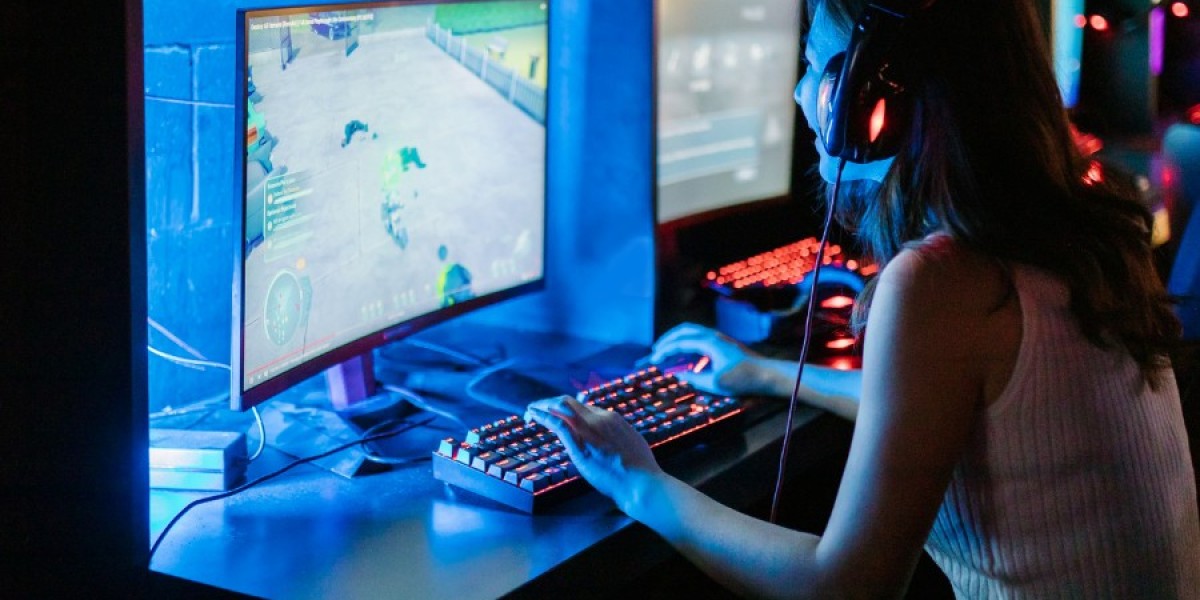

Cloud gaming is changing the way games are delivered by moving much of the computing workload from a player's device to remote data centres. Instead of downloading and running a game locally, users stream gameplay over an internet connection while servers handle rendering, processing and other demanding tasks. This model can make sophisticated games accessible on devices that would otherwise lack the necessary hardware.
The global cloud gaming market reached approximately USD 2,360.29 million in 2025 and is projected to expand at a CAGR of 36.80% between 2026 and 2035, reaching about USD 54,178.42 million by 2035, according to the market figures provided by Expert Market Research. Such rapid projected growth reflects improvements in broadband, 5G, edge computing, cloud infrastructure and subscription-based entertainment.
The appeal is straightforward: cloud gaming can reduce the importance of expensive local hardware and make games available across smartphones, tablets, computers, consoles and other connected devices. Microsoft's Xbox Cloud Gaming, NVIDIA GeForce NOW and other platforms illustrate how game streaming has developed from an experimental concept into an increasingly accessible distribution model. Microsoft says Xbox Cloud Gaming is available across 28 major markets and has invested extensively in reducing latency across its technology stack.
Yet cloud gaming is not simply traditional gaming delivered through a different screen. Its economics, infrastructure requirements and technical limitations are fundamentally different. Network stability, server capacity, data-centre locations, content licensing and the quality of the player's internet connection all influence the experience.
Cloud Gaming Is Moving Game Processing Into the Cloud
Cloud gaming allows games to be processed on remote servers and delivered to users as interactive video streams. Player inputs travel to the cloud, the game responds on the server, and the resulting frames are encoded and sent back to the device.
This architecture changes the hardware equation. A smartphone or low-specification laptop does not necessarily need to perform the complex graphics rendering associated with a modern AAA game because much of that workload occurs remotely.
The distinction between video streaming and file streaming is important within the market. Video streaming represents the familiar model in which the game runs on a remote server and gameplay is streamed to the user. File-streaming approaches can involve delivering game components or assets progressively, allowing some processing to occur closer to the user device.
For consumers, the most obvious advantage is accessibility. A player may be able to access demanding titles without purchasing a high-end gaming PC or downloading a very large installation package.
For publishers and platform operators, cloud delivery can create additional ways to distribute games. It can reduce some barriers to trial, support cross-device access and potentially connect games with subscription ecosystems.
However, cloud gaming does not eliminate hardware requirements altogether. Data centres still require powerful GPUs, CPUs, storage and networking equipment. The hardware simply moves away from the consumer's home and into professionally managed infrastructure.
5G and Edge Computing Are Improving the Gaming Experience
5G and edge computing are important growth technologies because cloud gaming is highly sensitive to latency. A powerful server is not enough if player inputs take too long to reach the game engine or if rendered frames experience delays while travelling back to the player.
Latency represents the time between an action, such as pressing a button, and seeing the resulting response. In a conventional locally rendered game, the network may have little influence on this process. In cloud gaming, network performance becomes part of the gameplay system itself.
Microsoft has described latency as one of the most significant factors in cloud gaming and has introduced measures including WebRTC, buffering optimisation, device-specific improvements and additional data-centre locations to reduce end-to-end delays.
5G can help by providing greater capacity and potentially lower, more consistent latency. Ericsson has highlighted that advanced 5G capabilities and edge computing can support demanding mobile cloud gaming applications, particularly where highly responsive gameplay is required.
Edge computing takes this concept further by placing computing resources closer to users. Instead of sending every interaction to a distant central data centre, some workloads can be processed at strategically positioned edge locations. Research from IMDEA Networks has also highlighted the potential of edge computing to reduce the time required for data to travel between mobile users and gaming infrastructure.
The combination of cloud infrastructure, 5G and edge computing could therefore make cloud gaming more responsive, particularly for mobile users and multiplayer titles where latency matters.
Smartphones and Casual Players Are Expanding the Addressable Audience
Smartphones are becoming an increasingly important access point for cloud gaming because they combine widespread availability with increasingly capable displays, processors and connectivity. Cloud services can allow these devices to access games that would otherwise require dedicated hardware.
The market segmentation provided for this industry includes smartphones, tablets, gaming consoles, PCs and laptops, along with other connected devices. This broad device coverage demonstrates one of cloud gaming's central propositions: the game becomes less dependent on the hardware available at the point of consumption.
Casual gamers represent an especially important audience. These users may not want to purchase a dedicated gaming system but may still be willing to pay for convenient access to selected games.
Lifestyle gamers also have an opportunity to benefit from cloud access. A person who plays at home on a television, during travel on a smartphone and occasionally on a laptop can potentially use a single ecosystem across different devices.
Avid gamers, meanwhile, are likely to judge cloud platforms more critically. They may care about frame rates, resolution, input responsiveness and connection consistency. This places pressure on providers to make cloud performance competitive with local hardware.
The result is a market that serves several distinct user motivations rather than one uniform gaming audience.
Subscription Models Are Changing How Players Access Games
Cloud gaming is closely connected with subscription-based digital entertainment because streaming platforms can provide access to libraries rather than requiring consumers to purchase every game individually. This model can lower the initial cost of trying new titles and encourage users to explore larger catalogues.
Subscription services also create predictable recurring revenue for platform operators. However, the economics depend on balancing infrastructure expenses, licensing costs and subscriber willingness to pay.
Game publishers face a related question: whether cloud access should be treated as another distribution channel or integrated directly into broader subscription ecosystems. The answer can vary according to the publisher's catalogue, business model and relationship with platform owners.
Free tiers and advertising-supported models may also become more important as providers seek to lower barriers to entry. These approaches can allow consumers to experience a service before committing financially, although advertising must be balanced against the uninterrupted nature of premium gaming experiences.
The market's commercial structure is therefore still developing. Unlike traditional physical game sales, cloud gaming creates ongoing infrastructure costs because every play session requires server capacity and network resources.
That means user engagement becomes particularly important. A platform with a large number of subscribers who rarely play may have very different economics from one with a smaller but highly active user base.
Cloud Gaming Is Changing the Role of Traditional Gaming Hardware
Cloud gaming is unlikely to eliminate gaming consoles and PCs in the foreseeable future. Instead, it is more likely to coexist with local gaming by giving consumers another way to access games and reducing hardware barriers for selected use cases.
High-end gaming PCs still provide advantages in performance, customisation, local responsiveness and offline access. Dedicated consoles also offer optimised hardware, stable software environments and physical interfaces designed specifically for gaming.
Cloud gaming addresses a different problem. It makes computing power available as a service rather than requiring users to own it.
NVIDIA's GeForce NOW provides a useful example of this direction. NVIDIA has continued upgrading its cloud infrastructure, including the introduction of Blackwell architecture and RTX 5080-class performance to its service. The company has stated that supported users can access high-resolution, high-frame-rate gaming through its cloud platform.
This demonstrates an important competitive dynamic. Cloud providers need to keep their server hardware sufficiently advanced to meet expectations created by local gaming systems. As GPU technology improves, cloud services must continually upgrade their infrastructure.
For consumers, the choice may increasingly depend on the individual situation. A player who wants maximum performance and ownership may prefer local hardware, while someone prioritising convenience and device flexibility may find cloud gaming more attractive.
Regional Growth Is Being Shaped by Connectivity and Gaming Culture
Cloud gaming adoption differs significantly by region because broadband availability, smartphone penetration, data costs, gaming culture and cloud infrastructure vary between markets. Asia Pacific is emerging as one of the industry's most dynamic regions, while North America and Europe benefit from mature digital ecosystems.
Asia Pacific has become a major growth centre because of its large gaming population, mobile-first consumer behaviour and rapid deployment of high-speed connectivity. Grand View Research estimates that Asia Pacific generated approximately USD 1.60 billion in cloud gaming revenue in 2025 and projects strong growth through 2033.
Countries including China, Japan, South Korea and India have distinctive opportunities. High smartphone usage is particularly relevant because cloud gaming can bring more advanced experiences to mobile users without requiring them to purchase dedicated gaming hardware.
India represents a potentially significant long-term market because of its large digital population and expanding broadband and mobile infrastructure. However, affordability, data consumption and network consistency will influence the speed of adoption.
North America has strong cloud infrastructure and an established gaming industry. Major technology companies and platform providers are based in the region, supporting investment in data centres, content and streaming technologies. Market estimates vary considerably depending on methodology, but research consistently identifies North America as an important cloud gaming market.
Europe benefits from widespread broadband access and established gaming communities, although regulatory requirements, data infrastructure and differences between national markets can affect deployment.
Latin America and the Middle East and Africa offer longer-term opportunities as connectivity improves. In these markets, cloud gaming's ability to reduce dependence on expensive local hardware could be particularly valuable, provided network performance and pricing become sufficiently accessible.
Competition Is Expanding Across Platforms, Cloud Providers and Publishers
The competitive landscape includes technology companies, console manufacturers, game publishers, cloud infrastructure providers and specialised streaming platforms. Competition is increasingly centred on game libraries, infrastructure quality, device compatibility, pricing and the ability to deliver consistent low-latency experiences.
Microsoft has a strong position through Xbox Cloud Gaming and its broader Game Pass ecosystem. Its advantage comes from combining cloud infrastructure, a large game catalogue and an established gaming platform.
NVIDIA approaches the market from a graphics and infrastructure perspective through GeForce NOW, allowing users to stream supported games using remote NVIDIA hardware. Its continued investment in GPUs and data-centre technology gives the platform a direct connection to advances in graphics processing.
Sony Interactive Entertainment brings an established PlayStation ecosystem and extensive game publishing relationships, while Tencent is particularly influential in Asia through its enormous gaming footprint.
Companies such as Amazon, Intel, IBM, Alibaba, Ubisoft and Ubitus contribute to different parts of the wider ecosystem, including cloud infrastructure, game development, publishing and streaming technology.
The competitive environment is unlikely to be determined by infrastructure alone. A provider may have excellent servers but struggle if its game catalogue is limited. Conversely, a large catalogue will not compensate for poor latency or inconsistent streaming.
Network Reliability and Economics Remain Major Constraints
Cloud gaming's biggest weakness is also its defining characteristic: dependence on an internet connection. Users need sufficient bandwidth, low latency and stable network performance to maintain a high-quality experience.
A conventional video stream can buffer content in advance, but interactive games cannot rely on large buffers because player actions must be processed in real time. This makes fluctuations in latency particularly disruptive.
Data consumption is another consideration. High-resolution gameplay can require significant network capacity, which may affect mobile users with limited data allowances or households with expensive broadband plans.
Infrastructure costs also create challenges for providers. Cloud gaming requires high-performance GPUs, servers, storage, cooling systems and network capacity. Operators must provision these resources while ensuring enough capacity during peak gaming periods.
Content licensing presents another challenge. A cloud platform may need agreements with publishers and rights holders before offering games to subscribers, and those agreements can differ across territories.
Finally, consumer expectations are rising. As local gaming hardware becomes more powerful, cloud providers must continually improve image quality, responsiveness and availability to convince users that remote rendering is an acceptable alternative.
The Future of Cloud Gaming Will Depend on Better Infrastructure and Broader Access
The cloud gaming market is entering a period of rapid expansion as cloud computing, 5G, edge infrastructure and increasingly capable GPUs converge. The supplied market forecast of growth from approximately USD 2.36 billion in 2025 to USD 54.18 billion by 2035 reflects the scale of the opportunity.
The long-term significance of cloud gaming extends beyond simply streaming games. It represents a shift from hardware ownership towards computing delivered as a service. That could make advanced gaming more accessible while allowing players to move between devices without rebuilding their gaming setups.
Smartphones are likely to remain particularly important because of their enormous installed base. At the same time, televisions, laptops, tablets and dedicated gaming devices can provide additional access points.
Technology will remain central. Better codecs, faster networks, edge computing, AI-assisted optimisation and more powerful server GPUs should gradually improve responsiveness and visual quality.
Nevertheless, cloud gaming will not replace local gaming overnight. The strongest future market may be a hybrid one in which consumers choose local or cloud rendering depending on the game, device, location and network conditions.
Ultimately, the industry's success will depend on making cloud gaming feel less like a compromise and more like a natural way to play. As infrastructure becomes faster and more widely distributed, the boundary between owning gaming hardware and accessing gaming power through the cloud is likely to become increasingly less important.