
But picking the fence is only half the job. The contractor who plans, supplies and installs it shapes how well the finished result actually fits your site. Sloppy measurements, the wrong material or an install that ignores gates and access points can cause headaches for years.
So when businesses compare commercial fencing Perth options, price shouldn't be the deciding factor on its own. Experience, planning, product range, workmanship and a real grasp of commercial needs matter just as much. Here's what to check before you sign anything.
1. Look for Real Commercial and Industrial Experience
Residential and commercial jobs aren't the same animal. A business site might involve long perimeter runs, vehicle access, pedestrian gates, loading bays, restricted zones, uneven ground, high-security sections and multiple entry points — sometimes all at once.
That's why it pays to work with someone who handles business and industrial sites regularly. Ask what kind of properties they usually take on and whether they've done anything similar to yours. Most commercial specialists work across palisade, garrison and chain mesh systems, plus commercial gates.
2. Make Sure They Actually Assess the Site
A fencing recommendation should come from your property, not a catalogue. A good contractor wants to understand how the site is used day to day before quoting.
Worth factoring in: total perimeter length, ground conditions, existing fencing, vehicle and foot traffic, loading areas, gate positions, visibility needs, high-security spots and any future access plans. A warehouse with constant truck movements needs a very different gate setup from a small office. A proper walk-around stops posts and gates ending up where they'll get in the way.
3. Ask Which Fence Type Suits Your Purpose
No single system fits every site, and a decent contractor should explain why they're suggesting one over another.
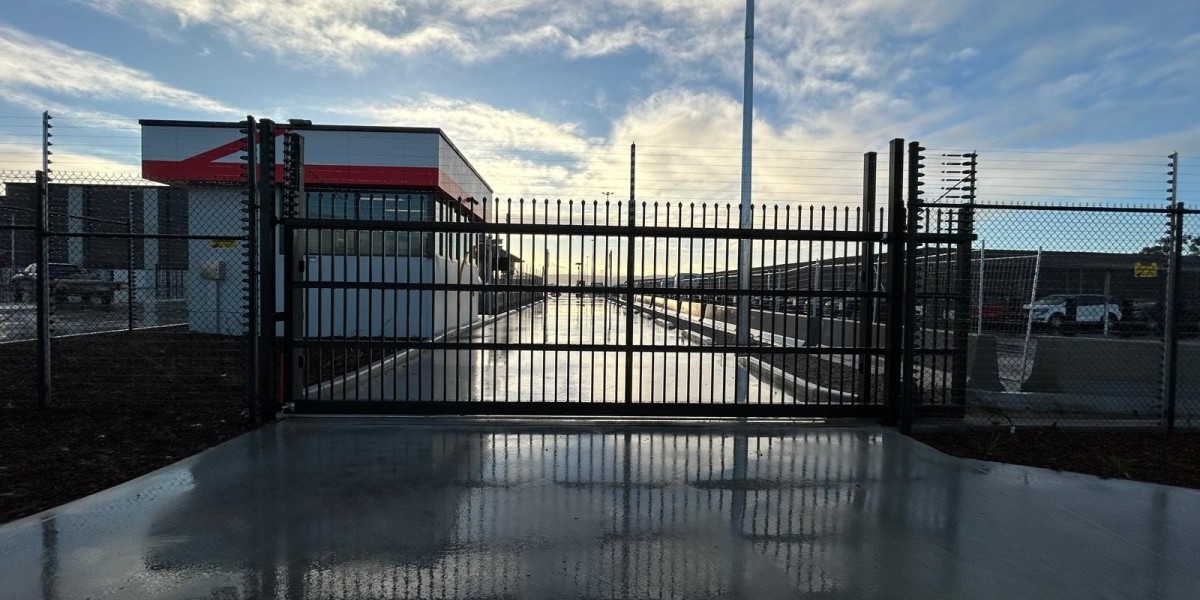
Garrison fencing works well when you want a strong boundary with a clean, professional finish. Palisade fencing suits sites needing a heavier, security-first barrier. Chain mesh is a practical, cost-effective choice for yards, warehouses and large boundaries where seeing through the fence is useful. Some sites need panel systems or custom solutions — iBolt, for instance, lists palisade, garrison, chain mesh and C-Thru among its commercial fencing options.
Push them to explain the pros and limits of each system rather than steering you toward the priciest one.
4. Sort Out Security Before Appearance
Looks matter, especially on customer-facing frontages — but nail down what the fence needs to do first. Are you marking a boundary, restricting foot access, deterring intruders, protecting stock and machinery, separating work areas, controlling vehicles or just improving privacy?
Once the main goal is clear, height, design, gate type and materials all fall into place more easily. Some businesses want visibility through the fence; others want a solid visual barrier. The contractor should match the system to your actual purpose.
5. Don't Treat Gates as an Afterthought
Gates usually cop far more daily wear than fixed panels, particularly at warehouses and logistics sites. Raise them early.
Think about vehicle and truck width, staff and pedestrian entry, opening direction, available space, how often they'll be used, and whether you want manual or automated operation. If automation might be on the cards, it's smarter to plan it while the whole system is being designed rather than retrofitting later.
6. Ask About Materials and Finishes
Commercial fencing is expected to stand outdoors for years, so quality counts. Ask what materials are proposed and why they suit your location.
It's worth discussing protective coatings, finish and colour options, corrosion resistance, maintenance expectations and replacement parts. This matters especially in Perth, where fencing faces strong sun, wind and — near the coast — salt-laden air. A good contractor explains how a finish suits your environment instead of just calling it "high quality."
7. Look Closely at Installation Quality
Even a well-built fence underperforms if it's installed badly. Posts need proper footing and support, panels need to stay aligned, and gates need clearance to swing correctly.
Before accepting a quote, ask: Who's doing the install? How are measurements confirmed? How do you handle changes in ground level? How will gates be aligned? And what happens if unexpected site conditions turn up? Clear answers show they're thinking past just dropping panels on-site.
8. Compare Detailed Quotes, Not Just Prices
The cheapest quote can quietly become the most expensive. One might include gates, removal of old fencing and site prep; another might cover only supply and basic install.
Ask for the scope in writing. A proper commercial quote should spell out fence type, height, length, posts, panels, gates, hardware, coatings, removal of old fencing, site prep, installation, disposal and automation if needed. Comparing like-for-like is the only way to see real value.
9. Check Communication and Project Planning
Commercial jobs usually involve several people — a facility manager coordinating staff, tenants, delivery drivers and other trades while work happens. Good communication keeps that manageable.
Ask when the project can start, what the install sequence looks like, whether access will be restricted, who your main contact is, and how changes and delays get communicated. A contractor who's clear before winning the job tends to be easier throughout it.
10. Ask About Past Projects and Future Maintenance
Past work shows whether they regularly handle your scale. Instead of just admiring photos, ask about jobs with similar property types, fence lengths, security needs, gate systems and ground conditions.
And remember the fence needs upkeep. Gates, hinges, locks and automated parts eventually need attention. Ask what maintenance is recommended, whether replacement parts and individual repairs are available, and what warranty applies.
11. Choose a Contractor Who Asks You Questions
One of the clearest signs of an experienced contractor is that they ask about your business — what the property's used for, what you're protecting, who comes and goes, how vehicles move and whether your needs might change.
Businesses weighing up fencing contractors Perth should be wary of anyone quoting a flat price-per-metre without discussing the actual property. A tailored recommendation beats a generic fence that just happens to fit the boundary.
Quick Contractor Checklist
What to Check | Question to Ask |
Experience | Have you done similar commercial projects? |
Site assessment | Have you inspected how our property is used? |
Fence type | Why is this system suitable? |
Security | Does the design match our security needs? |
Gates | Have vehicle and pedestrian access been planned? |
Materials | What finish and material are being used? |
Installation | Who completes the work? |
Quote | What exactly is included? |
Timing | What's the expected schedule? |
Maintenance | What support is available afterwards? |
Final Thoughts
Choosing a commercial fencing contractor in Perth is about more than lining up three prices and picking the lowest. The right one understands how your property runs, pinpoints your security and access needs, recommends a system that fits and hands you a clear installation plan.
Look for commercial experience, a proper site assessment, quality materials, thoughtful gate planning, transparent quoting and strong communication. Above all, choose someone who can explain why their solution suits your business — because a good commercial fence shouldn't just define your boundary, it should work with your operations and last for the long haul.