
Ask ten IV hydration business owners what "certified" means for their clinic, and you'll get ten different answers. Some think it's about the nurse's license. Some think it's about liability insurance. Some think it's a plaque on the wall.
None of those, on their own, is what regulators, insurers, or serious clients are actually looking for.
Real IV hydration certification is about proving your business — not just your clinicians — operates to a documented, verifiable standard. Here's what that actually involves, and why more practices are formalizing it now.
Licensed vs. Certified: Two Different Things
Licensure is individual. It's your RN or NP's state license to practice, plus any required certifications like ACLS. It answers the question: is this person qualified to deliver care?
Business certification is organizational. It answers a different question entirely: does this practice have documented standards, protocols, and oversight in place — regardless of which staff member is working that day?
A clinic can employ perfectly licensed, competent clinicians and still fail a compliance review because the business has no documented standards for consent, emergency response, waste handling, or physician oversight. That gap is exactly what certification programs and standards books are designed to close.
What a Real Certification Standard Should Cover
When evaluating (or building) a certification framework for your IV hydration business, it should address:
- Clinical protocols — infusion procedures, dosing safety, contraindication screening
- Emergency preparedness — documented, rehearsed responses to anaphylaxis, infiltration, vasovagal episodes
- Medical oversight structure — a clear, written collaboration or supervision agreement
- Compliance documentation — PHI handling, biomedical waste, consent processes
- Business operations — HR policies, employment agreements, client-facing policies like cancellations
If a certification program only covers the clinical piece, it's missing most of what actually gets practices flagged in audits or named in claims.
Why This Matters More Than Ever in 2026
The IV hydration and mobile wellness industry has grown fast — and regulators have taken notice. More states are tightening oversight of nurse-led infusion services, insurers are asking harder questions before underwriting malpractice policies, and clients themselves are increasingly savvy about checking credentials before booking a drip.
Practices that can point to a formal, documented certification standard have an easier time with all three: regulatory reviews, insurance underwriting, and client trust. Practices that can't be increasingly the exception, not the norm.
Building (or Buying) Your Standard
You have two paths:
- Build it yourself — piecing together protocols, forms, and policies from scattered sources, general legal templates, and trial and error. Slow, and easy to miss industry-specific requirements.
- Start from an existing IV-specific standard — adapting a framework already built for this exact business model, then customizing it to your state and practice.
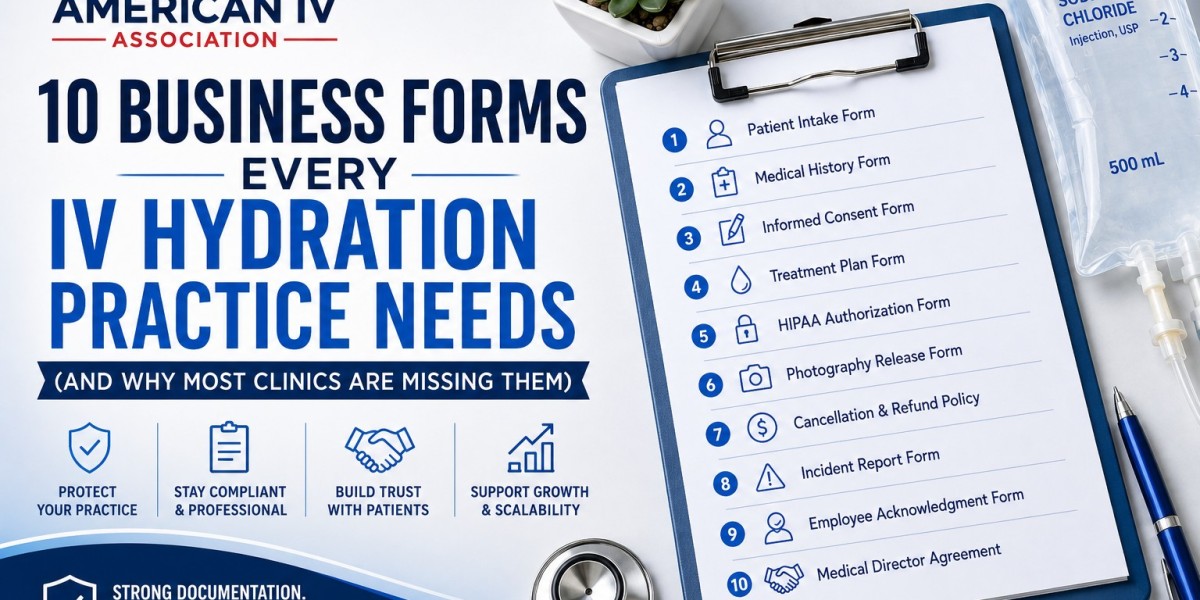
The American IV Association's Certification Standards Book takes the second approach. It lays out the full framework — clinical, compliance, and operational — that AIVA uses for its Business Certification Program , along with an optional companion workbook for practices building their standards from scratch. It's paired with a library of 25+ ready-to-use forms covering everything from PHI authorization to collaboration agreements, so you're not starting with a blank page.
? Explore the Certification Standards Book, Business Certification Program, and full forms library →
Three Questions to Ask Before You Say "We're Certified"
- Is our certification based on documented, written standards — or just individual staff credentials?
- Does it cover business operations (HR, consent, waste, oversight), not just clinical protocol?
- Could we produce the current standards document if a regulator, insurer, or client asked to see it?
If the answer to any of those is uncertain, it's worth spending time with AIVA's Education & Resources library before it becomes a problem instead of a plan.