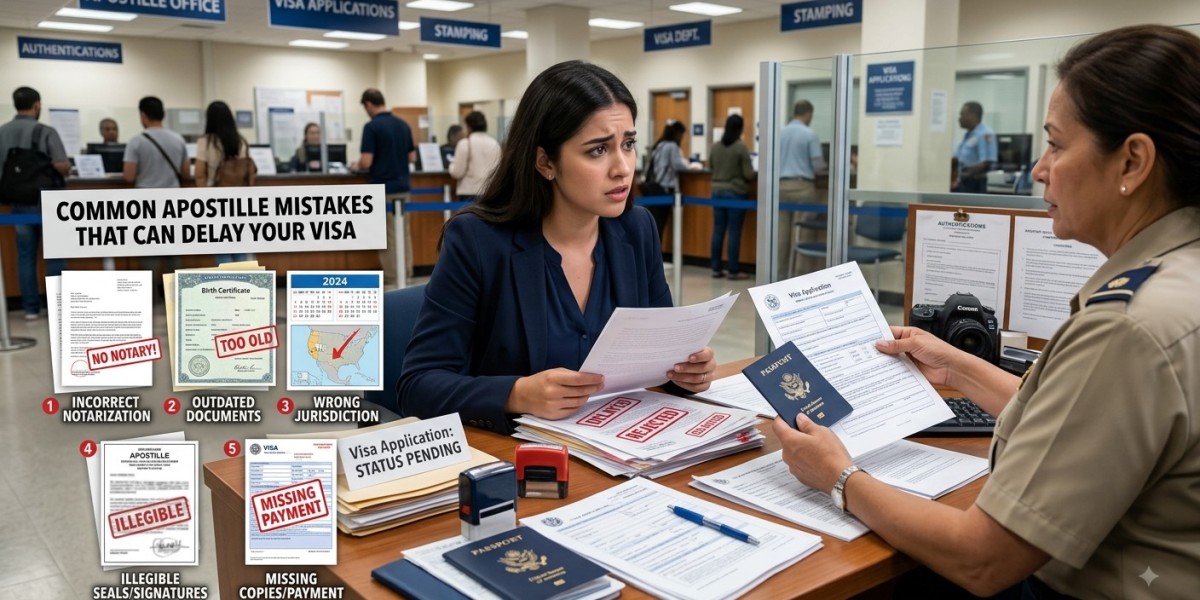

When applying for a visa, even a small documentation mistake can cause unnecessary delays. Many applicants focus on completing their visa forms and arranging travel plans but overlook the importance of correctly preparing documents for international use. Apostille Services in Hyderabad can help applicants understand the authentication requirements before submitting important documents.
Apostille is commonly required when Indian public documents are intended for use in countries that recognize the Hague Apostille Convention. Depending on the document, additional verification may be required before the final apostille is issued.
Secure Apostille Services assists individuals with document review, verification, apostille processing, and secure delivery. Understanding common mistakes in advance can help reduce the possibility of delays.
1. Choosing the Wrong Legalization Process
One of the most common mistakes is assuming that every country requires apostille.
Apostille is generally applicable to countries that recognize the Hague Apostille Convention. Countries outside this system may require a different legalization or attestation procedure.
Submitting a document for the wrong type of authentication can result in delays, additional expenses, or rejection by the receiving authority.
Before beginning the process, always confirm whether the destination country requires apostille, attestation, embassy legalization, or another form of authentication.
2. Submitting a Document With Incorrect Information
Names, dates of birth, registration numbers, and other details should be checked carefully before submitting a document.
For example, if the name on a birth certificate is different from the name on the passport, the receiving authority may question the discrepancy. Similar problems can occur with marriage certificates, educational certificates, and police clearance certificates.
Correcting inconsistencies before authentication is generally preferable to discovering them after processing has started.
3. Using an Old or Damaged Certificate
Some applicants submit very old certificates without checking whether the document is still suitable for their intended purpose.
Older birth certificates, for example, may contain incomplete information or may not include the applicant's name. Damaged certificates can also create problems if important seals, signatures, or details are difficult to read.
Before starting authentication, check whether the receiving authority has any requirements regarding the age, format, condition, or contents of the document.
4. Not Completing Required Prior Verification
Not every document can proceed directly to the final apostille stage.
Depending on the document type, prior verification or authentication may be required. Educational certificates may follow a different route from personal documents, while commercial documents can have their own requirements.
Failing to complete the required preliminary verification can result in the document being returned or the process being delayed.
Applicants should identify the correct route before submitting original documents.
5. Waiting Until the Last Minute
Visa applications often have strict deadlines. Waiting until the last moment to start document authentication can create unnecessary pressure.
If your document requires additional verification, correction, or replacement, the process may take longer than expected.
It is better to start the authentication process well before your visa appointment, university deadline, employment joining date, or immigration submission date.
Early preparation gives you more time to resolve unexpected issues.
6. Not Checking the Receiving Authority's Requirements
Another common mistake is assuming that an apostilled document will automatically satisfy every requirement of the receiving authority.
Apostille authenticates the relevant signature, seal, or stamp. However, the foreign authority may have additional requirements concerning translation, document format, validity period, supporting documents, or the specific type of certificate.
Before processing your document, check the requirements provided by the university, employer, immigration authority, embassy, or other receiving organization.
7. Ignoring Name Differences Across Documents
Name discrepancies are particularly important when submitting documents for immigration or visa purposes.
For example, the name on a degree certificate may differ from the name on a passport because of initials, spelling variations, surname changes, or marriage.
Applicants should compare all important documents before beginning the process. If there is a legitimate reason for the difference, supporting documentation may be required depending on the receiving authority.
Addressing these issues early can help avoid questions during the visa process.
8. Apostilling the Wrong Document
Applicants sometimes authenticate a document without first confirming whether it is the document actually requested by the receiving authority.
For example, a university may ask for a specific educational certificate, while an applicant submits a different academic record. Similarly, an immigration authority may require a particular civil document rather than a general declaration.
Always match the document you are processing with the exact requirement in your visa or immigration checklist.
9. Forgetting Translation Requirements
Some foreign authorities may require documents to be translated into a particular language.
Applicants sometimes complete the apostille process and only later discover that a certified translation is also required.
Translation requirements vary by destination country and receiving authority. Therefore, applicants should determine whether translation is required and whether the translation itself needs certification or authentication.
Planning translation and apostille requirements together can prevent unnecessary delays.
10. Not Keeping Track of Original Documents
Original certificates are important documents and should be handled carefully throughout the authentication process.
Applicants should maintain records of which documents have been submitted, where they are being processed, and when they are expected to be returned.
Using a reliable document-handling service and keeping copies or digital scans of important records can provide additional peace of mind.
11. Assuming Every Document Has the Same Process
Different documents can have different authentication requirements.
A birth certificate, degree certificate, police clearance certificate, affidavit, and commercial document may not follow identical procedures.
The issuing authority and type of document can determine which preliminary verification is required before apostille.
Understanding the document-specific process helps applicants avoid following an incorrect procedure.
12. Not Checking the Final Document
Once the authenticated document is returned, applicants should carefully check it before submitting it with their visa application.
Verify that the correct document has been processed and that the apostille details are present and readable. Also check whether the receiving authority has requested any additional supporting documents or translations.
A final review can help identify an issue before the visa application is submitted.
How Apostille Mistakes Can Affect Visa Applications
Apostille-related mistakes do not necessarily mean that a visa will be refused. However, incorrect, incomplete, or improperly authenticated documents can lead to additional requests, processing delays, or the need to submit corrected documents.
Visa applications are often time-sensitive, so these delays can create significant inconvenience.
Applicants should therefore treat document authentication as an important part of their overall visa preparation rather than something to complete at the last minute.
How Secure Apostille Services Can Help
Secure Apostille Services assists applicants with the document authentication process by reviewing documents, identifying potential issues, coordinating required verification, and managing apostille processing.
Professional assistance can be particularly useful when applicants have multiple documents or are working with strict immigration, university, employment, or family visa deadlines.
Before processing begins, applicants can provide details about their document and destination country so that the appropriate authentication route can be identified.
Apostille Services in Hyderabad
Applicants in Hyderabad who need documents authenticated for overseas use can seek professional assistance to simplify the process.
Secure Apostille Services handles various categories of documents, including personal, educational, legal, and commercial documents. The team can assist with document review, processing, and delivery based on the applicable requirements.
Whether you are preparing documents for study, employment, immigration, marriage, or another international purpose, checking the requirements early can help prevent avoidable problems.
Conclusion
Apostille is an important part of preparing certain Indian documents for use abroad, but mistakes during the process can create unnecessary delays.
Choosing the wrong authentication route, submitting incorrect information, overlooking prior verification, using unsuitable documents, ignoring translation requirements, and waiting until the last minute are some of the common issues applicants should avoid.
The best approach is to identify the destination country's requirements, check every document carefully, and begin the process well before your visa deadline.
With proper preparation and professional assistance from Secure Apostille Services, applicants in Hyderabad can make the document authentication process more organized and reduce the risk of avoidable delays.