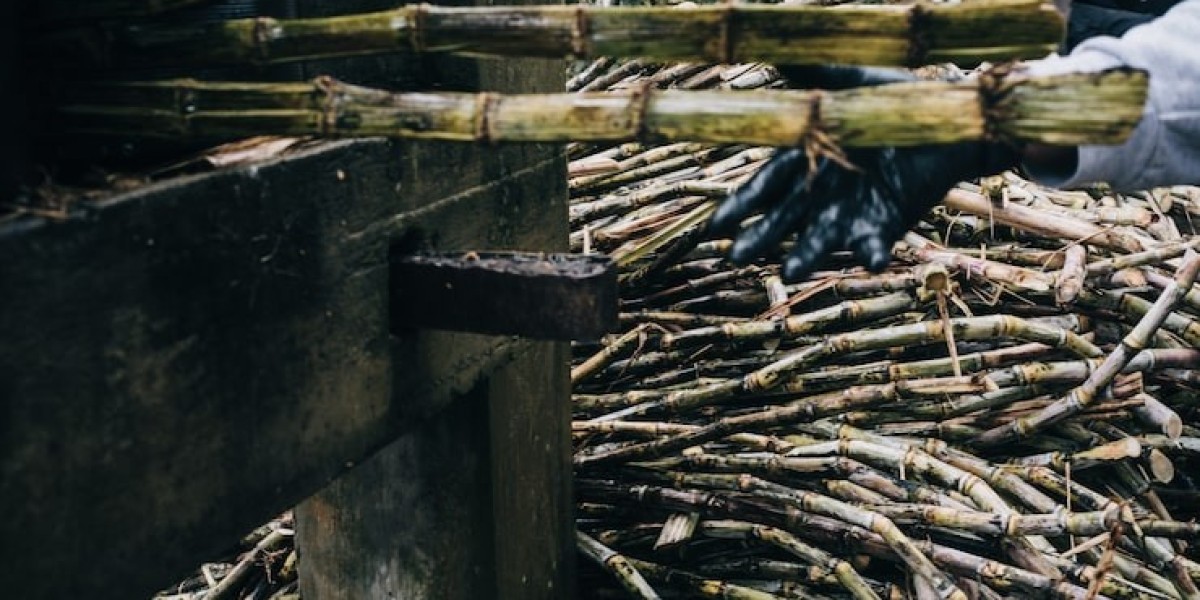

Sugarcane is one of India's most important commercial crops, supplying raw material for sugar production while supporting ethanol, jaggery, khandsari sugar, and other value-added applications. The crop has substantial economic and social importance because its cultivation supports millions of farming households and provides raw material to an extensive network of sugar mills. Favorable climatic conditions, government pricing policies, technological improvements, and growing demand from sugar and biofuel industries are shaping the sector's development.
The India sugarcane industry study states that India's sugarcane production was valued at around 450.12 million tons in 2024–25 and estimates the industry to register a CAGR of around 3.5% during 2026–2032. The study highlights government pricing support, farmer welfare programs, favorable cultivation conditions, ethanol production, export opportunities, precision agriculture, and value-added processing as important factors influencing future development. Syrup canes lead by type, sugar production remains the dominant end use, and Uttar Pradesh is projected to maintain its leading regional position.
Government Pricing Support Encourages Cultivation
Government pricing policies remain an important factor influencing sugarcane cultivation. Guaranteed pricing mechanisms provide farmers with greater visibility over potential returns and can encourage continued investment in the crop.
For the 2025–26 sugar season, the government fixed the Fair and Remunerative Price at Rs. 355 per quintal for a basic recovery rate of 10.25%. For the following 2026–27 season, the Cabinet approved an FRP of Rs. 365 per quintal, representing a 2.81% increase over the previous season. The policy is expected to benefit approximately five crore sugarcane farmers and their dependents.
These measures provide income support while encouraging farmers to maintain sugarcane cultivation.
Sugar Production Remains a Major End Use
Sugar production is expected to retain its dominant position in India's sugarcane industry through 2026–2032. Sugarcane remains the primary raw material for India's extensive sugar-processing network, with demand supported by households, food manufacturers, beverage companies, bakeries, confectionery producers, and dairy processors.
The crop's established connection with India's food culture also supports long-term demand. Sugar is widely used during festivals, celebrations, religious occasions, and everyday food preparation.
Continued investment in sugar mills and processing infrastructure can improve cane utilization and create opportunities for greater efficiency.
Ethanol Diversification Creates New Opportunities
The increasing diversion of sugarcane-derived materials toward ethanol production is changing the industry's revenue structure. Sugarcane juice, syrup, and molasses can be processed into ethanol, providing sugar mills with an additional revenue stream.
The government's ethanol-blending program is encouraging mills to invest in distillation capacity and diversify beyond conventional sugar production.
This diversification can help mills manage fluctuations in sugar prices and improve the utilization of available cane. It also strengthens the connection between agriculture, food processing, and renewable energy.
Syrup Canes Hold a Strong Position
Syrup canes are projected to maintain a leading position among sugarcane types. Their relevance is linked with demand for crystallized sugar, processed foods, and biofuels.
The growing integration of sugar mills with ethanol production further supports demand for cane varieties suitable for industrial processing.
Improved processing efficiency and increasing industrial utilization are expected to sustain the segment's importance during the forecast period.
Precision Agriculture Improves Productivity
Technology is increasingly influencing sugarcane cultivation. Precision agriculture tools can help farmers monitor soil conditions, crop health, irrigation requirements, pest activity, and harvesting schedules.
The MarkNtel Advisors study highlights AI-powered farming, IoT-based sensors, satellite imagery, and other smart technologies as important trends. Such systems can improve resource utilization and potentially increase yields without requiring proportional expansion of cultivated land.
India's agricultural authorities are also encouraging improved technologies and crop varieties. The ICAR sugarcane cultivation guidance recommends suitable varieties, planting practices, spacing, and crop-management measures for different cultivation conditions.
Production Continues to Expand
Official agricultural data indicates that India's sugarcane production increased from 405.399 million tonnes in 2020–21 to 454.611 million tonnes in 2024–25. The first advance estimate for 2025–26 places production at approximately 475.614 million tonnes.
The increase reflects the importance of sugarcane within India's agricultural economy and provides a broader raw-material base for sugar, ethanol, jaggery, and other downstream industries.
Higher production can also strengthen supply availability for processing facilities.
Uttar Pradesh Maintains Regional Leadership
Uttar Pradesh is projected to remain India's leading sugarcane-producing state during 2026–2032, supported by extensive cultivated acreage, irrigation infrastructure, established sugar mills, and continued investment in agricultural development.
Maharashtra and Karnataka are also significant contributors, while Tamil Nadu and Bihar provide additional production capacity.
Regional differences in rainfall, irrigation, soil conditions, technology adoption, and mill infrastructure influence productivity and profitability across states.
Water Scarcity Creates a Major Challenge
Water availability remains one of the most significant challenges facing sugarcane cultivation. Sugarcane requires substantial water during its growth cycle, making the crop vulnerable to drought, irregular rainfall, and groundwater constraints.
Maharashtra, Karnataka, and other water-stressed areas can experience fluctuations in production when rainfall patterns change.
Drip irrigation, fertigation, drought-tolerant varieties, soil monitoring, and improved irrigation scheduling can help reduce water consumption while maintaining productivity.
Climate Variability Affects Yield Stability
Climate conditions can influence cane growth, sugar recovery, disease incidence, and harvesting schedules. Excessive rainfall can create waterlogging, while insufficient rainfall can reduce crop development.
Temperature fluctuations can also increase the risk of pests and diseases.
The adoption of climate-resilient varieties and precision farming can help farmers respond to these risks. Improved crop monitoring can also support earlier identification of disease and pest pressures.
Export Revival Supports Value Addition
India's position as a major sugar producer creates opportunities for sugarcane-based value chains to participate in international markets. Export opportunities can become particularly important when domestic production generates sufficient surplus.
The MarkNtel Advisors study also identifies organic sugar, specialty sugars, pharmaceutical applications, bioethanol, molasses, industrial alcohol, and bio-based chemicals as areas with diversification potential.
Developing these applications can help integrated sugar mills generate revenue from multiple products rather than depending solely on conventional sugar.
Circular Economy Encourages By-Product Utilization
Sugarcane processing generates several by-products, including bagasse and molasses. Greater utilization of these materials can support the development of renewable energy, animal feed, biofuels, and bio-based products.
In 2024, Bajaj Hindusthan Sugar partnered with EverEnviro to produce compressed biogas from sugarcane waste in Uttar Pradesh, demonstrating how agricultural residues can contribute to circular-economy initiatives.
Such projects can improve resource efficiency while providing additional revenue opportunities for sugar-processing companies.
Competitive Landscape
The competitive environment includes Triveni Engineering & Industries Ltd., Cosan Limited, Dharani Sugars & Chemicals Ltd., Shree Renuka Sugars, Biosev, Mawana Sugars Ltd., Louis Dreyfus Company, Credence Commodity Inc., Imperial Sugar, Bajaj Hindusthan Sugar Ltd., and Dwarikesh Sugars Industries Limited, among others.
Competition is influenced by cane procurement, farm productivity, processing efficiency, ethanol capacity, technology adoption, geographical reach, and diversification into value-added products.
Conclusion
India's sugarcane industry is evolving through smart farming, government pricing support, ethanol diversification, increasing production, export opportunities, and value-added processing.
Sugar production remains the dominant end use, while ethanol and other downstream applications are providing sugar mills with opportunities to diversify revenue. Syrup canes maintain a strong position, and Uttar Pradesh is expected to remain the leading producing region.
At the same time, water scarcity, climate variability, input costs, pests, and production volatility remain important challenges. Companies and farmers that combine precision agriculture, efficient irrigation, resilient crop varieties, modern processing, ethanol integration, and effective by-product utilization can strengthen the industry's long-term sustainability and productivity.