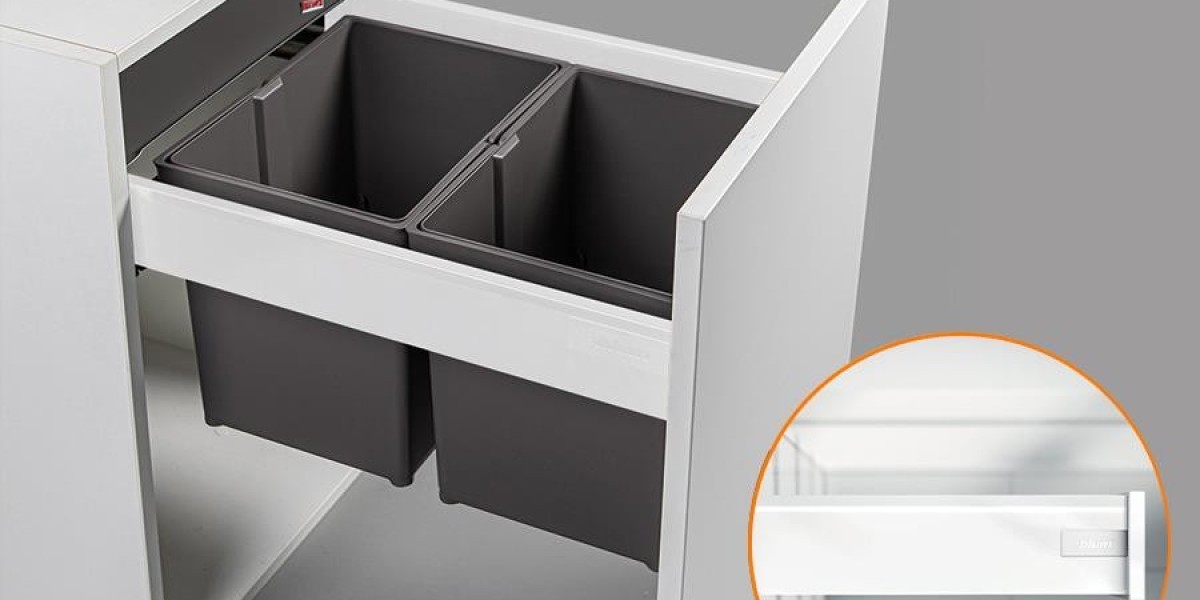

But choosing well involves more than picking the biggest container that fits a cupboard. Cabinet dimensions, waste volume, household habits, installation style and everyday accessibility all affect whether a system actually works. Whether you're renovating or upgrading a single cabinet, understanding these considerations helps you avoid an expensive or inconvenient mismatch.
Start With the Available Cabinet Space
The cabinet itself should always be your first consideration. Two kitchens can have cupboards that look identical from the outside yet offer very different usable space inside — hinges, drawer runners, plumbing and cabinet frames all eat into the room available.
Measure the internal width, height and depth, the door opening, the clearance around hinges, and the space needed for moving parts. Don't rely on the nominal size: a cabinet described as 450 mm wide will have a smaller usable interior once walls and hardware are accounted for.
Accurate measurements matter most with a pull out kitchen bin, because the full frame and containers need room to extend and retract without hitting surrounding hardware. Measuring twice before ordering a pull out kitchen bin saves considerable frustration later.
Think About Where It Will Be Installed
Location affects how practical a bin is day to day. Most people prefer waste storage close to the main preparation area, so packaging and scraps can be disposed of without walking across the kitchen. Common spots include beneath the prep bench, near the sink, beside the dishwasher, under an island, or inside a pantry cabinet.
Consider how you actually move around. If you prep most vegetables beside the sink, a bin several metres away quickly becomes annoying. Installed directly under a heavily used work area, it makes both prep and cleanup more efficient.
Choose Capacity Based on Real Habits
A large bin sounds convenient, but capacity should reflect actual needs rather than maximum volume. Think about how often your current bin is emptied. A small household that takes rubbish out frequently may be fine with a compact system; a larger family generating more packaging will want more capacity.
Weigh up the number of people, how often you cook at home, how much packaging you produce, and your recycling habits. Looking at the size of your existing bin and how quickly it fills gives you a practical starting point for comparison.
Decide Between One Bin or Multiple Containers
Waste separation has become a core part of kitchen organisation. Rather than one container for everything, many households split general rubbish, recycling and other streams.
A multi-container system makes this easier — two buckets for general waste and recycling, for instance, or three where cabinet space allows. Remember, though, that more containers usually means each individual bin is smaller. Think about which waste type your household produces most before dividing the space.
Consider How the Bin Opens
Built-in bins come with different mechanisms. A common option is a slide out bin that moves forward on runners when you need it and stores neatly inside the cabinet afterwards. Depending on the system, a slide out bin may be pulled forward manually or move in coordination with the cabinet door.
When comparing mechanisms, look at ease of access (it should open smoothly without excessive force), the clearance in front of the cabinet for full extension, and how easily the containers lift out for emptying and washing. A system that looks clever in a showroom can become frustrating if removing a full container takes complicated steps — and since kitchen bins are opened many times a day, a smooth mechanism matters more than it first seems.
Door-Mounted Versus Independent Systems
Some bins attach to the cabinet door, so the unit moves forward as the door opens. Others operate independently, requiring you to open the door before pulling the bin out. Neither is automatically better.
A door-connected system offers quick access because opening the cupboard brings the bin forward at the same time. An independent mechanism can offer more flexibility in certain cabinet configurations. The right choice depends on cabinet construction, door style, internal dimensions and how often the bin is used — worth confirming before you buy, especially when adding a bin to existing cabinetry rather than a full renovation.
Check the Runner and Frame Quality
The containers are only part of the system. The runners and frame do most of the mechanical work and carry significant weight when the bin is full, so their construction matters.
Look at runner construction, smoothness of movement, stability when fully extended, frame materials and mounting method. The unit should feel stable rather than loose or flexible when extended — a poor mechanism undermines even a well-designed container.
Pay Attention to Bin Shape
Capacity figures only tell part of the story. Two containers with similar litre ratings can have very different shapes — one tall and narrow, another short and wide. Tall containers suit narrow cabinets but can be awkward beneath sinks; wider ones give a larger opening but need more cabinet width. Compare actual dimensions, not just litres.
Consider Established Bin Systems
The manufacturer and product range also matter. Established systems often provide different configurations, replacement containers and installation options for a range of layouts. For homeowners researching recognised European-style storage, wesco bins are among the options worth considering for concealed waste storage, with configurations and replacement parts suited to various cabinet sizes.
Whatever the brand, always compare the specifications of the individual unit against your cabinet. A reputable product is still unsuitable if its dimensions or installation requirements don't match your kitchen.
Watch for Under-Sink Restrictions
The cupboard under the sink looks ideal but is often the hardest to work with. Sink bowls reduce height, and plumbing occupies space at the rear or centre. Watch for water filters, waste-disposal plumbing, flexible hoses, isolation valves and dishwasher connections. Measure these carefully — don't assume a bin fits just because the cabinet is wide enough, because the usable shape of an under-sink cupboard is very different from an empty standard cabinet.
Measure With the Bin Fully Extended
It's easy to focus only on what happens inside the cupboard, but the system must also work outside it. Check whether an open dishwasher, a nearby drawer, an opposite cabinet or an island could interfere when the bin is fully extended. This is especially important in narrow galley kitchens where opposing cabinets sit close together.
Final Thoughts
Choosing a built-in waste bin is about matching the system to the kitchen rather than forcing the kitchen to accommodate the wrong product. Start with accurate internal measurements and identify any hinges, plumbing or obstructions. Then weigh household waste volume, recycling habits, preferred location and how often the system will be used.
Pay attention to the practical details — runner quality, container removal, cleaning access and the clearance needed at full extension. A well-chosen pull out kitchen bin should do more than hide rubbish: it should make disposal easier, cut visible clutter and support the natural flow of cooking and cleaning.