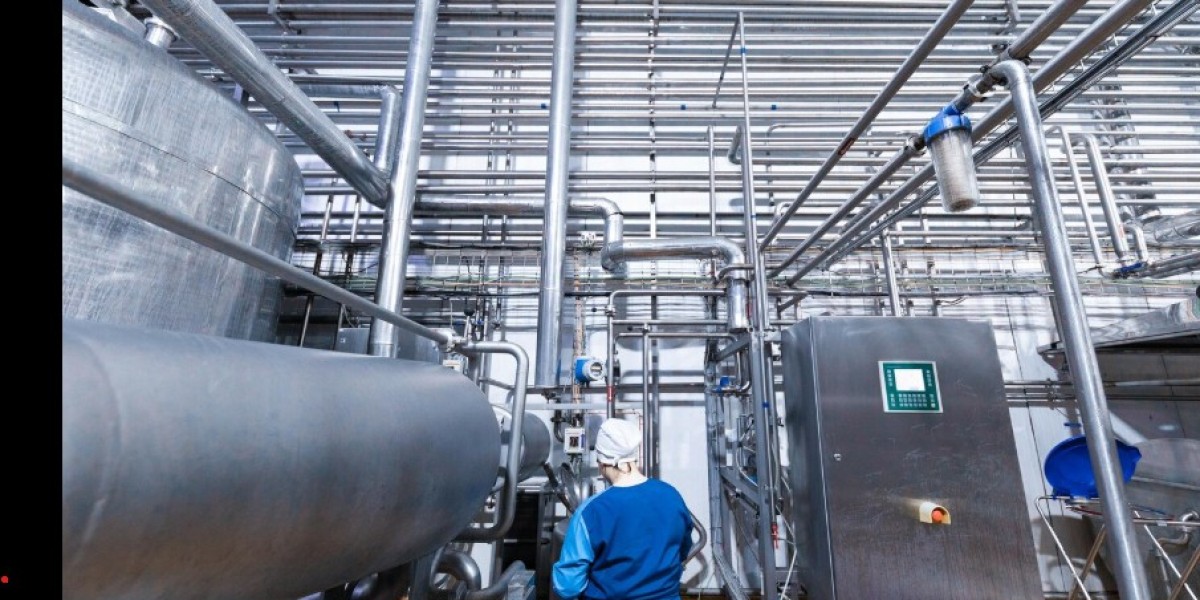

Selecting reliable heat exchanger suppliers is an important decision for businesses that depend on efficient heating, cooling, and thermal-energy management. Heat exchangers are used across a wide range of industrial processes to transfer heat between separate fluid streams while keeping them physically isolated. The right equipment can support process stability, energy efficiency, and dependable long-term operation.
Industrial systems often operate under demanding temperature, pressure, and flow conditions. Because of this, choosing a heat exchanger should involve more than comparing equipment sizes or prices. Businesses should consider technical requirements, materials, maintenance needs, installation conditions, and the level of application support available.
Courtney & Nye focuses on providing industrial equipment solutions based on the practical requirements of each application. Understanding what to consider when evaluating heat exchanger suppliers can help businesses make better purchasing and engineering decisions.
Understanding Heat Exchangers
A heat exchanger is designed to transfer thermal energy from one fluid to another without allowing the fluids to mix. One stream provides heat while the other receives it. The transfer takes place through a conductive surface separating the two flow paths.
Heat exchangers can be designed in different configurations depending on the application. Common considerations include heat-transfer area, flow arrangement, pressure requirements, temperature ranges, and fluid characteristics.
The correct design can help maintain process temperatures and reduce unnecessary energy consumption. In heat-recovery applications, a heat exchanger can also redirect thermal energy that might otherwise be lost.
Because every industrial process has different requirements, equipment selection should begin with a clear understanding of the operating environment.
Why Choosing the Right Supplier Matters
The supplier plays an important role in the overall success of a heat-transfer project. A suitable supplier should understand that selecting an exchanger involves more than matching a product to a general capacity requirement.
Technical knowledge is particularly important when the application involves unusual temperatures, high pressures, demanding fluids, limited installation space, or continuous operation.
Reliable heat exchanger suppliers should be able to review information such as heat load, fluid flow rate, inlet temperatures, required outlet temperatures, operating pressure, and fluid properties.
Application support can also help identify potential issues before equipment is installed. Proper planning can reduce the risk of selecting equipment that does not provide the required thermal performance.
Courtney & Nye takes an application-focused approach to industrial equipment solutions, helping customers consider the complete operating environment when evaluating heat-transfer equipment.
Types of Heat Exchangers
Different industrial processes require different heat-transfer configurations. Shell and tube heat exchangers are commonly used where robust construction and flexibility are important. They use tubes contained within a shell, with one fluid flowing through the tubes and another surrounding them.
Brazed plate heat exchangers use corrugated plates to create alternating flow channels. Their compact construction and high heat-transfer surface area can make them useful where space and thermal efficiency are important.
Plate fin heat exchangers use plates and fins to create multiple flow passages and maximize heat-transfer surface area. These systems can be considered for applications where compact thermal performance is required.
Air-based heat-transfer systems can also be used where air serves as one of the heat-transfer media. The appropriate configuration depends on the required thermal duty and operating conditions.
The choice should always be based on the actual application rather than simply selecting the most compact or highest-capacity option.
Key Factors to Consider
When evaluating heat exchanger suppliers, businesses should first identify the required heat-transfer duty. This determines how much thermal energy the equipment needs to transfer under operating conditions.
Temperature is another major consideration. The inlet and outlet temperatures of both fluid streams affect the required heat-transfer area and overall exchanger design.
Flow rate must also be evaluated. An exchanger needs to accommodate the required fluid volume while maintaining acceptable pressure drop.
Operating pressure is equally important. The equipment should be appropriate for both normal operating conditions and expected pressure variations.
Fluid characteristics can influence equipment selection significantly. Viscosity, chemical composition, corrosiveness, cleanliness, and the presence of suspended particles can affect heat-transfer performance and maintenance requirements.
Installation space should also be considered. Equipment dimensions, connection arrangements, accessibility, and maintenance clearance can all influence the final choice.
Heat Exchangers and Industrial Energy Efficiency
Energy efficiency is one of the major reasons businesses invest in effective heat-transfer equipment. Heat exchangers can help reduce energy losses by transferring thermal energy between process streams.
For example, heat from a warmer process stream can potentially be transferred to a colder stream that requires heating. This allows existing thermal energy to be reused rather than discarded.
Efficient heat transfer can also reduce the workload on separate heating and cooling equipment. When process temperatures are controlled effectively, supporting systems may operate more efficiently.
However, overall energy performance depends on the complete system. Pumping requirements, pressure drop, insulation, fluid flow, equipment sizing, and maintenance all influence energy consumption.
A supplier with application knowledge can help businesses consider these factors during equipment selection.
Heat Exchangers in Vacuum Applications
Heat-transfer equipment can also play an important role in industrial vacuum systems. Vacuum processes may involve vapor removal, evaporation, condensation, drying, or temperature-sensitive operations.
When equipment such as elmo rietschle vacuum pumps is integrated into a process, thermal management may be necessary to maintain suitable operating temperatures and process conditions. Heat exchangers can assist by removing unwanted heat, transferring thermal energy, or supporting temperature control within the larger system.
The interaction between vacuum equipment and heat-transfer equipment should be considered during system planning. Factors such as process gas, fluid temperature, flow rate, pressure, and heat load can affect both vacuum and thermal performance.
Courtney & Nye focuses on application requirements so that individual equipment components can be considered as part of the complete industrial process.
Maintenance and Long-Term Performance
Choosing quality equipment is only one part of achieving reliable heat-transfer performance. Proper maintenance is equally important.
Over time, deposits, fouling, and corrosion can reduce heat-transfer efficiency. These conditions may also increase pressure drop and place additional demands on connected equipment.
Monitoring inlet and outlet temperatures can help identify changes in thermal performance. Pressure-drop measurements can provide additional information about potential restrictions or fouling.
The appropriate maintenance schedule depends on the application. Systems handling clean fluids may require less frequent intervention, while demanding process environments may need regular inspection and cleaning.
Working with a supplier that understands maintenance requirements can help businesses plan for reliable long-term operation.
Evaluating Supplier Support
When comparing heat exchanger suppliers, businesses should consider the level of technical support available before, during, and after equipment selection.
Application understanding is important because heat-transfer equipment must match real operating conditions. Documentation, technical guidance, sizing assistance, and maintenance information can also make equipment easier to integrate and operate.
Communication is another important factor. Clear discussions about process requirements can reduce the risk of misunderstandings and help ensure that equipment specifications accurately reflect the intended application.
Courtney & Nye emphasizes practical industrial equipment solutions and application-focused support. This approach helps customers consider equipment performance together with installation, maintenance, and long-term operating requirements.
Why Choose Courtney & Nye?
Courtney & Nye understands that industrial heat-transfer systems can vary considerably from one application to another. A successful solution requires attention to temperature, pressure, flow rate, heat load, fluid characteristics, space limitations, and operating conditions.
Our approach focuses on understanding the application before selecting an equipment solution. This allows businesses to evaluate heat-transfer equipment based on practical requirements rather than relying solely on general specifications.
Whether the need involves process heating, cooling, thermal-energy recovery, or temperature management within a vacuum-related system, careful equipment selection can contribute to reliable and efficient operation.
Conclusion
Choosing the right heat exchanger suppliers is an important step toward achieving dependable thermal performance in industrial systems. The supplier should understand the application and help evaluate factors such as heat load, temperature, flow rate, pressure, fluid properties, installation requirements, and maintenance needs.
Heat exchangers can support a wide range of processes, including heating, cooling, energy recovery, and temperature control. They can also work alongside vacuum equipment where thermal management is important.
For businesses evaluating industrial heat-transfer solutions, Courtney & Nye provides an application-focused approach designed around practical operating requirements. With appropriate equipment selection, installation, and maintenance, a well-designed heat-transfer system can support energy efficiency, process stability, and reliable long-term performance.