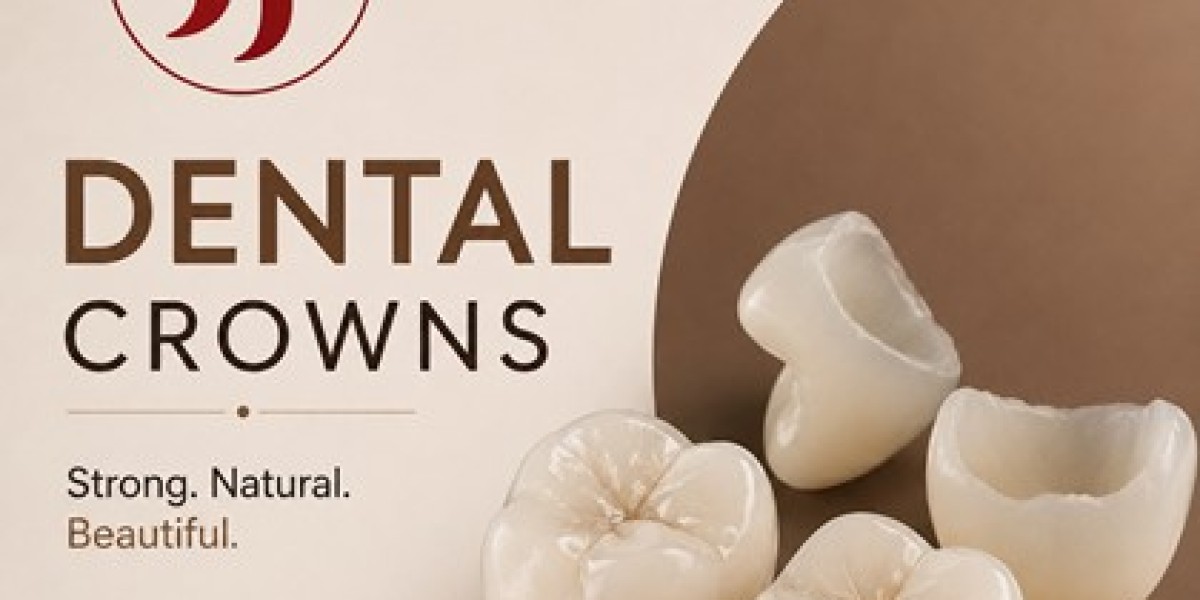

A damaged or weakened tooth can affect your smile, chewing ability, and overall dental health. When a tooth has lost a significant amount of its natural structure, a dental crown can provide the protection and support it needs. Dental crowns are widely used to restore damaged teeth while also improving their appearance.
What Are Dental Crowns?
A dental crown is a custom-made restoration that covers the visible portion of a damaged or weakened tooth. It is designed to restore the tooth's shape, size, strength, and function.
Crowns can be made from different materials, including porcelain, ceramic, and zirconia. The appropriate material depends on the location of the tooth, its condition, aesthetic requirements, and the patient's individual needs.
When Is a Dental Crown Needed?
Dentists may recommend a crown when a tooth requires more protection than a standard filling can provide. Common reasons include:
- Severely decayed teeth
- Cracked or fractured teeth
- Weak teeth with large fillings
- Teeth that have undergone root canal treatment
- Worn-down teeth
- Misshapen or discolored teeth
- Restoration of dental implants
A dental examination is necessary to determine whether a crown is the right solution.
Benefits of Dental Crowns
Dental crowns offer several benefits for patients with damaged or weakened teeth.
Protects Weakened Teeth
A crown can cover a vulnerable tooth and help protect it from further damage during normal biting and chewing.
Restores Function
A properly fitted crown can help restore comfortable chewing and allow the treated tooth to function more effectively.
Enhances Appearance
Modern crowns can be designed to closely match the color and shape of natural teeth. This makes them a popular choice for patients who want both functional and cosmetic improvement.
Provides a Customized Fit
Each crown is created to fit the individual tooth. The dentist considers the tooth's size, shape, position, and bite when planning the restoration.
Supports Long-Term Oral Health
By protecting a damaged tooth and restoring its function, a crown can contribute to maintaining a healthy and functional smile.
What Happens During Crown Treatment?
The process usually begins with a dental consultation and examination. Your dentist evaluates the affected tooth and may take X-rays to check its condition.
If a crown is suitable, the tooth is carefully prepared to create space for the restoration. A dental impression or digital scan is then taken so the crown can be customized.
A temporary crown may be placed while the permanent restoration is being prepared. Once the final crown is ready, the dentist checks its fit, appearance, and bite before securing it in place.
How to Care for a Dental Crown
Good oral hygiene is important for maintaining both your crown and the natural tooth underneath it. Brush your teeth twice daily with fluoride toothpaste and clean between your teeth regularly.
Avoid chewing extremely hard objects and do not use your teeth to open packages. Regular dental checkups can also help your dentist monitor the condition of your crown and surrounding teeth.
Is a Dental Crown Right for You?
Dental crowns can be an effective option for restoring teeth that are damaged, weakened, cracked, or extensively restored. However, every patient's dental condition is different.
If you have a damaged or weakened tooth, consult a qualified dentist for a professional evaluation. The right treatment can help restore your tooth's function, protect it from further damage, and give you a stronger, more confident smile.