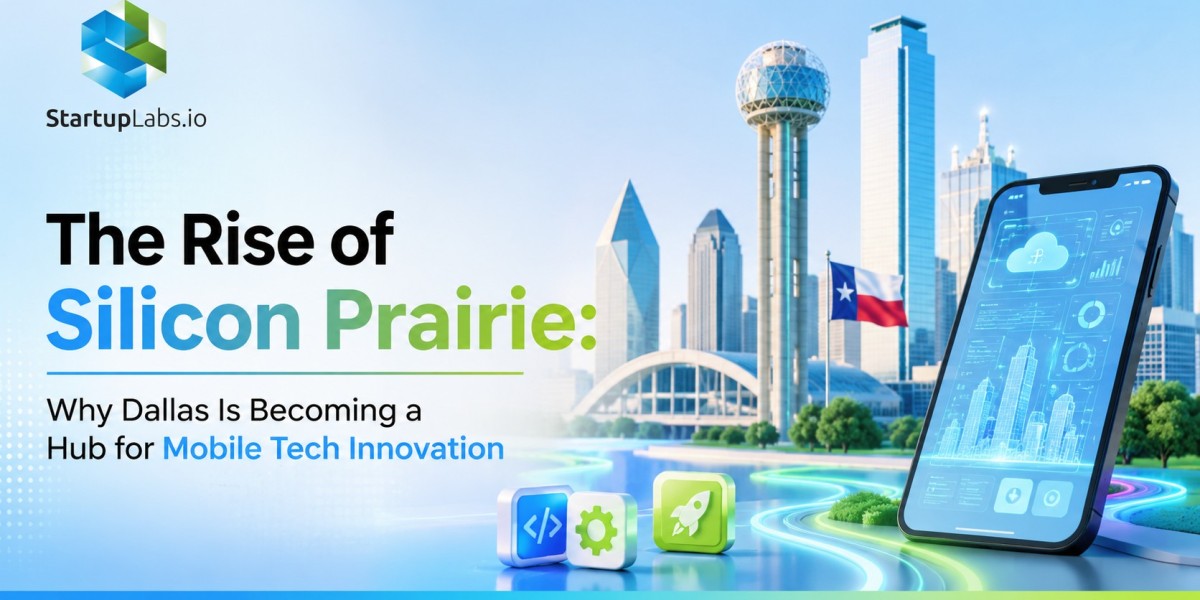

For decades, Silicon Valley was almost synonymous with American technology innovation. Today, however, the U.S. technology map is becoming more decentralized. Dallas-Fort Worth is emerging as one of the strongest examples of this shift, combining a large business ecosystem, growing startup activity, access to technical talent, and a diverse mix of industries.
The region is increasingly being described as the “Silicon Prairie”—a nickname that reflects its growing influence in technology without suggesting it is simply another version of Silicon Valley.
Dallas has several characteristics that make it attractive to technology companies: a strong corporate base, access to investors and talent, a central U.S. location, and an expanding startup ecosystem. The Dallas Regional Chamber specifically identifies artificial intelligence, mobility, big data, virtual and augmented reality, and blockchain among the emerging technology areas gaining momentum across the region.
For mobile technology, this environment creates an important advantage: businesses have both the demand and the resources to turn digital ideas into scalable products.
Why Dallas Is Attracting Technology Entrepreneurs
Dallas has long been known as a major business center, but its technology ecosystem has become increasingly significant. Recent ecosystem data points to thousands of startups, a large technology workforce, accelerators, coworking spaces, and substantial access to venture and corporate capital.
The region is also attracting a new generation of entrepreneurs. According to the Dallas Regional Chamber, LinkedIn data showed that Dallas experienced a 192% increase in Gen Z entrepreneurs between 2020 and 2025—the fastest growth among U.S. cities measured in that analysis.
That entrepreneurial growth matters for mobile technology because startups often use mobile applications as a direct route to customers. Instead of relying exclusively on physical locations or traditional distribution channels, companies can build digital products that provide services, collect customer insights, automate processes, and create recurring revenue.
Mobile Innovation Is Expanding Beyond Startups
The mobile opportunity in Dallas is not limited to early-stage companies.
Healthcare providers, financial services companies, retailers, logistics businesses, real estate firms, restaurants, and large enterprises are increasingly using mobile applications to improve customer experiences and streamline operations.
This creates demand for applications that go beyond attractive interfaces. Modern products need secure authentication, cloud infrastructure, API integrations, analytics, scalable databases, payment systems, and increasingly, artificial intelligence.
A recent example illustrates how sophisticated mobile technology has become in the region. Dallas Fort Worth International Airport has invested in continued development of its mobile application, including capabilities such as conversational AI, indoor wayfinding, location-based services, parking optimization, and accessibility features.
This reflects a broader change in how organizations think about mobile apps. They are no longer simply digital extensions of a website. They can become strategic platforms connecting customers, employees, data, and business systems.
Why Local Expertise Matters
As mobile products become more sophisticated, choosing the right development approach becomes increasingly important.
Businesses must decide between native and cross-platform development, determine which backend architecture fits their expected scale, plan security and data privacy requirements, and consider how emerging technologies such as AI can be integrated without compromising usability.
Expert insight: The strongest mobile products are rarely defined by the number of features they launch with. They are defined by how effectively technology solves a measurable business problem. For a Dallas company, that might mean reducing operational friction, improving customer retention, creating a new revenue channel, or making a complex service easier to access.
That is why businesses exploring Mobile App Development in Dallas should evaluate development partners based on product strategy, technical architecture, scalability, security, and long-term support—not simply development cost.
Companies such as StartUpLabs are part of the broader technology services landscape helping businesses turn mobile product concepts into functional digital experiences.
Dallas Has the Ingredients for Long-Term Mobile Growth
One of Dallas's biggest advantages is the combination of established enterprises and emerging technology companies.
Established businesses provide real-world problems worth solving, while startups introduce new approaches and products. Universities and technology programs contribute talent, and investors and innovation organizations help connect founders with capital and resources.
Venture Dallas, for example, describes its mission around strengthening the Dallas-Fort Worth innovation ecosystem and connecting investors with high-growth companies.
The result is an ecosystem that does not depend on one industry. Fintech, healthcare technology, logistics, retail technology, enterprise software, and other sectors create multiple pathways for mobile innovation.
That diversity could prove particularly valuable as AI and mobile computing increasingly converge. Instead of building standalone applications, companies can create intelligent mobile experiences capable of personalization, automation, predictive recommendations, and real-time decision support.
What Comes Next for the Silicon Prairie?
Dallas does not need to become another Silicon Valley to establish itself as an important technology center. Its strength lies in building a different model—one based on business scale, practical innovation, industry diversity, and access to a growing pool of technology talent.
For entrepreneurs and established companies alike, this creates an attractive environment for experimenting with new digital products.
The next generation of mobile innovation may therefore come from companies that understand both technology and business outcomes. Dallas is well positioned to support those companies, making the Silicon Prairie more than a nickname—it is becoming a meaningful part of America's evolving technology landscape.
Frequently Asked Questions
Why is Dallas called the Silicon Prairie?
“Silicon Prairie” is an informal term used to describe the growing technology and startup ecosystem across Dallas-Fort Worth and the broader Texas region. The nickname reflects the area's expanding technology activity, entrepreneurship, and innovation.
Is Dallas a good location for mobile technology startups?
Yes. Dallas offers access to a large business market, technology talent, investors, startup resources, and multiple technology-driven industries. Its diverse economy also gives mobile startups opportunities to serve both consumers and enterprises.
What industries are driving mobile innovation in Dallas?
Fintech, healthcare, logistics, retail, real estate, enterprise software, and other technology-enabled industries are contributing to demand for mobile applications and digital products.
What should businesses consider before developing a mobile app?
Businesses should define the target users and business objective first, then evaluate product scope, platform strategy, UX, security, backend architecture, integrations, scalability, development methodology, and post-launch maintenance.