
When a business plans to launch a visual social media platform, one of the first technical decisions is whether to start with an Instagram clone or build the entire platform through custom development.
Both approaches can support social networking, media publishing, messaging, monetization, and commerce. However, they differ significantly in development effort, feature readiness, scalability planning, customization, and long-term engineering requirements.
For developers and technical teams, the better choice depends on how unique the platform needs to be and how much foundational engineering the team wants to handle internally.
What Is an Instagram Clone?
An Instagram clone is a ready-made social platform containing many of the core systems required for a modern visual social network.
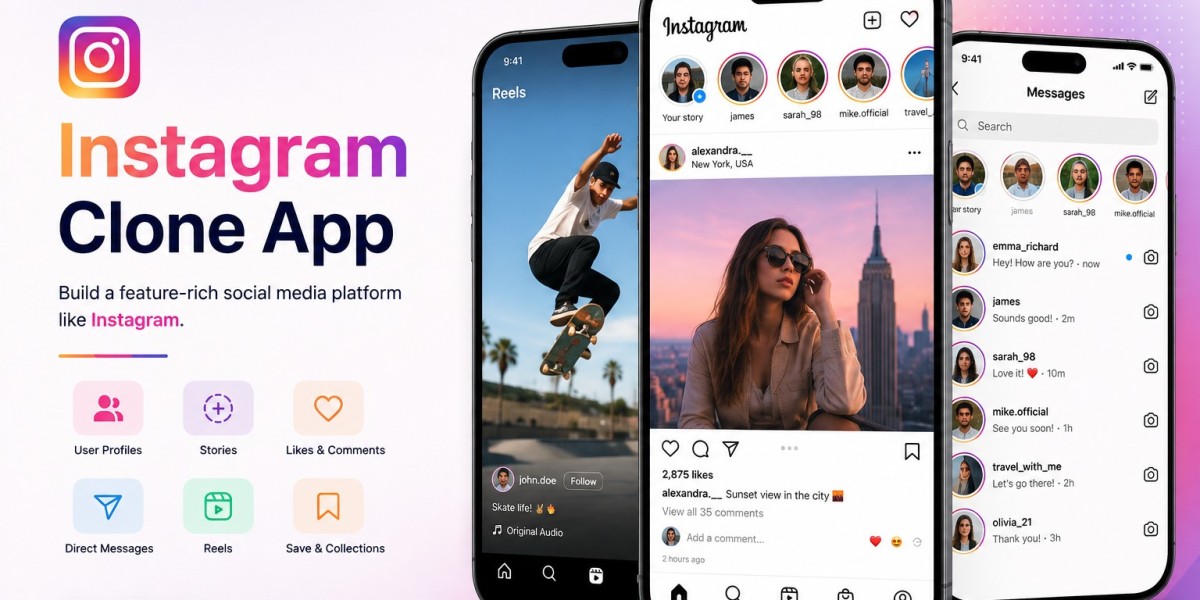
The Miracuves Instagram Clone includes posts, reels, stories, highlights, direct messaging, live broadcasting, commerce, creator monetization, privacy controls, and administrative functionality. Miracuves describes the product as a working platform rather than a basic frontend template.
Instead of building every social feature from zero, developers begin with an existing architecture and customize branding, workflows, integrations, infrastructure, and market-specific functionality.
Custom development takes the opposite approach. The technical team designs the database structure, APIs, media pipeline, interfaces, security model, and business logic specifically for one product.
Feature Development
Feature availability is one of the biggest differences between the two approaches.
With custom development, every major feature needs separate planning and implementation.
A development team may need to build:
- User authentication
- Profiles
- Follow relationships
- Feed generation
- Image publishing
- Reels
- Stories
- Comments
- Likes and saves
- Direct messaging
- Notifications
- Live streaming
- Creator subscriptions
- Payments
- Shopping
- Moderation
- Admin dashboards
Each feature also needs database structures, backend logic, frontend components, testing, and security controls.
An Instagram clone starts with many of these modules already connected.
For example, the Miracuves platform combines image posts, carousels, reels, 24-hour stories, highlights, and scheduled publishing within one publishing engine. It also includes likes, saves, threaded comments, follow requests, blocking, messaging, and moderation workflows.
For development teams, this can reduce the amount of foundational work required before product-specific customization begins.
Reels, Stories, and Media Scalability
Media processing is one of the more complex areas of social platform development.
Large volumes of images and videos require storage management, caching, upload optimization, access controls, and efficient content delivery.
Custom development gives engineers full freedom to design the media architecture. This can be valuable when the business has unusual video formats, specialized editing tools, proprietary recommendation systems, or advanced streaming requirements.
However, the engineering team must design these systems correctly from the beginning.
A ready-made Instagram clone provides an existing publishing structure that can be extended.
Miracuves uses one content architecture for posts, reels, stories, and highlights. Its platform also supports pre-upload image processing and scheduled publishing.
This gives developers a working media foundation while still allowing additional functionality to be introduced later.
Messaging and Real-Time Features
Real-time systems can significantly increase development complexity.
Direct messaging needs conversation management, read status, typing indicators, user presence, attachments, moderation, and notification logic.
Live streaming introduces additional requirements involving real-time communication, stream permissions, moderation, replay storage, and viewer interaction.
Building these features from scratch gives engineering teams maximum control, but it also increases development and testing requirements.
The Miracuves Instagram Clone already supports one-to-one and small-group messaging with presence and typing indicators. Its live broadcasting layer uses WebRTC and includes real-time chat, stream moderation, featured products, gifting, and private replay delivery.
For teams that need these features immediately, starting with a ready-made system can avoid rebuilding common real-time functionality.
Creator Monetization and Commerce
Monetization can dramatically increase backend complexity because financial transactions must remain accurate and traceable.
Possible revenue models include creator subscriptions, premium content, gifting, advertising, commissions, and social commerce.
When developing from scratch, technical teams must design payment flows, transaction records, commission rules, wallet balances, refunds, subscription states, and administrative controls.
This provides complete flexibility but creates more financial logic to maintain.
Miracuves includes creator subscription tiers, premium-content access, gifting, CPC and CPM promotions, a native product shop, checkout, orders, and refunds. It also uses transaction-based database functions for certain monetary operations.
For platforms where creator monetization and shopping are core requirements, having these features integrated into the underlying architecture can simplify initial development.
Scalability of an Instagram Clone
A common misconception is that ready-made software cannot scale.
Scalability depends less on whether software began as a clone and more on how the application, database, storage, caching, APIs, and infrastructure are designed.
Miracuves states that its Instagram Clone uses PostgreSQL, Row-Level Security, multiple storage buckets, and a shared codebase across web, Android, and iOS.
Developers can still optimize infrastructure as usage grows through database indexing, caching, content delivery networks, horizontal application scaling, background processing, and dedicated media services.
The advantage is that teams begin with a functioning product rather than an empty architecture.
Scalability of Custom Development
Custom development provides greater architectural freedom.
Engineering teams can design separate services for feeds, messaging, video processing, search, recommendations, payments, and notifications.
For extremely large or highly specialized platforms, this flexibility can become valuable.
However, custom architecture also introduces more engineering decisions.
Teams must determine:
- When to separate services
- How to manage databases
- How to process video
- How to cache feeds
- How to handle event queues
- How to scale notifications
- How to monitor failures
- How to deploy updates safely
Custom development therefore offers potentially unlimited flexibility, but that flexibility requires stronger engineering resources and longer architecture planning.
Source Code and Customization
Developers often prefer custom software because they want complete access to the codebase.
A properly delivered clone platform can provide similar flexibility if source-code ownership is included.
Miracuves states that its Instagram Clone includes the complete React 18, TypeScript 5, Vite 5, and PostgreSQL-based application, with source code that customers can modify, extend, and redeploy.
This means teams are not limited to simply changing colors and logos.
Developers can extend business logic, modify interfaces, add APIs, change workflows, connect third-party services, and introduce new modules.
When an Instagram Clone Makes More Sense
An Instagram clone is usually better suited to projects where the required social behavior already resembles established visual social platforms.
It can be particularly useful when the product needs features such as reels, stories, messaging, creator subscriptions, live streaming, shopping, and moderation without spending the first development phase rebuilding them.
Developers can focus more heavily on differentiation, integrations, performance, and market-specific functionality.
When Custom Development Makes More Sense
Custom development becomes more attractive when the product is fundamentally different from a traditional social network.
A custom architecture may be appropriate when the platform depends on proprietary algorithms, unusual content formats, specialized workflows, complex enterprise integrations, or completely new interaction models.
In these situations, modifying an existing architecture could eventually require more work than building around the unique requirements from the beginning.
Final Comparison
The decision between an Instagram clone and custom development is not simply about choosing ready-made software over custom code.
It is about determining where engineering resources should be invested.
Custom development provides maximum architectural freedom but requires teams to build and maintain the complete social foundation.
An Instagram clone provides that foundation earlier.
Miracuves offers an Instagram Clone with multi-format publishing, messaging, live streaming, creator monetization, commerce, admin controls, cross-platform support, and full source-code access.
For development teams building a platform close to an Instagram-style social ecosystem, this can provide a faster technical starting point while preserving room for customization and future scaling.
For products with fundamentally different technical requirements, custom development may provide the architectural freedom necessary for long-term differentiation.
The right choice ultimately depends on feature complexity, scalability goals, available engineering resources, and how much of the underlying social infrastructure the team genuinely needs to reinvent.