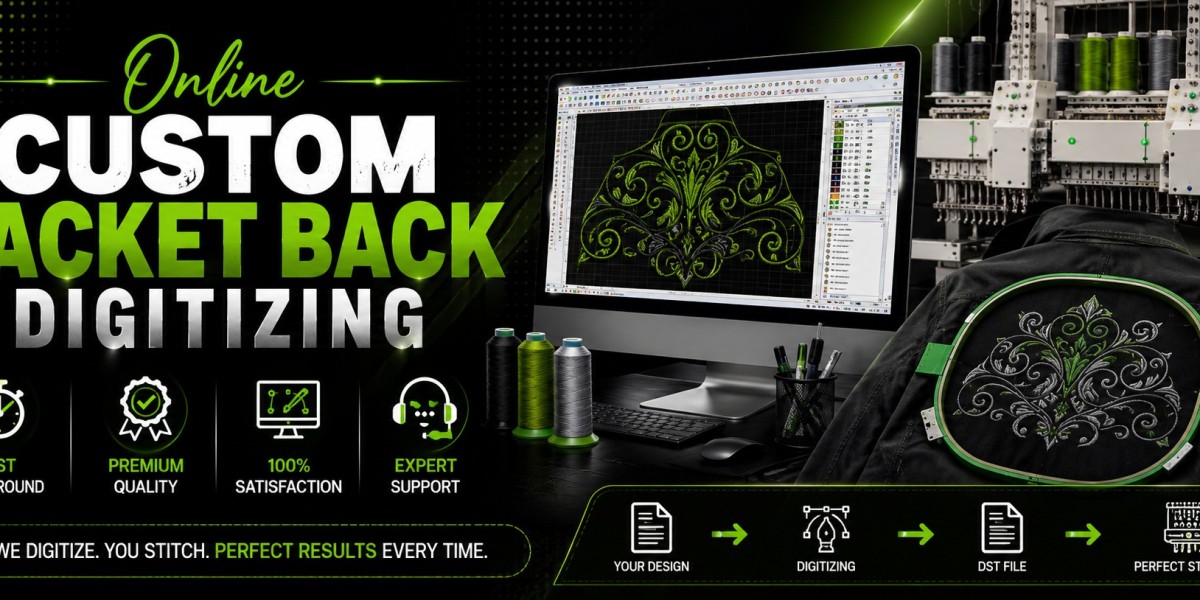

Master Oversized Logo Stitch Programming for Perfect Designs
Large embroidered logos create a bold and professional appearance on jackets, hoodies, uniforms, bags, and sportswear. However, producing large embroidery designs requires more than simply increasing the size of a small logo. Every stitch must be planned carefully to keep the design smooth, clean, and durable.
Oversized Logo Stitch Programming helps embroidery professionals create balanced stitch paths that reduce thread breaks, fabric distortion, and uneven coverage. Proper planning also improves machine efficiency while delivering attractive results for every customer.
Whether you work with promotional apparel or premium fashion garments, understanding the programming process helps you produce embroidery that looks professional from start to finish.
Why Large Embroidery Needs Special Planning
Oversized embroidery covers a larger surface than standard logos. More stitches mean more movement, more thread, and greater stress on fabric. Without careful programming, even an attractive design may become rough or distorted after stitching.
Professional digitizers divide large areas into manageable sections, adjust stitch directions, and reduce unnecessary density. These techniques allow embroidery machines to work smoothly while maintaining the original artwork.
Planning every detail before production saves valuable time and prevents costly mistakes during stitching.
Understanding Fabric Before Programming
Every fabric reacts differently during embroidery. Heavy canvas, fleece, denim, cotton, softshell jackets, and polyester all require different stitch settings.
Stable fabrics usually support higher stitch counts without movement. Softer fabrics may require lighter density and stronger underlay to prevent puckering.
Testing on the actual garment before production ensures the final embroidery maintains its shape and appearance.
Choosing the correct stabilizer also improves the finished quality by supporting the fabric throughout the embroidery process.
Choosing the Right Stitch Direction
One of the biggest factors in professional embroidery is stitch direction.
Large fill areas stitched in one direction often create unwanted pulling. Changing stitch angles throughout the design distributes tension more evenly.
Professional programmers carefully rotate stitch directions between sections to create depth while reducing fabric stress.
Balanced stitch angles also improve how light reflects from the embroidery, making logos appear more detailed and attractive.
Managing Stitch Density Carefully
High stitch density does not always produce better embroidery.
Too many stitches may create thick, stiff embroidery that causes thread breaks and needle heat. Too few stitches may leave gaps that expose the fabric underneath.
Experienced programmers calculate proper density based on fabric type, thread weight, and design size.
Balanced density creates smooth embroidery while keeping production efficient.
Clean Travel Paths Improve Production
Efficient machine movement saves time during embroidery.
Instead of allowing long thread jumps across the design, professional programming creates logical stitch paths that connect nearby sections naturally.
Clean travel paths reduce trimming, improve machine speed, and create a cleaner backside.
Customers may never see the back of the embroidery, but professional-quality programming always considers both sides of the design.
Underlay Builds a Strong Foundation
Every successful embroidery design starts with quality underlay.
Underlay stabilizes fabric before the visible stitches are added. It keeps large embroidery sections from sinking into soft materials while improving coverage.
Different underlay styles work for different fabrics.
Some designs require edge run underlay, while others benefit from zigzag or lattice underlay depending on stitch type and material.
Proper underlay helps maintain sharp edges throughout production.
Better Color Changes Increase Efficiency
Large logos often include several thread colors.
Programming color sequences intelligently minimizes unnecessary machine stops and reduces production time.
Grouping nearby elements with the same thread color keeps embroidery running efficiently while maintaining accurate registration.
Organized color planning also lowers the risk of operator mistakes during long production runs.
Using Jacket Embroidery File Creation Correctly
Professional Jacket Embroidery File Creation ensures oversized designs fit perfectly across jacket backs without losing detail.
Because jacket embroidery often covers wide areas, file preparation includes balanced stitch directions, accurate sizing, stable underlay, and efficient sequencing before production begins.
Proper file creation allows embroidery machines to sew consistently while maintaining clean lettering and sharp logo edges across larger garments.
Avoiding Common Programming Mistakes
Many embroidery problems begin before the machine even starts sewing.
Designs with excessive stitch density, poor sequencing, incorrect pull compensation, or weak underlay often produce disappointing results.
Professional programmers review every section carefully before exporting the embroidery file.
Testing sample stitches helps identify small issues that can be corrected before full production begins.
This simple quality-control step reduces waste and improves customer satisfaction.
Machine Performance Matters
Even perfectly programmed files require well-maintained embroidery machines.
Sharp needles, proper thread tension, clean bobbin areas, and regular maintenance help machines reproduce detailed embroidery accurately.
Operators should monitor production during the first sample run and make small adjustments if necessary.
Combining quality programming with machine maintenance creates consistently excellent embroidery.
Quality Testing Before Final Production
Professional embroidery shops rarely begin full production without testing.
Sample stitching verifies:
Design alignment
Thread coverage
Fabric stability
Letter readability
Edge smoothness
Overall appearance
Minor adjustments made after testing often prevent expensive production errors later.
Testing also builds confidence that every finished garment will meet customer expectations.
Order Now
Why Professional Programming Creates Better Results
Successful embroidery combines technical knowledge with creative planning.
Large logos demand careful stitch sequencing, balanced density, smooth travel paths, proper underlay, and accurate testing before production begins.
When every element works together, embroidery becomes cleaner, stronger, and more visually impressive.
Businesses benefit from professional-looking apparel that reflects their brand, while embroidery shops improve efficiency, reduce waste, and increase customer satisfaction.
Modern embroidery continues to evolve, but careful preparation remains the key to outstanding results. Investing time in quality programming allows every oversized design to stitch smoothly, maintain excellent detail, and deliver long-lasting performance on a wide variety of garments.
Ready to get started? Get a Free Quote Now or Contact Us today to turn your ideas into stunning embroidered art.
Beyond embroidery, we also offer AI Digital Marketing Services in USA.
Author: Digit-it
Experts in Custom Embroidery Digitizing – Trusted by Clients Nationwide
Website: www.digit-it.com | Email: digitize@digit-it.com |
Contact: +1(231)-821-5515
WhatsApp: +44 7598 989500
Secure, Professional, and Committed to Quality – View our About Page and Contact Information for Trust & Support.