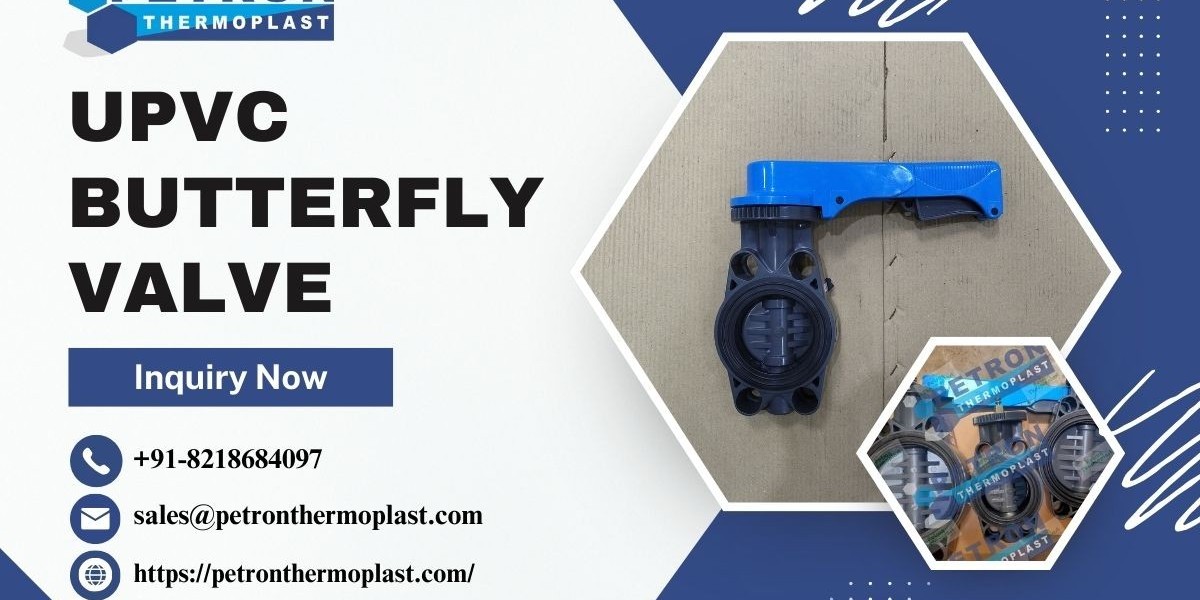

Corrosion has always been one of the biggest challenges in industrial piping systems. Whether it is chemical manufacturing, water treatment, mining, desalination, or food processing, metal pipelines and valves can weaken over time due to exposure to aggressive chemicals, moisture, temperature variations, and contaminants. This leads to leaks, equipment failures, downtime, and expensive replacement cycles.
With industries expanding globally, the demand for corrosion-resistant and maintenance-free piping solutions has increased rapidly. One of the most reliable answers to these challenges is the UPVC Butterfly Valve, a modern engineering solution designed to outperform traditional metal valves in corrosive environments.
In this blog, we discuss how UPVC (Unplasticized Polyvinyl Chloride) Butterfly Valve technology helps resolve corrosion issues, its advantages, applications, and why it has become the preferred choice for industrial projects worldwide.
Understanding Corrosion in Piping Systems
Corrosion is a natural process that deteriorates metals due to chemical reactions with their environment. In industries handling fluids like acids, alkalis, chlorine, seawater, or contaminated water, corrosion becomes a frequent problem.
Common Corrosion-related Issues with Metal Valves
- Pitting and surface erosion
- Scaling and buildup
- Rust formation
- Valve jamming and reduced flow
- Leakages at joints
- Premature mechanical failure
- Costly maintenance downtime
Even stainless steel, brass, and cast-iron valves are susceptible to corrosion under extreme conditions. This is why industries increasingly shift toward polymer-based valves such as UPVC, CPVC, PP, PVDF, and HDPE. Among these, UPVC Butterfly Valves deliver an excellent balance of performance, cost-efficiency, and corrosion resistance.
What Is a UPVC Butterfly Valve?
A UPVC Butterfly Valve is a quarter-turn valve used to regulate or isolate flow in industrial piping systems. It consists of:
- UPVC body
- Corrosion-resistant disc
- EPDM or FKM elastomeric liner
- Stainless steel shaft (usually isolated from the fluid)
Why UPVC Butterfly Valve Technology Solves Corrosion Problems?
1. High Chemical Resistance
UPVC is inherently resistant to:
- Strong acids
- Alkalis
- Chlorinated water
- Salts
- Sewage and wastewater
- Industrial effluents
This makes UPVC Butterfly Valves an ideal replacement for metal valves in corrosive environments. The valve materials do not react with aggressive chemicals, ensuring reliability and long-term performance.
2. Zero Rust Formation
Since the valve body is non-metallic, it does not oxidize or rust.
This helps industries avoid:
- Rust contamination in processed fluids
- Blockages due to rust flakes
- Jamming or restricted operation
- Frequent replacement cycles
A rust-free piping system ensures consistent performance and reduces overall operational headaches.
3. Long Service Life with Minimal Maintenance
UPVC Butterfly Valves are engineered to withstand repeated operations without degradation.
Benefits include:
- No periodic painting or coating needed
- No rust treatment required
- Fewer repairs
- Long operational life even in harsh conditions
4. Lightweight Yet Durable
UPVC valves weigh much less than cast iron or stainless steel valves, making them:
- Easier to install
- Safer to transport
- Suitable for elevated or complex pipeline layouts
Despite their lightweight design, UPVC valves offer high mechanical strength and structural stability.
5. Smooth Internal Surface Prevents Scaling
Metal valves often develop scale buildup when exposed to hard water or chemicals.
UPVC valves contain smooth surfaces that eliminate:
- Scaling
- Bacterial growth
- Flow blockages
- Pressure drop issues
This ensures consistent and uninterrupted fluid flow.
6. Cost-Effective Alternative to Metal Valves
UPVC Butterfly Valves provide:
- Lower purchase cost
- Reduced installation labor
- No corrosion treatment expenses
- Lower long-term maintenance cost
Where UPVC Butterfly Valves Are Used?
UPVC Butterfly Valve technology is widely adopted across multiple sectors, especially where corrosion protection is critical.
✔ Water Treatment & Wastewater Plants
- Chlorinated water
- RO plants
- Filtration systems
- Sewage treatment plants
UPVC ensures durability even when exposed to high chemical dosing.
✔ Chemical Processing Industry
For acids, alkalis, solvents, and corrosive mixtures, UPVC valves outperform metal valves in shelf life and reliability.
✔ Food & Beverage Industry
UPVC is hygienic, non-toxic, and resistant to contamination—ideal for clean environments.
✔ Agriculture & Irrigation
Lightweight valves make installation easier in long pipeline runs.
✔ Marine & Offshore Applications
UPVC handles salty environments better than metal valves, eliminating corrosion concerns.
✔ HVAC & Cooling Systems
Resistant to chemical additives used in cooling towers and chilled water systems.
✔ Mining, Electroplating & Fertilizer Plants
These industries involve heavy chemical exposure, where UPVC performs exceptionally well.
Key Technical Features of UPVC Butterfly Valves
1. Body Material: UPVC
Ensures corrosion resistance and long service life.
2. Disc Options
Often include plastic-coated metals or pure UPVC discs for maximum corrosion protection.
3. Liner Materials
- EPDM (for water and mild chemicals)
- FKM/Viton (for strong chemicals and hydrocarbons)
4. Connection Types
- Wafer type
- Lug type
Compatible with UPVC, steel, CPVC, and PP pipes.
5. Temperature & Pressure Handling
- Ideal temperature range: 0°C to 60°C
- Pressure rating: PN10 / 150 PSI (typical)
6. Operation Options
- Lever handle
- Gear operation
- Pneumatic actuator
- Electric actuator
Automation can be added for industrial control systems.
How UPVC Butterfly Valves Improve Plant Efficiency?
✔ Reduces downtime caused by corrosion failures
Consistent operation means smoother production cycles.
✔ Lower operating cost
No coatings, minimal repairs, and longer lifespan.
✔ Improves safety
Prevents leaks from corroded joints and pipes.
✔ Enhances flow control accuracy
The disc design ensures optimized flow characteristics.
✔ Easy installation and replacement
Lightweight design reduces labor cost and effort.
UPVC Butterfly Valve vs. Metal Butterfly Valve
Feature | UPVC Butterfly Valve | Metal Butterfly Valve |
Corrosion Resistance | Excellent | Moderate to Poor |
Weight | Lightweight | Heavy |
Lifespan in Chemical Environments | Long | Short |
Maintenance | Very Low | High |
Cost | Lower | Higher |
Cleanliness | Non-contaminating | Rust & scale formation |
Suitable for Aggressive Chemicals | Yes | Limited |
Why Global Industries Are Switching to UPVC Butterfly Valves?
- Increasing cost of corrosion repairs
- Need for safer industrial environments
- Demand for chemical-resistant piping solutions
- Need to reduce downtime and increase productivity
- Rising preference for lightweight, durable materials
Conclusion
Corrosion is a major concern across industries, affecting pipeline safety, operational efficiency, and long-term costs. Traditional metal valves struggle to withstand aggressive media, leading to rust, scaling, leakages, and unpredictable failures. By integrating UPVC Butterfly Valve technology into your piping system by