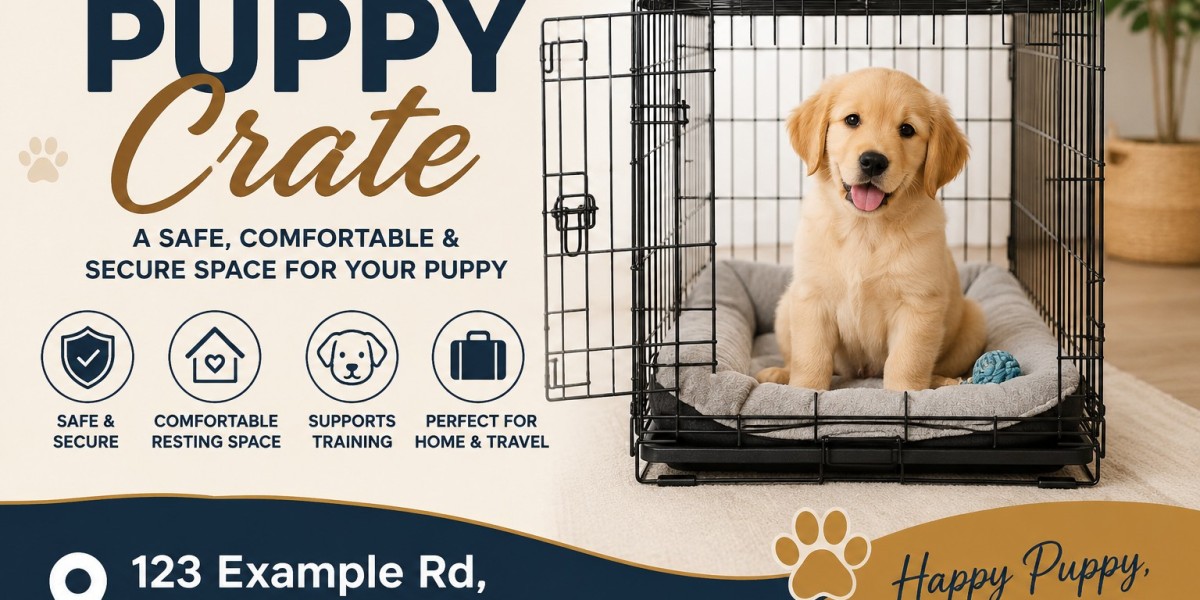

Bringing a new puppy home is an exciting experience, but it also comes with responsibilities. Puppies need a safe, comfortable place where they can sleep, relax, and feel protected. A puppy crate can provide this dedicated space while also supporting training and establishing a consistent daily routine.
What Is a Puppy Crate?
A puppy crate is an enclosed space designed to give your puppy a secure area for resting, sleeping, and spending short periods alone. Crates are available in different materials, including wire, plastic, fabric, and other durable options.
Choosing the right crate depends on your puppy’s breed, current size, expected adult size, temperament, and daily routine. The crate should feel comfortable rather than restrictive.
Benefits of Using a Puppy Crate
A puppy crate can be useful for both puppies and their owners when introduced correctly. It gives puppies their own quiet space where they can rest without unnecessary distractions.
Crate training can also support house training because puppies generally prefer keeping their sleeping area clean. A consistent schedule involving bathroom breaks, meals, playtime, and crate time can help puppies develop better habits.
A crate can also help keep curious puppies away from electrical cords, household objects, shoes, furniture, or other potentially unsafe items when direct supervision is temporarily unavailable.
Choosing the Right Puppy Crate
Size is one of the most important considerations when selecting a puppy crate. Your puppy should have enough room to stand naturally, turn around comfortably, lie down, and stretch.
Avoid choosing an excessively large crate simply because your puppy will grow. Many wire crates include adjustable dividers that allow you to increase the available space as your puppy becomes larger.
Ventilation, secure doors, durable construction, ease of cleaning, and portability are also important features to consider.
Different Types of Puppy Crates
Wire crates are popular because they provide excellent airflow and visibility. Many models are foldable, making them convenient for storage or transportation.
Plastic crates offer a more enclosed environment and are commonly used for travel. Soft-sided crates are lightweight and portable, although they may not be suitable for puppies that frequently chew or scratch.
The best option depends on where and how you plan to use the crate.
How to Introduce Your Puppy to the Crate
Introducing a puppy crate should be a gradual and positive process. Place the crate somewhere comfortable and allow your puppy to explore it voluntarily.
Adding comfortable bedding, safe toys, or treats can create a positive association. Feeding your puppy near or inside the crate may also help them become comfortable with the space.
Start with short periods and gradually increase the duration. Avoid forcing your puppy into the crate or using it as punishment, as this can create fear or anxiety.
Making a Puppy Crate Comfortable
Comfort can make crate training easier. Depending on your puppy’s chewing habits and needs, consider adding suitable bedding or a crate mat.
Keep the crate in a well-ventilated location away from extreme temperatures. Providing an appropriate chew toy can also help keep your puppy occupied during short crate sessions.
Regularly clean the crate, bedding, and accessories to maintain a fresh and hygienic environment.
Puppy Crate Safety Tips
Always remove potential hazards before leaving your puppy inside the crate. Check that doors and latches work correctly and ensure there are no damaged wires, sharp edges, or loose components.
Puppies should not spend excessive periods confined inside a crate. They need regular bathroom breaks, physical activity, social interaction, training, and mental stimulation throughout the day.
Final Thoughts
A puppy crate can become a valuable part of your puppy’s everyday routine when used responsibly. It provides a comfortable resting area while supporting house training, travel, safety, and routine building.
Choose an appropriately sized crate, introduce it gradually, and create positive experiences around crate time. With patience and consistency, your puppy can learn to view the crate as a familiar, comfortable, and secure personal space.