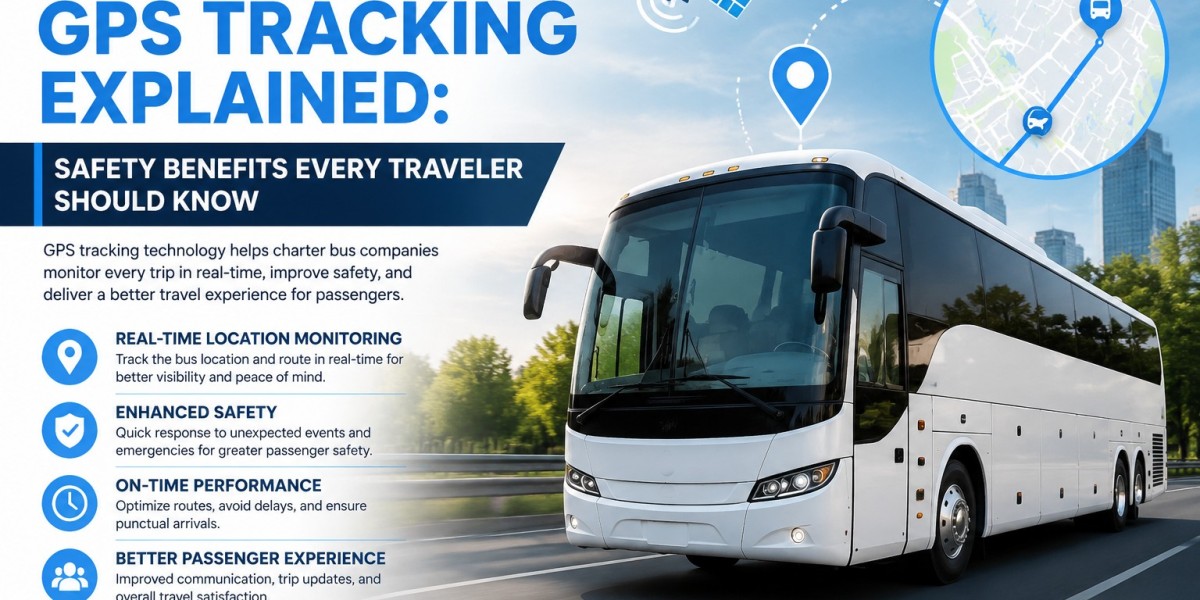

When booking transportation for a group trip, safety and reliability are two of the most important things travelers consider. Whether you are organizing a business event, school outing, sports trip, wedding transportation, or a family vacation, knowing that your charter bus provider uses modern safety technology can provide peace of mind. One of the most valuable technologies used in today’s transportation industry is GPS tracking.
Charter bus GPS tracking helps companies monitor vehicles, improve safety procedures, and provide a smoother travel experience. From real-time location updates to better fleet management, GPS technology has changed the way charter bus companies operate and serve passengers.
What Is GPS Tracking on a Charter Bus?
GPS tracking is a technology that uses satellite signals to determine the exact location of a vehicle. A GPS device installed on a charter bus sends information to a centralized system, allowing transportation companies to monitor the vehicle’s location, route, and travel progress.
For charter bus operators, this technology provides valuable insights into fleet operations. Companies can track buses in real time, manage schedules more effectively, and respond quickly to unexpected situations during a trip.
How GPS Tracking Improves Charter Bus Safety
Safety is the biggest advantage of GPS tracking on charter buses. By monitoring vehicle locations and routes, companies can ensure buses are following planned travel paths and staying on schedule. If a bus experiences delays, makes an unexpected stop, or encounters a road issue, fleet managers can quickly identify the situation and provide support when needed.
GPS tracking also helps transportation companies review driving patterns and improve overall operations. When combined with experienced drivers, regular vehicle inspections, and proper maintenance, GPS technology creates an additional layer of safety for passengers.
Real-Time Location Monitoring for Better Travel Management
One of the key benefits of charter bus GPS tracking is real-time monitoring. Transportation providers can see where their vehicles are located and estimate arrival times more accurately. This is especially helpful for large group trips where timing and coordination are essential.
For example, event organizers can have better visibility into transportation schedules, while charter bus companies can communicate updates if traffic, weather, or road conditions affect the trip. This makes the entire travel process more organized and convenient.
Benefits of GPS Tracking for Charter Bus Companies
GPS tracking does more than improve passenger safety. It also helps charter bus companies manage their fleets more efficiently. Operators can use tracking data to optimize routes, reduce unnecessary travel time, and improve fuel efficiency.
The technology can also support vehicle maintenance planning. By monitoring bus usage and travel patterns, companies can schedule inspections and repairs before potential problems occur. This proactive approach helps keep buses in excellent condition and reduces the chances of unexpected issues during trips.
Does Every Charter Bus Have GPS Tracking?
While many modern charter bus companies use GPS tracking systems, the availability of this technology can vary between providers. Travelers who value additional safety features should ask about GPS tracking when choosing a charter bus company.
A reliable transportation provider will often use multiple safety measures, including professional drivers, routine vehicle maintenance, and advanced technology solutions. GPS tracking is one important feature that supports safer and more efficient group transportation.
Why GPS Technology Matters for Modern Travelers
Today’s travelers expect transportation options that are safe, dependable, and convenient. GPS tracking helps charter bus companies meet these expectations by improving communication, monitoring vehicles, and supporting better decision-making.
For passengers, the benefits are clear. Knowing that a bus company uses modern tracking technology can make a trip feel more secure and organized. For transportation providers, GPS systems help deliver higher-quality service and maintain strong safety standards.
Final Thoughts
Charter bus GPS tracking has become an important part of modern transportation safety. By providing real-time monitoring, improving fleet management, and helping companies respond to travel challenges, GPS technology benefits both passengers and operators.
When planning your next group trip, consider choosing a charter bus provider that combines experienced drivers, well-maintained vehicles, and advanced safety technology. GPS tracking is one of the many ways the charter bus industry continues to make group travel safer, easier, and more reliable.