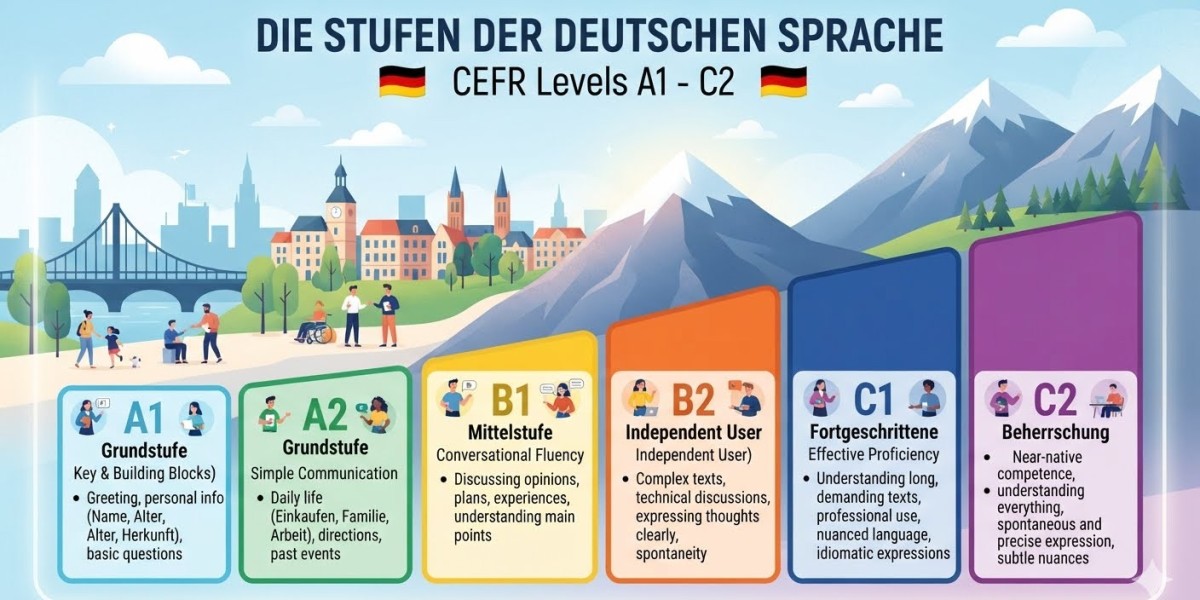

Learning German can feel overwhelming at first, especially when you come across terms like A1, B2, or C1 scattered across textbooks, language schools, and job postings. These labels aren't random they belong to the Common European Framework of Reference for Languages (CEFR), an internationally recognized system used to measure language proficiency. Whether you're planning to study in Germany, apply for a visa, or simply track your progress, understanding these levels is essential. Here's a complete breakdown of what each level means and what you can expect to achieve at each stage.
What Is the CEFR Framework?
The CEFR divides language ability into six levels, grouped into three broad categories: Basic User (A1–A2), Independent User (B1–B2), and Proficient User (C1–C2). This framework isn't unique to German it applies to most European languages, but Beginner Levels of Beginner Levels of German Language schools, universities, and employers rely on it heavily to assess candidates. Each level builds on the previous one, focusing on expanding vocabulary, grammar complexity, and real-world communication skills.
A1: Beginner
A1 is where every German learner starts. At this stage, you learn to understand and use simple, everyday expressions and basic phrases aimed at satisfying immediate needs. You can introduce yourself, ask simple questions about where someone lives or what they do, and respond to similar questions directed at you. Grammar is kept minimal present tense verbs, basic sentence structure, and essential vocabulary related to daily life like numbers, greetings, and family members. Most learners reach A1 within two to three months of consistent study, often through a beginner course or self-study app.
A2: Elementary
At A2, learners can understand sentences and frequently used expressions related to areas of immediate relevance, such as shopping, local geography, or employment. You can communicate in simple, routine tasks requiring a direct exchange of information on familiar topics. This is the level where past tense (Perfekt) is introduced, along with more descriptive vocabulary. A2 learners can describe their background, immediate environment, and needs in simple terms, though conversations remain fairly basic and predictable.
B1: Intermediate
B1 marks a significant shift this is often considered the level of "independent" language use. Learners can understand the main points of clear, standard input on familiar matters encountered at work, school, or leisure. You can deal with most situations likely to arise while traveling in a German-speaking area, produce simple connected text on familiar topics, and describe experiences, events, dreams, and ambitions while briefly explaining opinions or plans. B1 is frequently required for German citizenship applications and many vocational training programs. Grammar becomes noticeably more complex, incorporating subordinate clauses, modal verbs in various tenses, and conditional structures.
B2: Upper Intermediate
B2 is a major milestone, especially for those pursuing higher education or professional careers in Germany. At this level, learners can understand the main ideas of complex text on both concrete and abstract topics, including technical discussions in their field of specialization. You can interact with a degree of fluency and spontaneity that makes regular interaction with native speakers quite possible without strain on either party. B2 speakers can produce clear, detailed text on a wide range of subjects and explain a viewpoint on a topical issue, weighing advantages and disadvantages of various options. Many German universities require B2 as a minimum for degree programs taught in German.
C1: Advanced
C1 represents fluency that approaches native-like command of the language. Learners can understand a wide range of demanding, longer texts and recognize implicit meaning. They can express ideas fluently and spontaneously without much obvious searching for expressions. C1 speakers use language flexibly and effectively for social, academic, and professional purposes, and can produce clear, well-structured, detailed text on complex subjects, showing controlled use of organizational patterns, connectors, and cohesive devices. This level is often required for demanding academic programs, specialized professions, and roles requiring nuanced written and spoken communication.
C2: Mastery
C2 is the highest level in the German Language Course framework, representing near-native mastery. At this stage, learners can understand virtually everything heard or read with ease. They can summarize information from different spoken and written sources, reconstructing arguments and accounts in a coherent presentation. C2 speakers can express themselves spontaneously, very fluently, and precisely, differentiating finer shades of meaning even in complex situations. Reaching C2 typically requires years of immersion, extensive reading, and deep cultural understanding, and it's rarely necessary outside academic linguistics, translation work, or highly specialized professional contexts.
How Long Does It Take to Progress Through Each Level?
Progress varies significantly based on study intensity, prior language learning experience, and immersion opportunities. As a general guideline:
- A1: 2–3 months
- A2: 3–4 months
- B1: 5–6 months
- B2: 6–8 months
- C1: 8–12 months
- C2: 1–2 years or more
These estimates assume consistent study, roughly 4–6 hours per week, though intensive courses or full immersion can accelerate progress considerably.
Choosing the Right Level for Your Goals
Not everyone needs to reach C2. If you're planning a short trip, A2 or B1 might suffice. For university admission, B2 is often the benchmark. For professional certification, medical licensing, or academic research in German, C1 is frequently the minimum requirement. Understanding your specific goal helps you avoid over-investing time in levels beyond what you actually need.
Final Thoughts
The CEFR scale gives German learners a clear roadmap from absolute beginner to near-native fluency. Rather than feeling daunted by the six levels, think of them as milestones each one unlocking new opportunities, whether that's holding a basic conversation, studying at a German university, or working seamlessly in a German-speaking environment. Wherever you are on this journey, consistent practice and real-world exposure remain the most reliable paths to progress.













mohan kumar 7 d
Great breakdown of the levels! I'd add that A1-A2 is where most learners struggle with motivation since progress feels slow. B1-B2 is where real fluency starts kicking in though. If anyone's looking for structured online classes with live speaking practice to get through these stages faster, YesGermany has been a solid option for us - worth checking out.
https://www.yesgermany.com/german-language/