
Let's be honest. Most women don't think about their gynecological health until something goes wrong. And even then, many of us delay going to the doctor. We convince ourselves it's probably nothing. We assume it'll sort itself out. We tell ourselves we're too busy.
I've seen this pattern play out countless times. Women who ignored symptoms for months or years. Women who were scared to find out what was happening. Women who simply didn't know that what they were experiencing wasn't normal.
The truth is, understanding your body and knowing what to look for is one of the most important things you can do for your health. Gynecological conditions are incredibly common. Most women will experience at least one during their lifetime. And the majority are manageable when caught early.
Polycystic Ovary Syndrome (PCOS)
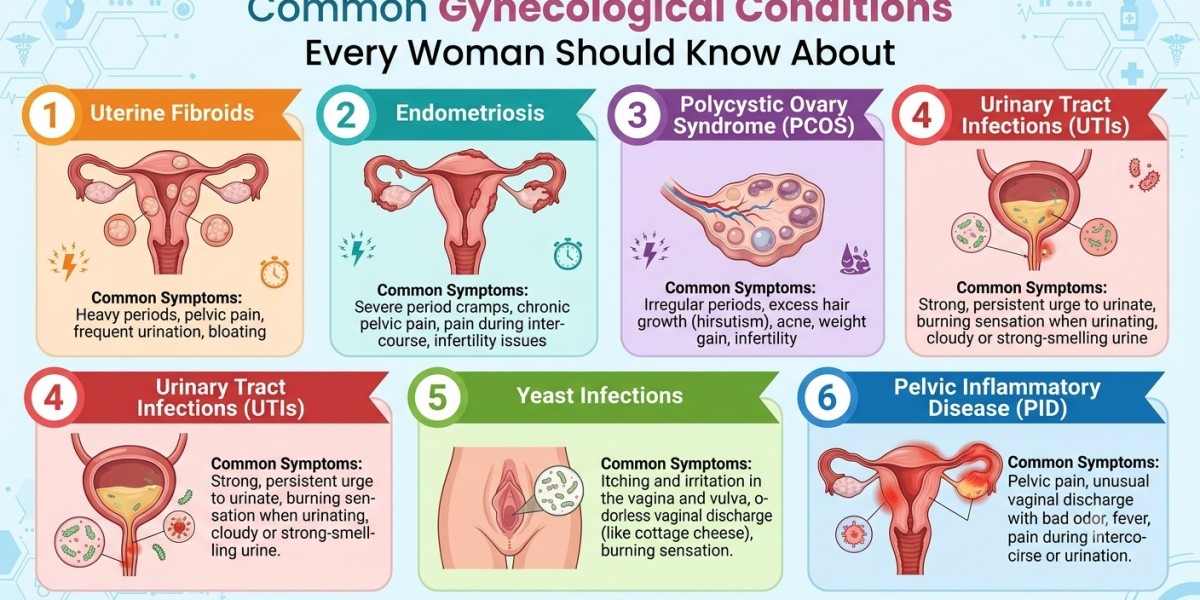
PCOS touches about 10% of women but a lot of them don’t get diagnosed for years, sometimes it just sort of drifts, unnoticed. It’s basically a hormonal misfire that messes with ovulation. Instead of the ovaries letting go of one egg every month like they’re supposed to, they release irregularly , or maybe not at all. Then you end up with irregular periods, weird or unpredictable cycles, or even missing periods entirely.
But PCOS isn’t only, you know, the menstruation part. It usually shows up with other symptoms too: stubborn weight gain that resists diet and exercise , acne that doesn’t really improve with usual treatments, more hair growth on areas like the face or body, and thinning hair on the scalp.
What really concerns me is the ripple effect. Women with PCOS can be at higher risk for insulin resistance, type 2 diabetes, heart disease, and endometrial cancer. The hopeful side is that PCOS can be managed—through lifestyle changes, medication, and sometimes hormonal therapy. Still, you can’t manage what you don’t know is there.
When to see a doctor: if your periods are irregular, if weight gain seems unexplained, if acne keeps lingering, or if you notice excess hair growth that won’t settle.
Endometriosis
Endometriosis occurs when tissue similar to the uterine lining grows outside the uterus. It causes inflammation, scarring, and significant pain. For years, it was considered a condition of women in their thirties and forties. We now know it affects women of all ages.
The most common symptom is pelvic pain, especially during menstruation. It can also cause heavy bleeding, pain during intercourse, digestive issues, and fertility problems.
Here's the frustrating part: it takes an average of seven to ten years for women to receive a diagnosis. Seven to ten years of being told "it's just bad cramps."
If you have pelvic pain that doesn't respond to typical treatments, extremely painful periods, or pain between periods or during intercourse, push for proper evaluation.
When to see a doctor: If your period pain is severe enough to interfere with your daily life, don't accept it as normal.
Uterine Fibroids
Uterine fibroids are non-cancerous growths in the uterus. By age 50, up to 80% of women have them. Yet many don't know because they have no symptoms.
When symptoms start showing up, they can be pretty impactful. Heavy or long-lasting menstrual bleeding is often the most common sign. Other women may notice pelvic discomfort, more frequent urination, or even a dull ache in the back. Sometimes, fibroids can also interfere with fertility.
What you do next really depends on the size, the exact position, and how your symptoms are behaving. In general, the choices go from medication to various surgical procedures, or other options in between.
When to get medical help: If you’re having heavy bleeding, pelvic pain, or that kind of pressure feeling.
Menstrual Disorders
Menstrual disorders are among the most common reasons women see a gynecologist.
Heavy menstrual bleeding lasts more than seven days or is so heavy you need to change a pad or tampon every hour. It can lead to anemia.
Irregular periods mean cycles shorter than 21 days or longer than 35 days, or cycles that vary significantly from month to month.
Amenorrhea is the absence of periods. Primary means you haven't started by age 15. Secondary means your periods have stopped for three months or more.
Painful periods are common, but pain that interferes with your daily activities is not.
When to see a doctor: If your periods are consistently heavy, irregular, painful, or absent.
Thyroid Disorders
Thyroid disorders are much more common in women. About 13.6% of women with menstrual disorders have some form of thyroid dysfunction.
An underactive thyroid (hypothyroidism) can cause heavy periods, irregular periods, or absent periods, along with fatigue and weight gain.
An overactive thyroid (hyperthyroidism) can cause light periods, irregular periods, or absent periods, along with weight loss and anxiety.
A simple blood test can identify thyroid problems, and they're generally straightforward to treat with medication.
When to see a doctor: If you have menstrual irregularities along with fatigue, weight changes, or mood changes.
Urinary Tract and Vaginal Infections
UTIs are incredibly common in women, like really common. People often notice symptoms such as a constant need to urinate, a pain or burning feeling when urinating, cloudy urine, and pelvic pain. If the infection is left untreated it can spread to the kidneys, and that’s where things can get more serious.
Vaginal infections also happen quite often, including bacterial vaginosis, yeast infections, and trichomoniasis. Typical signs are unusual discharge, itching, an odor that seems stronger than normal, plus general discomfort. Now, some of these conditions can look kinda similar at first, so the symptoms might overlap but the treatments can be different.
When to see a doctor: If you have abnormal discharge, itching, odor, or urinary symptoms.
Sexually Transmitted Infections
STIs are more common than many women realise. They're also frequently asymptomatic. Chlamydia is the most common bacterial STI. HPV is the most common viral STI, and certain strains are linked to cervical cancer.
When to see a doctor: Regular screening is essential if you're sexually active.
Pelvic Inflammatory Disease
PID, Pelvic inflammatory disease, is like an infection of the female reproductive organs, most often caused by sexually transmitted bacteria . You might notice symptoms such as pelvic pain, fever, unusual discharge and even discomfort during intercourse . If it stays untreated it can lead to infertility, like later trouble conceiving.
When to see a doctor: If you have pelvic pain along with fever, please get medical help right away.
When to See a Doctor
If something doesn't feel right, pay attention. Persistent pelvic pain. Periods suddenly heavier or more painful. Bleeding between periods or after menopause. Unexplained fatigue or weight changes.
Don't dismiss it. Don't assume it's nothing. Find a gynecologist you trust and make an appointment.
Call Gynecologist in South Delhi today if you're in the region. Book your consultation with best gynecologist in south Delhi for proper evaluation and personalized care.
A Final Word
Your reproductive health isn't something to just put on the back burner, it really matters. It ties into your overall well-being, too. Lots of different conditions can get managed pretty well if they're caught early, and if the right treatment is used.
Don't wait until symptoms are unbearable. Don't assume that because something is common, it's unavoidable. Don't let fear or embarrassment keep you from getting care.
You deserve to feel good. You deserve answers. You deserve care that respects you and addresses your concerns. Don't settle for less.
Call Gynecologist in South Delhi today. Book your consultation with best gynecologist in south Delhi and take the first step toward better health.