
What happens when you neuter a dog? A veterinarian removes both testicles while the dog is under anesthesia. This prevents future sperm production and lowers testosterone. The dog then recovers at the hospital before going home with pain medication, incision protection, and activity restrictions.
The operation itself is only one part of the process. A safe plan begins with an examination and health review. It continues through anesthesia, surgical monitoring, recovery, and roughly two weeks of protected healing at home. Hormone influenced behavior may change over the following weeks, while learned behavior can continue.
This guide follows the process in order so owners know what to expect from the first consultation through the final recovery check.
The Initial Consultation
The veterinarian first confirms that neutering is appropriate and discusses timing. Breed, expected adult size, age, health, testicular position, behavior, reproductive exposure, and household management all matter. A small dog and a large dog may receive different timing recommendations.
The examination includes the heart, lungs, hydration, body condition, mouth, skin, abdomen, and reproductive anatomy. The veterinarian confirms whether both testicles are present in the scrotum. A retained testicle can be located in the groin or abdomen and requires a different surgical approach.
Owners should share all medications, supplements, previous illnesses, allergies, and past reactions to anesthesia. Recent coughing, vomiting, diarrhea, appetite loss, urinary changes, or unusual tiredness may lead the team to postpone an elective operation until the dog is well.
Summit Dog & Cat Hospital provides local information through its spay and neuter service. The consultation is the right time to ask about timing, testing, anesthesia, pain relief, cost, discharge, and recovery.
Preanesthetic Testing
The veterinary team may recommend bloodwork before surgery. A blood cell count can identify anemia, inflammation, infection patterns, or platelet concerns. Chemistry testing provides information about organs involved in processing anesthetic drugs and maintaining normal body function.
Normal results do not remove every possible risk, but they give the team valuable information. An abnormal result may change medication choices, prompt additional testing, or lead to postponement. Older dogs and patients with known disease may need a more detailed evaluation.
The veterinarian also considers physical findings that bloodwork cannot explain. A heart murmur, breathing abnormality, fever, dehydration, or painful condition may require investigation before elective anesthesia.
Instructions Before Surgery
The hospital gives directions about food, water, medication, and arrival time. Owners should follow those instructions rather than relying on a general rule found online. Puppies, diabetic dogs, very small patients, and dogs taking certain medication may need a modified plan.
If the dog eats after the fasting deadline, tell the team. Hiding that information can increase anesthesia risk. The veterinarian may decide the procedure can continue, adjust the plan, or reschedule.
Prepare the home before surgery. Choose a quiet recovery area, block access to stairs if necessary, and have the recommended recovery collar ready. Arrange for calm leash bathroom trips and separate the patient from pets that may encourage rough play.
The hospital's guide to preparing a pet for spaying or neutering offers additional questions owners can review before the appointment.
Arrival and Admission
On surgery morning, the team confirms the dog's identity, procedure, health status, and owner contact information. Staff ask whether the dog followed food and medication instructions and whether any new symptom appeared overnight.
The consent discussion should identify the planned procedure and possible decisions that may arise. If a retained testicle is suspected, the owner should understand that the surgeon may need an additional incision. The team also confirms how to contact the owner if an unexpected finding requires discussion.
The dog is weighed because accurate weight affects medication and fluid calculations. A final examination may be performed before premedication. The owner then leaves the dog in the care of the surgical team.
Preparing for Anesthesia
Neutering requires general anesthesia so the dog remains unconscious, pain free, and still. The veterinary team selects medication based on age, size, health, anxiety, procedure, and test results.
Premedication may reduce fear, provide early pain control, and allow a smoother transition into anesthesia. An intravenous catheter may be placed for medication and fluid access. The dog is then induced, intubated, and maintained under anesthesia according to the hospital's protocol.
Monitoring can include heart rate, breathing, oxygenation, blood pressure, temperature, and carbon dioxide. The team responds to changes throughout the operation. Safe anesthesia depends on preparation, observation, equipment, and trained staff rather than one medication alone.
The pet surgery information explains how examination findings and laboratory results contribute to an individual surgical plan.
The Neutering Procedure
The surgical area is clipped and cleaned. The dog is positioned, and sterile drapes isolate the prepared site. The surgeon makes an incision near or in front of the scrotum, depending on technique and patient anatomy.
Each testicle is brought through the incision. The spermatic cord and blood vessels are securely tied or sealed before the testicle is removed. The surgeon checks for bleeding and then closes the tissues in layers.
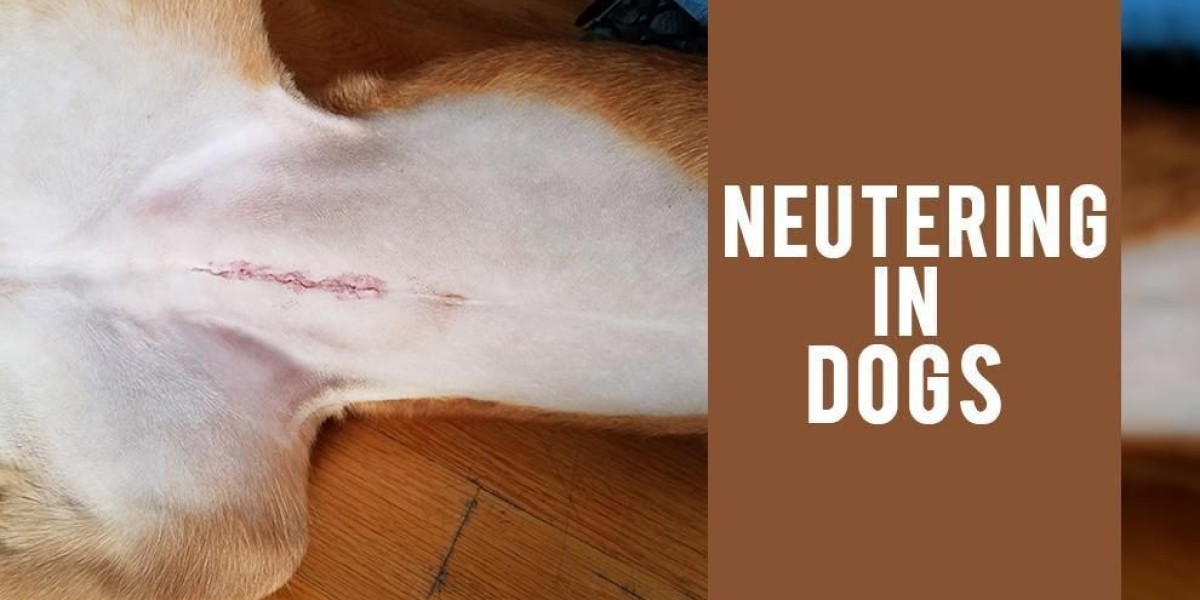
The scrotal skin and penis usually remain. Sutures may be buried beneath the skin, visible externally, or combined with surgical adhesive. Owners should ask whether the dog will need suture removal.
A routine operation can become more involved when a testicle is retained, the dog has unusual anatomy, or another problem is discovered. The surgeon may need to explore the groin or enter the abdomen to find retained tissue.
Waking From Anesthesia
After surgery, the team stops the anesthetic and monitors the dog as consciousness returns. The breathing tube is removed when the dog can protect the airway. Staff continue checking breathing, circulation, temperature, comfort, and the incision.
Dogs wake in different ways. One may be sleepy and quiet, while another vocalizes, paddles, or appears confused. These signs can reflect medication and disorientation rather than uncontrolled pain, but the team evaluates comfort and provides support.
The dog remains at the hospital until sufficiently awake and stable. Discharge timing depends on recovery, procedure, age, health, and hospital protocol. A dog that does not recover as expected may need longer observation.
Going Home
At discharge, the owner receives directions for medication, feeding, water, activity, incision checks, and licking prevention. Ask questions before leaving. Written instructions are useful because owners may not remember every detail after a stressful day.
The dog should travel in a secure, comfortable space. Avoid allowing a groggy patient to jump into or out of the vehicle. Support may be needed, especially for a large dog.
Once home, place the dog in the prepared quiet area. Keep children and other animals calm. The patient may want to sleep and should not have free access to stairs, furniture, or an open yard while coordination is reduced.
The First Evening
Sleepiness, mild unsteadiness, and a temporary decrease in appetite can occur. Offer food and water according to the discharge instructions. Do not force a large meal. A small amount may be recommended first, depending on the hospital's plan.
The dog should be able to rest comfortably and respond to the owner. Some whining can occur during anesthetic recovery, but persistent distress, severe pain, breathing difficulty, repeated vomiting, collapse, pale gums, or uncontrolled bleeding requires immediate guidance.
Bathroom trips should be brief and supervised. Use a leash even in a fenced yard. The dog may feel better than expected and attempt to run before balance and judgment are fully normal.
The First Three Days
The incision should remain closed and dry. Mild bruising or a small amount of swelling may occur. Check the area at least once daily without pressing or pulling on the skin. Taking a clear photograph under similar lighting can help owners notice change.
Give pain medication exactly as directed. Do not add aspirin, ibuprofen, acetaminophen, or another human product. Several common human pain medicines can cause serious illness in dogs.
The recovery collar must stay in place unless the veterinary team provides another plan. A dog can damage the incision in minutes. Licking introduces bacteria and may remove sutures or adhesive.
Activity remains limited. The dog may begin acting normal, but internal and external tissues are still healing. Calm enrichment such as food puzzles approved for the recovery plan can help reduce frustration without encouraging vigorous movement.
Days Four Through Seven
Many dogs have more energy during this period. That improvement is welcome but creates a common recovery risk. Running, jumping, wrestling, and sudden turns can cause swelling, bleeding, fluid accumulation, or opening of the incision.
Continue leash control and separation from active playmates. Medication may finish during this stage, but owners should follow the prescription rather than stopping because the dog looks comfortable.
The incision should become less irritated, not more. Contact the hospital if redness spreads, swelling increases, discharge appears, a bad odor develops, or the skin edges separate. A soft swelling near the scrotum can have several causes and should be described to the veterinary team.
Days Eight Through Fourteen
Healing continues even when the incision looks small. Keep restrictions in place for the full period given by the surgeon. Some dogs need a recheck before returning to normal activity, and visible sutures may need removal.
The veterinarian assesses whether the incision is sealed, swelling has resolved, and pain is absent. If healing is complete, activity can gradually increase. A dog that has been restricted should not immediately return to intense running, jumping, or sports.
Summit Dog & Cat Hospital's spay and neuter discharge instructions provide a reference for postoperative care. The instructions issued for the individual dog remain the most important guide.
Hormone Changes After Surgery
Testosterone does not disappear instantly. Hormone levels decline over time, so reproductive interest and related behavior may change gradually. The dog may remain interested in a female in heat shortly after surgery and should be separated according to veterinary advice.
Roaming, marking, mounting, and some competition between males may decrease when testosterone is a strong influence. Results are not guaranteed. A behavior practiced for months or years can continue because it has become learned or because it serves another purpose.
Fear, separation distress, resource guarding, and pain related aggression require separate evaluation. Neutering is not a substitute for training, environmental management, or behavior care.
Changes in Weight and Appetite
Some dogs experience a change in calorie needs or appetite after neutering. Weight gain is not inevitable, but continuing the same portions without monitoring can gradually add excess body fat.
Measure meals and include treats when estimating daily intake. Once surgical restrictions end, maintain suitable exercise and mental activity. Ask the veterinarian to reassess body condition and food portions at future wellness visits.
A dog that refuses food beyond the expected recovery window, loses weight, drinks excessively, or develops another persistent change should be examined. Not every symptom after neutering is caused by the operation.
Possible Complications
Complications are not expected, but owners need to recognize them. Incision infection can cause spreading redness, heat, pain, discharge, odor, or fever. A seroma is a pocket of fluid that can develop after too much activity. Bleeding can cause rapidly increasing swelling, weakness, pale gums, or collapse.
Anesthesia complications may affect breathing, circulation, temperature, or recovery. Medication reactions can cause vomiting, diarrhea, facial swelling, hives, unusual agitation, or profound sedation. Urinary difficulty, severe pain, and persistent appetite loss also deserve prompt guidance.
The hospital's pet emergency information can help owners identify the appropriate next step when serious symptoms develop.
When to Call the Veterinarian
Call whenever recovery differs from the written plan or the owner is unsure. It is better to describe a concern early than to wait until the incision is badly damaged. A photograph or short video may help the team understand swelling, breathing, movement, or behavior.
Urgent signs include collapse, breathing difficulty, uncontrolled bleeding, pale gums, a rapidly enlarging surgical area, repeated vomiting, inability to urinate, severe weakness, or an open incision. These signs may require immediate examination rather than an online message.
Local Neutering Care in Summit
Summit Dog & Cat Hospital is located at 16 Morris Turnpike in Summit, New Jersey. Owners can discuss timing, preanesthetic testing, retained testicles, pain control, and recovery before choosing a surgical date. An appointment request can begin the process for a nonurgent consultation.
Tell the team about any health change before surgery, even if it seems minor. Accurate information helps the veterinarian decide whether proceeding is safe.
Final Thoughts
Understanding what happens when you neuter a dog makes the experience more manageable. The process includes far more than removing the testicles. Examination, testing, anesthesia, monitoring, pain relief, incision protection, and careful home recovery all contribute to a safe outcome.
Summit Dog & Cat Hospital provides dog neutering consultations and surgery in Summit, NJ. Owners can contact the hospital to discuss timing, preparation, procedure details, and an individual recovery plan.
FAQs
Q: Does a dog go home the same day after neutering?
A: Many routine patients go home after they are awake and stable, but discharge depends on health, procedure, recovery, and hospital protocol. A dog with a retained testicle or slower recovery may need additional observation.
Q: How long must a dog wear a recovery collar?
A: The collar should remain in place for the period directed by the surgeon, often until the incision is fully healed. Removing it too early allows licking that can introduce infection or open the surgical site.
Q: When can my dog exercise after being neutered?
A: Activity is restricted during early healing, commonly for roughly ten to fourteen days. Follow the individual discharge plan and recheck advice. Exercise should return gradually after the veterinarian confirms the incision is adequately healed.
Q: Is swelling normal after dog neutering?
A: Mild swelling or bruising may occur, but it should not rapidly increase. Contact the hospital about spreading redness, heat, discharge, odor, severe pain, bleeding, or a growing swelling near the incision or scrotum.
Q: When will behavior change after neutering?
A: Testosterone declines gradually, so hormone influenced behavior may change over several weeks. Learned marking, mounting, or roaming can continue. Fear, anxiety, guarding, and pain related behavior need separate evaluation and should not be expected to disappear.