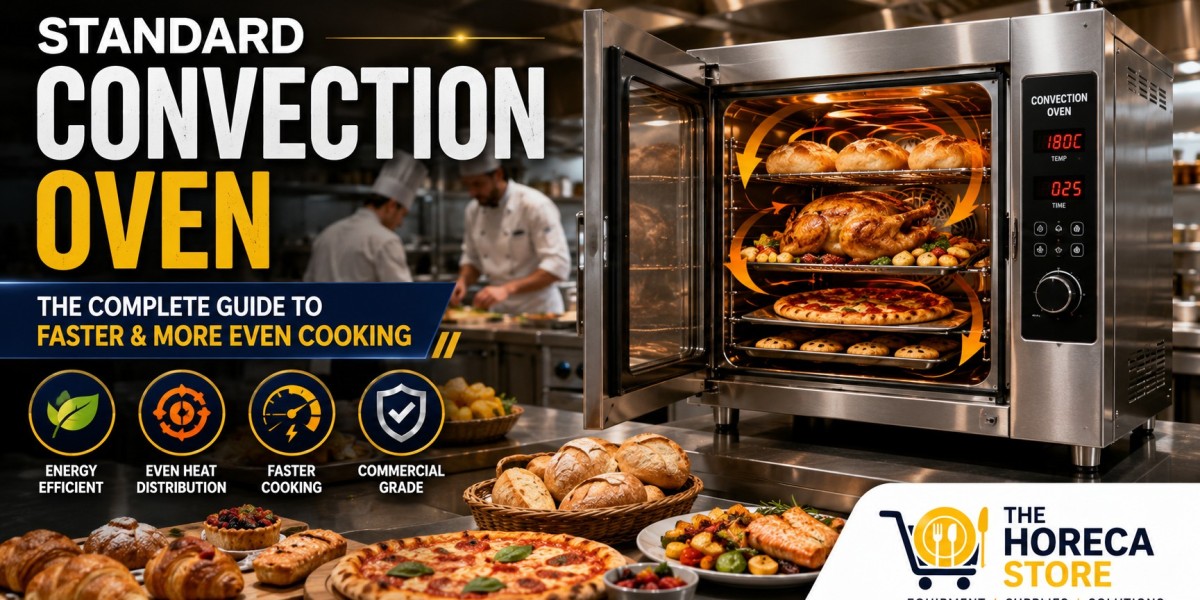

A reliable oven is one of the most essential pieces of equipment in any professional kitchen. Restaurants, bakeries, hotels, cafés, and catering businesses depend on efficient cooking equipment to prepare high-quality food while maintaining speed and consistency. Among the many oven options available, the standard convection oven has become a popular choice because it offers improved cooking performance compared to traditional ovens.
A standard convection oven combines traditional heating technology with a fan-assisted air circulation system. This allows heat to move evenly throughout the cooking chamber, helping food cook faster and more consistently. Whether you operate a small café or a large commercial kitchen, understanding how a convection oven works and its benefits can help you make the right equipment decision.
What Is a Standard Convection Oven?
A standard convection oven is a cooking appliance that uses a fan to circulate hot air inside the oven chamber. Unlike a conventional oven, which relies on natural heat movement, a convection oven actively distributes heat around the food.
The continuous airflow helps maintain consistent temperatures and improves cooking efficiency.
Standard convection ovens are commonly used for:
Baking
Roasting
Cooking meats
Preparing vegetables
Reheating food
Commercial food production
They are widely used in:
Restaurants
Hotels
Bakeries
Cafés
Catering businesses
Institutional kitchens
How Does a Standard Convection Oven Work?
A standard convection oven operates using heating elements and an internal fan system.
The cooking process works as follows:
Heating elements create heat inside the oven chamber.
The fan circulates hot air evenly throughout the interior.
Moving air transfers heat directly to the food.
Food cooks more quickly and evenly.
The airflow created by the fan reduces temperature differences inside the oven. This means food placed on different racks can cook more consistently compared to a traditional oven.
Standard Convection Oven vs Traditional Oven
The main difference between a standard convection oven and a traditional oven is airflow.
Traditional Oven
A traditional oven uses natural heat circulation.
Advantages:
Simple operation
Lower initial cost
Suitable for basic cooking
Limitations:
Uneven heat distribution
Longer cooking times
Possible hot spots
Standard Convection Oven
A convection oven uses a fan to move hot air.
Advantages:
Faster cooking
More even results
Better heat distribution
Improved efficiency
For commercial kitchens, convection ovens often provide better productivity and consistency.
Key Features of Standard Convection Ovens
Standard convection ovens include several features designed to improve cooking performance.
Even Heat Distribution
One of the biggest benefits of a convection oven is consistent heat circulation.
The fan distributes heat throughout the cooking chamber, helping achieve:
Uniform baking
Better browning
Consistent cooking results
This is especially important for bakeries and restaurants where every product must meet quality standards.
Faster Cooking Times
Because hot air continuously moves around the food, convection ovens transfer heat more effectively.
Benefits include:
Reduced cooking time
Faster food preparation
Increased kitchen output
This allows restaurants to serve customers more efficiently during busy hours.
Multiple Rack Cooking
A standard convection oven allows multiple trays to be cooked at the same time.
This is useful for preparing:
Cookies
Bread
Roasted vegetables
Meat dishes
Pastries
Multiple rack cooking improves productivity and saves valuable kitchen time.
Temperature Accuracy
Professional convection ovens provide precise temperature control.
Features may include:
Digital displays
Adjustable temperature settings
Cooking timers
Programmable controls
Accurate temperature management helps chefs achieve consistent results.
Benefits of Using a Standard Convection Oven
Improved Food Quality
Consistent heat circulation helps create better cooking results.
A standard convection oven can improve:
Texture
Browning
Moisture control
Overall food appearance
For businesses focused on food quality, this consistency is extremely valuable.
Better Kitchen Efficiency
Commercial kitchens need equipment that can handle high workloads.
A convection oven improves efficiency by:
Cooking more food at once
Reducing preparation time
Supporting faster service
This makes it ideal for restaurants and catering operations.
Energy Savings
Because convection ovens cook food faster, they can help reduce energy consumption.
Benefits include:
Lower electricity usage
Reduced operating costs
Better long-term savings
Energy-efficient equipment is especially important for businesses operating ovens throughout the day.
Versatile Cooking Applications
A standard convection oven can handle many different cooking tasks.
It can be used for:
Baking pastries
Roasting meats
Cooking casseroles
Preparing frozen foods
Reheating dishes
This versatility makes it a valuable addition to professional kitchens.
Applications of Standard Convection Ovens
Restaurants
Restaurants use convection ovens for preparing a wide range of menu items.
Common applications include:
Roasted dishes
Baked items
Side dishes
Main courses
Bakeries
Bakeries benefit from convection ovens because they provide consistent baking results.
They are commonly used for:
Bread
Cakes
Cookies
Pastries
Hotels
Hotels require reliable cooking equipment for:
Restaurants
Banquet services
Large-scale food preparation
A convection oven helps maintain consistent quality during high-volume operations.
Cafés
Cafés use convection ovens for:
Baked snacks
Sandwich preparation
Pastries
Ready-to-serve foods
Factors to Consider When Buying a Standard Convection Oven
Choosing the right convection oven requires careful consideration.
Oven Size and Capacity
Select an oven size based on your cooking requirements.
Consider:
Daily food production
Kitchen space
Number of customers served
Large kitchens may require higher-capacity models.
Power Requirements
Check the available power supply before installation.
Important factors include:
Electrical requirements
Energy consumption
Installation needs
Construction Quality
Commercial ovens should be built with durable materials.
Look for:
Stainless steel construction
Strong internal components
Easy-to-clean surfaces
Durable construction improves equipment lifespan.
Temperature Range
A good convection oven should provide a wide temperature range for different cooking applications.
This allows chefs to prepare various dishes effectively.
Maintenance Tips for Standard Convection Ovens
Regular maintenance improves performance and extends equipment life.
Recommended practices include:
Clean the oven interior regularly
Remove food residue
Check fan operation
Inspect heating elements
Maintain door seals
Follow manufacturer guidelines
Proper maintenance ensures reliable daily operation.
Why Choose a Standard Convection Oven for Your Kitchen?
A standard convection oven is an excellent choice for businesses that need reliable, efficient, and versatile cooking equipment. It provides better airflow, faster cooking, and more consistent results compared to traditional ovens.
For restaurants, bakeries, hotels, and cafés, investing in a convection oven can improve kitchen productivity while maintaining high food quality.
Final Thoughts
A standard convection oven is a valuable investment for any commercial kitchen looking to improve cooking performance and efficiency. With advanced airflow technology, faster cooking times, and consistent results, convection ovens help businesses prepare high-quality food while reducing operational challenges.
The Horeca Store whether you run a bakery, restaurant, hotel, or café, choosing the right oven can have a major impact on your kitchen’s success. A standard convection oven provides the flexibility, reliability, and performance needed to support modern foodservice operations.