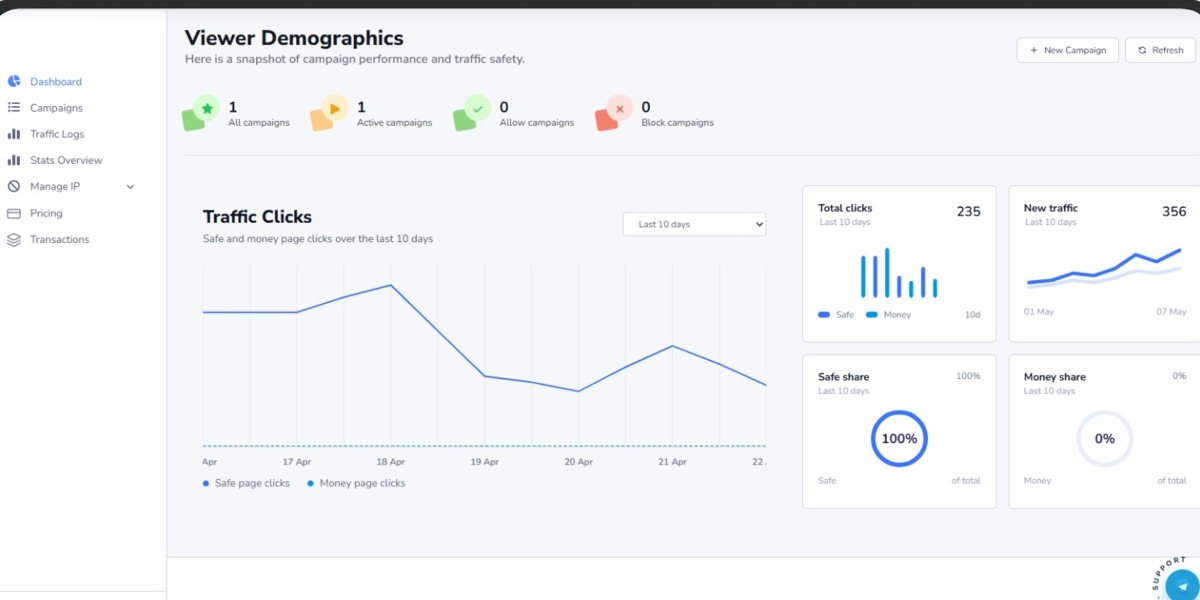

Cloaking refers to an SEO strategy where the site presents different content or information to both the search engine and the user visiting the same URL. Cloaking can be used for legitimate purposes such as personalization, accessibility, or localization purposes, but cloaking in SEO involves presenting the search engine with one set of content while presenting another set of content to the visitor. According to Google, cloaking is a violation of its policies because of the misleading nature of this practice. TrafficSaviour Bot detection tools like can help detect visitors' actions, traffic patterns, and help secure a website by differentiating between real visitors and bots
This article will discuss what cloaking is, how it works, types of cloaking, examples, risks, and when it is done safely.
What Is Cloaking in SEO?
The term cloaking within SEO means providing various webpages based on who requested it. The website can understand whether the visitor is a crawler bot like Googlebot or an ordinary user and show different content accordingly.
For instance:
Version for search engine: Webpage packed with lots of keywords to achieve better ranks.
Version for user: Different page with different information, deals or products offered.
The primary problem related to SEO cloaking is that search engines rank webpages based on content that should be seen by the user. When this content is quite different from what Google sees, it results in bad search experience.
How Does Cloaking Work?
Cloaking usually operates using a set of criteria to detect the visitors and provide various webpages accordingly.
The most popular ways of detecting the visitors are:
1. User-Agent Cloaking
The websites determine who visits them by analyzing the visitor’s user agent string.
Example:
Googlebot visits → the website displays content with SEO elements.
Visits from a regular web browser → the website displays other content.
Search engines analyze the user-agent data for identifying crawlers; therefore, this cloaking technique is widely used.
2. IP Cloaking
The IP address of the website visitor is analyzed to display appropriate content.
Examples:
The IP address belongs to the search engine’s crawler → one page is displayed.
The IP address belongs to a normal visitor → another page is displayed.
This cloaking technique can be used for displaying location-dependent content in a legitimate way but becomes a problem when used to deceive the search engines.
3. JavaScript Cloaking
JavaScript can dynamically modify the page’s content.
Example:
A search engine may see the first version of the page, while the second one is displayed for users running JavaScript.
Modern search engines are getting better at executing JavaScript.
4. Referrer-based cloaking
It is based on the display of varying information based on the origin of the user.
Example:
User who visited through Google Search: A page.
User who visited through Social media: Another page.
Examples of Cloaking
Example 1: Hidden Keyword Pages
A website creates a page which consists of hundreds of keywords to please search engines but displays a regular sales page to the user.
Search engines see:
"Best running shoes, cheap running shoes, buy running shoes online..."
User sees:
A product landing page with minimal text.
Example 2: Created Content for Rankings
The website writes an article on a popular subject that ranks in search engines, but then redirects users to something that has nothing to do with the original article.
Example:
The article ranks for "free software download," but when people click through, they are redirected to a paid subscription site.
Example 3: Geographic Personalization
The company offers different store locations depending on where the person visiting is located.
This is usually viewed as acceptable provided that the variation in content has been made with the intention of enhancing user experience and not manipulating search engines.
Is Cloaking Permissible under Google Rules?
According to Google, cloaking can be seen as violating Search Essentials policies.
These instances include:
Keyword stuffing for search engine traffic only.
Hiding spammy content from people.
Showing search engines a different version of information compared to visitors.
Rank manipulation by means of false information.
Consequences may include:
Decrease in search rankings.
Manual action by Google.
Elimination of webpages from search index.
Difference between Cloaking and Personalization: What Is It?
All variations in content cannot be classified as cloaking.
Personalization
Personalization involves variations in content for user experience improvement.
For example:
Offering currency in visitor's local currency.
Language choice display.
Regional deals display.
Product recommendations based on browsing history.
Cloaking
Alternatives to Cloaking in White Hat SEO Practices
As an alternative to harmful SEO practices, sites can use legitimate techniques:
1. Produce Valuable Content
Produce helpful content with an answer to users' queries and proof of your expertise:
Research.
Practical experience.
Explanations.
Insightfulness.
2. Conduct Technical SEO Optimization
Optimize the following elements:
Speed.
Mobile optimization.
Structured data.
Internal links.
Search engine crawling.
3. Implement Dynamic Content Legitimately
Legitimate usage of dynamic content can include:
Personalization.
User dashboard.
Region-specific content.
Account-related page.
Make sure that the primary content is available and unchanged for crawlers.
4. Apply E-E-A-T Rules
According to Google, quality of the content depends on:
Experience – practical knowledge.
Expertise – correct information.
Authoritativeness – trust.
Trustworthiness – reliability.
Cloaking Detection on a Website
Website administrators and SEO specialists can detect cloaking on websites by the following methods:
Comparing the Views of User and Crawler
Compare the following views:
Regular browser.
Googlebot.
Cached pages.
Rendered HTML.
Using SEO Tools
Use such tools as:
Google Search Console.
Screaming Frog SEO Spider.
Sites auditors.
Examining Server Responses
Analyze:
HTTP headers.
Redirecting.
Scripts.
User-agent-based responses.
Frequently Asked Questions About Cloaking
What is cloaking in layman’s terms?
The term cloaking refers to the presentation of distinct content to search engines and users of websites with one and the same URL. This technique is widely discussed in relation to SEO.
Is cloaking legal or not?
Although cloaking is not illegal per se, deceptive cloaking techniques may be penalized according to the search engine policies.
Is cloaking beneficial for SEO?
It goes without saying that deceptive cloaking can hardly be considered an effective SEO tool since the long-term success of your website in search engines is based on its high-quality content.
Can Google find out about cloaking?
Yes. Google has highly developed mechanisms aimed at the identification of misleading discrepancies between the experiences of crawlers and website users.
Not all cloakings are necessarily bad.
No. There are certain kinds of content adaptations such as personalization, localization, and language targeting that are acceptable if done for the benefit of the user not to trick the search engine.
Final Thoughts
The technique of presenting different information for the search engine and the visitor is called cloaking. Although there are legitimate reasons for content adaptations, cloaking for SEO purposes may harm ranking and credibility of the website.
A successful SEO strategy should include transparency, valuable content, technical SEO, and addressing the visitor’s needs.