
Introduction
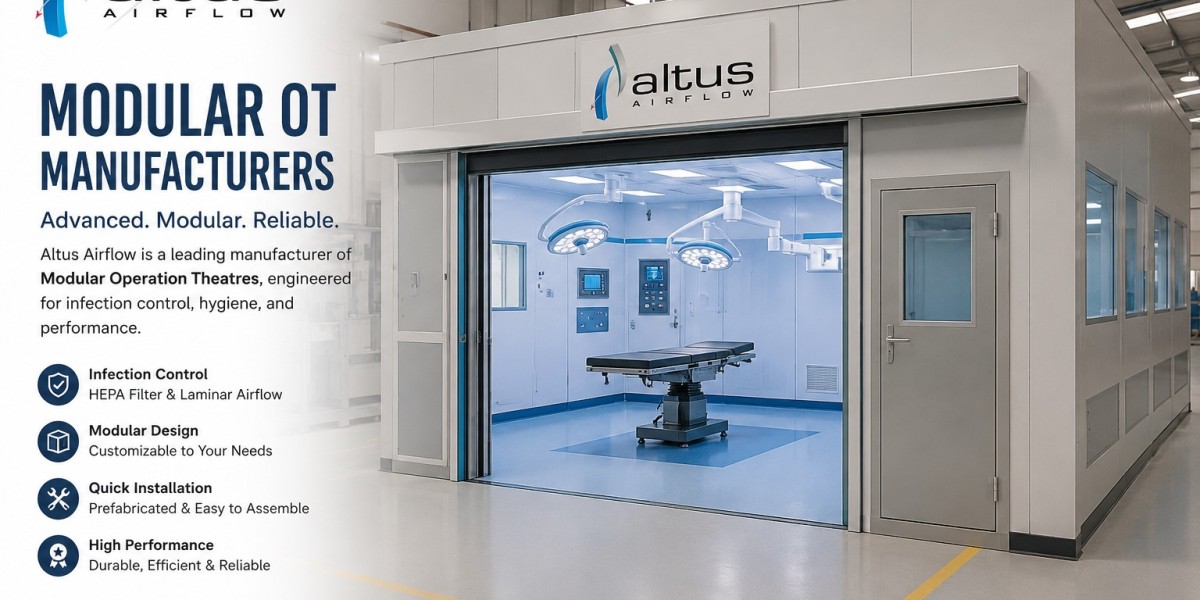
Maintaining sterile conditions is one of the most important requirements for any modern operation theatre. Airborne microorganisms, dust particles, and contaminants can increase the risk of surgical site infections, affecting patient safety and surgical outcomes. Hospitals therefore invest in advanced operation theatre infrastructure that supports strict infection control and environmental management. Modular OT Manufacturers play a significant role in developing operation theatres that combine innovative engineering, premium materials, and advanced air management technologies to create safe surgical environments. Their expertise helps healthcare facilities achieve reliable hygiene standards while supporting efficient clinical workflows.
Understanding the Role of Modular OT Manufacturers
Modular OT Manufacturers specialize in designing, manufacturing, and installing modern operation theatres that comply with healthcare requirements. Their solutions combine multiple engineering systems into one integrated surgical environment.
These systems generally include:
- Modular wall panels
- HEPA filtration systems
- Laminar airflow units
- HVAC systems
- Hermetically sealed doors
- Conductive flooring
- Medical gas pipeline systems
- Environmental monitoring systems
Each component contributes to maintaining cleanliness and supporting safe surgical procedures.
Why Sterility Is Critical in Operation Theatres
A sterile operation theatre protects patients, surgeons, and healthcare staff from airborne contamination.
Maintaining sterility helps:
- Reduce surgical site infections
- Improve patient recovery
- Protect sensitive surgical equipment
- Enhance surgical accuracy
- Maintain healthcare compliance
- Improve operational efficiency
Every element inside the operation theatre contributes toward infection prevention.
Seamless Modular Construction
One of the biggest advantages of modular operation theatres is their seamless construction.
Smooth modular panels offer:
- Easy cleaning
- Fewer dust-collecting joints
- Moisture resistance
- Chemical resistance
- Long-lasting durability
The absence of exposed gaps minimizes bacterial accumulation and simplifies daily sanitation.
HEPA Filtration for Clean Air
HEPA filters remove microscopic airborne particles before clean air enters the operation theatre.
These filters help eliminate:
- Dust particles
- Airborne bacteria
- Allergens
- Fungal spores
- Fine particulate matter
Continuous filtration significantly improves indoor air quality.
Laminar Airflow Technology
Laminar airflow provides a controlled stream of filtered air over the surgical area.
Its advantages include:
- Uniform airflow
- Reduced turbulence
- Continuous clean air supply
- Better contamination control
- Protection of sterile surgical fields
This technology minimizes airborne particle movement during surgical procedures.
Advanced HVAC Systems
Modern HVAC systems regulate the environmental conditions required for safe surgeries.
They maintain:
- Temperature
- Humidity
- Air pressure
- Air exchange rates
- Ventilation efficiency
Proper environmental control improves patient comfort while reducing contamination risks.
Positive Pressure Control
Positive pressure prevents contaminated air from entering the operation theatre.
This is achieved by:
- Supplying more filtered air than exhausted
- Maintaining outward airflow
- Supporting clean surgical environments
- Protecting sterile zones
Positive pressure works together with HEPA filtration and HVAC systems.
Conductive Flooring
Operation theatre flooring must support both hygiene and electrical safety.
Conductive flooring provides:
- Seamless surfaces
- Anti-static properties
- Slip resistance
- Easy maintenance
- Chemical resistance
Its smooth finish allows efficient cleaning and disinfection.
Hermetically Sealed Doors
Hermetically sealed doors maintain the controlled environment inside the operation theatre.
Their benefits include:
- Airtight sealing
- Pressure retention
- Reduced air leakage
- Automatic operation
- Improved contamination control
These doors help preserve sterile conditions throughout surgical procedures.
Medical Gas Pipeline Systems
Medical gas systems are essential for uninterrupted patient care.
They safely supply:
- Oxygen
- Medical air
- Vacuum
- Nitrous oxide
- Carbon dioxide
Proper installation ensures reliable performance during surgeries.
Continuous Environmental Monitoring
Modern operation theatres include intelligent monitoring systems that continuously evaluate environmental conditions.
These systems monitor:
- Air pressure
- Temperature
- Humidity
- Air quality
- HVAC performance
Real-time monitoring allows immediate corrective action when necessary.
Regular Maintenance Supports Sterility
Routine maintenance ensures all systems continue operating efficiently.
Important maintenance activities include:
- HEPA filter replacement
- HVAC servicing
- Airflow testing
- Pressure verification
- Medical gas inspection
- Electrical safety checks
Scheduled maintenance extends system life and maintains clean environments.
Benefits for Hospitals
Hospitals investing in quality modular operation theatres experience numerous benefits.
These include:
- Better infection control
- Improved patient safety
- Enhanced surgical efficiency
- Easier maintenance
- Superior indoor air quality
- Regulatory compliance
- Long-term durability
- Reduced operational disruptions
These advantages contribute to improved healthcare delivery.
Supporting Different Surgical Specialties
Modern modular operation theatres can support various specialties, including:
- Cardiac surgery
- Neurosurgery
- Orthopedic surgery
- General surgery
- Transplant surgery
- Gynecology
- Urology
- Laparoscopic procedures
Each operation theatre is designed according to clinical requirements.
Customized Healthcare Solutions
Modular OT Setup Company
Hospitals often require customized operation theatre layouts based on available space, surgical specialties, equipment requirements, and future expansion plans. Professional modular OT providers develop flexible solutions that improve workflow, optimize space utilization, and support advanced healthcare technologies while maintaining strict hygiene standards.
Importance of Quality Materials
High-quality construction materials improve both durability and infection control.
Commonly used materials include:
- Stainless steel
- High-pressure laminate panels
- Medical-grade glass
- Aluminum ceiling systems
- Conductive vinyl flooring
These materials resist corrosion, moisture, and microbial growth.
Future-Ready Infrastructure
Modern operation theatres are designed to accommodate future healthcare innovations.
They support:
- Smart monitoring systems
- Digital integration
- Advanced imaging equipment
- Robotic surgery systems
- Infrastructure expansion
Future-ready planning helps hospitals adapt to evolving medical technologies.
Conclusion
Maintaining sterile conditions requires a combination of advanced engineering, efficient airflow management, high-quality materials, and continuous environmental monitoring. Professional modular operation theatre manufacturers integrate these essential systems to create safe, contamination-controlled surgical environments that improve patient outcomes and operational efficiency. Hospitals benefit from modern infrastructure designed to support infection prevention, workflow optimization, and long-term reliability. Altus Airflow delivers advanced modular operation theatre solutions that help healthcare facilities achieve superior hygiene, safety, and performance.
FAQs
1. How do Modular OT Manufacturers help maintain sterile conditions?
Modular OT Setup Company solutions help maintain sterile conditions by integrating HEPA filtration, laminar airflow, HVAC systems, seamless modular construction, positive pressure, and environmental monitoring to reduce airborne contamination inside operation theatres.
2. Why is HEPA filtration important in modular operation theatres?
HEPA filtration removes airborne dust, bacteria, fungal spores, and microscopic particles, providing clean air for surgical procedures.
3. How does laminar airflow improve infection control?
Laminar airflow delivers filtered air in a uniform direction, reducing airborne contamination around the surgical area and maintaining a sterile field.
4. Why are hermetically sealed doors used in operation theatres?
Hermetically sealed doors prevent outside air from entering the operation theatre, helping maintain positive pressure and environmental stability.
5. What materials are commonly used in modular operation theatres?
Common materials include stainless steel, high-pressure laminate panels, aluminum ceiling systems, medical-grade glass, and conductive flooring because they are durable, hygienic, and easy to maintain.