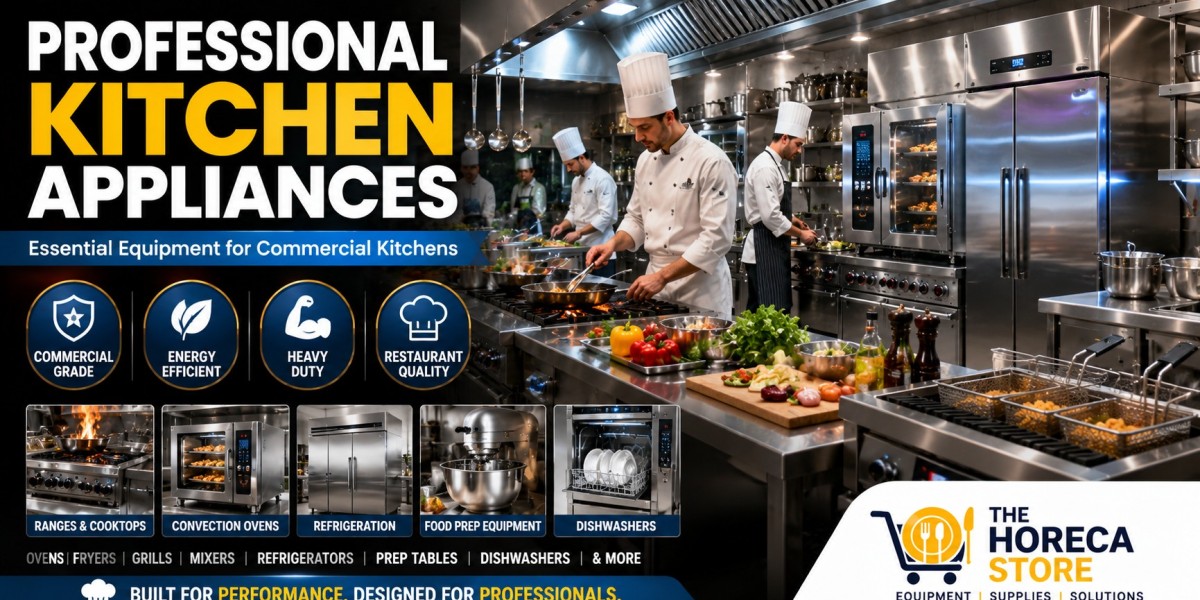

Running a successful food service business requires more than talented chefs and quality ingredients—it demands reliable, efficient, and durable equipment. Professional kitchen appliances are the backbone of restaurants, hotels, cafés, bakeries, catering companies, hospitals, schools, and institutional kitchens. Designed for heavy-duty use, these appliances help businesses maintain consistent food quality, improve operational efficiency, and meet the demands of high-volume cooking.
Whether you're opening a new restaurant, upgrading an existing kitchen, or expanding your food service operation, investing in the right professional kitchen appliances is essential for long-term success. This guide explores the different types of commercial kitchen equipment, their benefits, key features, and important factors to consider before making a purchase.
What Are Professional Kitchen Appliances?
Professional kitchen appliances are commercial-grade equipment specifically designed for continuous operation in food service environments. Unlike residential appliances, commercial kitchen equipment is built to withstand long hours of daily use while delivering reliable performance, faster cooking times, and greater durability.
These appliances include cooking equipment, refrigeration systems, food preparation machines, warewashing equipment, ventilation systems, and food storage solutions. They are engineered to comply with commercial food safety standards while maximizing productivity in busy kitchens.
Why Professional Kitchen Appliances Matter
Commercial kitchens operate under constant pressure to prepare meals quickly while maintaining quality and consistency. Professional kitchen appliances provide the speed, precision, and reliability needed to meet customer expectations.
High-quality equipment reduces preparation time, improves workflow, minimizes downtime, and supports food safety practices. Investing in durable appliances also lowers long-term maintenance costs and helps businesses avoid expensive equipment failures during peak service hours.
Essential Professional Kitchen Appliances
A well-equipped commercial kitchen includes a variety of appliances that support every stage of food preparation.
Commercial Ovens
Commercial ovens are available in convection, deck, combi, conveyor, and pizza oven configurations. They provide consistent cooking temperatures for baking, roasting, and reheating large quantities of food.
Commercial Refrigerators and Freezers
Proper refrigeration is essential for preserving ingredients and ensuring food safety. Reach-in refrigerators, walk-in coolers, undercounter refrigerators, display refrigerators, and commercial freezers are commonly used in restaurants and hotels.
Commercial Ranges and Cooktops
Gas and electric ranges provide flexible cooking options for sautéing, boiling, frying, and simmering. Many models include multiple burners and integrated ovens for maximum efficiency.
Griddles and Charbroilers
Flat-top griddles are perfect for breakfast items, burgers, sandwiches, and grilled vegetables, while charbroilers create authentic grill marks and smoky flavors for steaks, chicken, and seafood.
Deep Fryers
Commercial fryers produce consistently crispy foods such as French fries, fried chicken, seafood, and appetizers. High-capacity oil tanks and rapid recovery times make them ideal for busy kitchens.
Food Preparation Equipment
Food processors, mixers, slicers, blenders, meat grinders, vegetable cutters, and dough mixers help reduce manual labor while increasing production speed.
Ice Machines
Commercial ice machines provide a continuous supply of clean ice for restaurants, bars, hotels, cafés, and catering services.
Dishwashers
High-temperature commercial dishwashers sanitize dishes, cookware, and utensils quickly while reducing labor and water consumption.
Key Features to Look For
When selecting professional kitchen appliances, businesses should prioritize features that improve efficiency and reliability.
Durable Construction
Most commercial appliances feature stainless steel exteriors and interiors because they resist corrosion, withstand heavy use, and are easy to clean.
Energy Efficiency
Modern appliances are designed to reduce electricity, gas, and water consumption while maintaining high performance. Energy-efficient equipment helps lower operating costs over time.
Easy Cleaning
Smooth surfaces, removable components, and accessible designs simplify cleaning and support proper kitchen hygiene.
Temperature Precision
Accurate temperature controls ensure consistent cooking and food storage, improving both food quality and safety.
High Production Capacity
Commercial appliances are built to handle large volumes of food without sacrificing performance, making them suitable for busy kitchens.
Safety Features
Automatic shut-off systems, insulated handles, temperature protection, and safety controls help reduce workplace accidents and equipment damage.
Benefits of Professional Kitchen Appliances
Investing in commercial-grade equipment offers numerous advantages.
Increased Productivity
Professional appliances cook food faster, reduce preparation time, and streamline kitchen operations during peak business hours.
Consistent Food Quality
Reliable equipment maintains precise temperatures and cooking performance, ensuring every meal meets the same quality standards.
Improved Food Safety
Commercial refrigeration, cooking equipment, and warewashing systems help businesses comply with food safety regulations and maintain sanitary conditions.
Long-Term Cost Savings
Although professional appliances require a higher initial investment, their durability, efficiency, and lower maintenance needs reduce overall operating costs.
Enhanced Customer Satisfaction
Faster service, consistently prepared meals, and dependable kitchen operations contribute to a better dining experience and stronger customer loyalty.
Choosing the Right Professional Kitchen Appliances
Selecting the appropriate equipment depends on your business type, menu, kitchen layout, and daily production volume.
Restaurants with extensive menus require versatile cooking equipment, while bakeries prioritize commercial ovens and mixers. Hotels often need larger refrigeration systems, banquet equipment, and high-capacity dishwashers to accommodate guests and events.
Consider available space, utility connections, energy requirements, workflow efficiency, and future business growth before making purchasing decisions. Investing in scalable equipment allows your kitchen to adapt as customer demand increases.
Maintenance and Care
Proper maintenance extends the lifespan of professional kitchen appliances and ensures consistent performance.
Clean equipment daily using manufacturer-approved cleaning products. Remove grease buildup from cooking surfaces, inspect seals and gaskets, replace worn components, and schedule routine preventive maintenance.
Refrigeration systems should have condenser coils cleaned regularly, while ventilation systems require periodic filter replacement. Routine servicing helps prevent unexpected breakdowns and costly repairs.
Industries That Rely on Professional Kitchen Appliances
Professional kitchen appliances are used across a wide range of industries, including:
Restaurants
Hotels and resorts
Cafés and coffee shops
Bakeries
Catering companies
Food trucks
Hospitals
Schools and universities
Corporate cafeterias
Cloud kitchens
Quick-service restaurants
Institutional food service facilities
Each business depends on reliable equipment to deliver high-quality food efficiently while maintaining strict hygiene standards.
Final Thoughts
Choosing the right professional kitchen appliances is one of the most important investments for any commercial food service business. High-quality equipment improves productivity, enhances food quality, supports food safety, and reduces long-term operating costs. From commercial ovens and refrigerators to mixers, fryers, dishwashers, and food preparation equipment, every appliance plays a critical role in creating an efficient and successful kitchen.
The Horeca Store Before purchasing, carefully evaluate your menu, production requirements, available space, and future growth plans. Prioritize durable construction, energy efficiency, ease of maintenance, and reliable performance to maximize your return on investment. With the right professional kitchen appliances, your kitchen will be equipped to meet customer expectations, streamline operations, and support long-term business success in the competitive hospitality industry.












