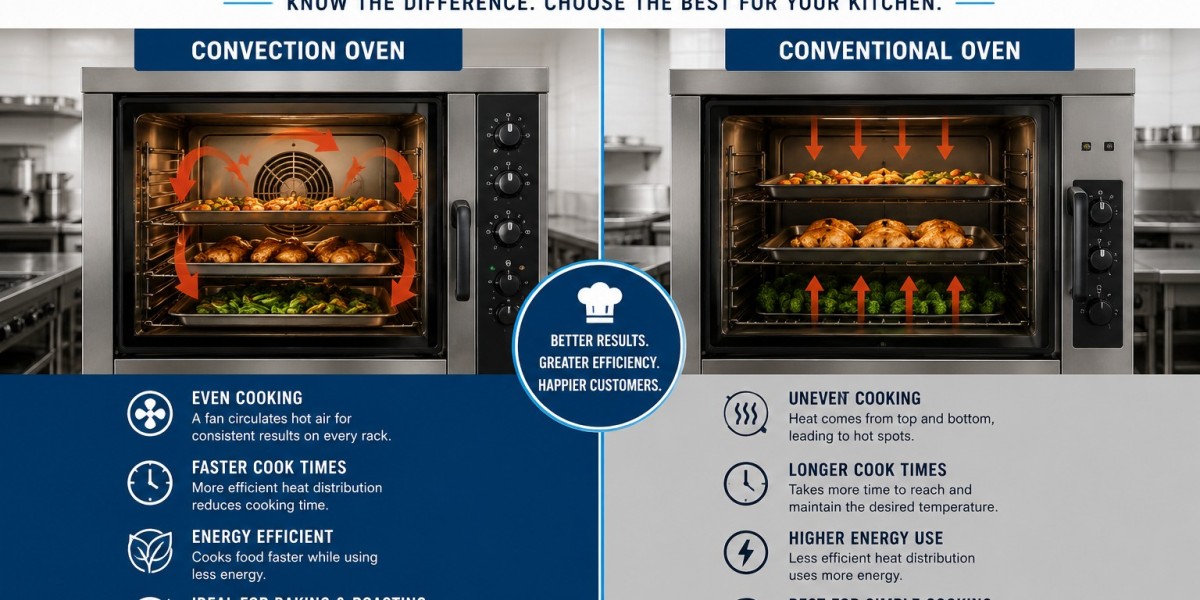

When choosing a new oven, one of the most common questions is conventional vs. convection oven. Both are excellent cooking appliances, but they work differently and produce different results depending on the type of food you're preparing.
Whether you're equipping a home kitchen, restaurant, bakery, or café, understanding the differences between these two oven types will help you make the right investment.
What Is a Conventional Oven?
A conventional oven is a traditional oven that cooks food using heating elements located at the top and bottom of the oven cavity. It does not have a fan to circulate hot air. Instead, heat moves naturally inside the oven.
Because the air remains relatively still, conventional ovens are ideal for recipes that require steady, gentle heat.
Best Uses
Cakes
Bread
Brownies
Muffins
Lasagna
Casseroles
Cheesecakes
Custards
What Is a Convection Oven?
A convection oven includes the same heating elements as a conventional oven but also features a built-in fan and exhaust system. The fan circulates hot air evenly throughout the oven, reducing hot and cold spots.
This constant airflow allows food to cook faster and brown more evenly.
Best Uses
Roasted chicken
Turkey
Beef roasts
Vegetables
Cookies
Pizza
Frozen foods
Pastries
Chicken wings
Conventional vs. Convection Oven: Side-by-Side Comparison
| Feature | Conventional Oven | Convection Oven |
|---|---|---|
| Heat Source | Top and bottom heating elements | Heating elements with fan |
| Air Circulation | Natural | Forced by fan |
| Cooking Speed | Standard | 20–30% faster |
| Heat Distribution | May have hot spots | Even throughout the oven |
| Browning | Moderate | Excellent |
| Multiple Trays | Less consistent | Very consistent |
| Energy Efficiency | Good | Better |
| Best For | Baking cakes and breads | Roasting and batch cooking |
How Each Oven Cooks Food
Conventional Oven
A conventional oven heats the air inside the cooking chamber, and the heat naturally rises around the food. Since there is no fan, temperatures can vary slightly between the top and bottom racks.
For even cooking, recipes often recommend rotating baking trays halfway through.
Convection Oven
A convection oven uses a fan to continuously move hot air around the food. This creates a consistent cooking temperature across all oven racks, resulting in:
Faster cooking
Crispier textures
Even browning
Better roasting performance
Advantages of a Conventional Oven
Better for Delicate Baking
Recipes like sponge cakes, soufflés, and cheesecakes benefit from the gentle heat of a conventional oven.
Easy Recipe Compatibility
Most traditional recipes are written specifically for conventional ovens.
Lower Purchase Price
Conventional ovens are generally more affordable than convection models.
Simple Operation
With fewer components, these ovens are easy to use and maintain.
Advantages of a Convection Oven
Faster Cooking Times
The circulating hot air cooks food more quickly, making meal preparation more efficient.
Even Heat Distribution
The fan eliminates temperature variations, ensuring consistent results.
Superior Browning
Foods develop crisp, golden exteriors while staying moist inside.
Ideal for Commercial Kitchens
Restaurants, bakeries, hotels, and catering businesses rely on convection ovens for high-volume cooking and consistent performance.
Which Oven Is Better for Baking?
The answer depends on what you're baking.
A conventional oven is generally better for:
Cakes
Custards
Cheesecakes
Soufflés
Quick breads
A convection oven performs better for:
Cookies
Puff pastries
Artisan breads
Pizza
Multiple baking trays
Which Oven Is Better for Roasting?
For roasting meats and vegetables, a convection oven is the clear winner.
The circulating hot air helps:
Create crispy skin on poultry
Brown meats evenly
Roast vegetables faster
Reduce cooking time
Improve caramelization
Should You Adjust Recipes?
If you're using a convection oven for a recipe written for a conventional oven:
Lower the oven temperature by 25°F (15°C).
Start checking the food 5–10 minutes earlier than the recipe recommends.
Avoid overcrowding the oven to allow proper airflow.
These adjustments help prevent overcooking and ensure excellent results.
Which Oven Is Best for Commercial Kitchens?
For restaurants and commercial foodservice operations, convection ovens are often the preferred choice because they:
Cook food faster
Increase kitchen productivity
Handle multiple trays efficiently
Deliver consistent results
Improve energy efficiency
However, bakeries specializing in delicate cakes and pastries may still use conventional ovens for specific recipes.
How to Choose Between a Conventional and Convection Oven
Choose a conventional oven if you:
Bake cakes and desserts frequently.
Prefer traditional recipes without modifications.
Want a budget-friendly appliance.
Mostly prepare casseroles and baked dishes.
Choose a convection oven if you:
Roast meats and vegetables regularly.
Need faster cooking times.
Cook multiple trays at once.
Run a commercial kitchen or bakery.
Want even browning and crispier textures.
Final Thoughts
When comparing conventional vs. convection oven, neither option is universally better—the right choice depends on your cooking needs.
A conventional oven is perfect for traditional baking, delicate desserts, and recipes that require gentle, consistent heat. Its simplicity and affordability make it a reliable option for many kitchens.
A convection oven, on the other hand, offers faster cooking, more even heat distribution, and better browning. It's an excellent choice for roasting, batch cooking, and busy commercial kitchens where efficiency is essential.
By understanding the strengths of each oven type, you can confidently choose the one that best fits your cooking style, budget, and kitchen requirements.