
When you undergo surgical procedures on your back, spine, or the back of your legs, your medical team must place you in a face-down posture. In medical terms, this is known as the Prone Position.
While it gives surgeons the perfect access they need to perform delicate operations, lying face down while completely unconscious introduces unique challenges for your body. Without the right support, the weight of your body resting on a rigid surface can strain your neck, compress blood vessels, and lead to deep tissue injuries.
Fortunately, modern operating rooms are equipped with specialized engineering designed to protect you from head to toe while you are asleep. Here is a look at the essential tools that safeguard your body during surgery in the Prone Position.
The Core Support: The OT Table Mat
Every safe surgical setup begins with the foundational surface of the operating room bed. A standard, bare operating table is far too firm for long-duration surgeries. To create a safer environment, surgical teams utilize an advanced ot table mat.
An ot table mat is not a basic cushion; it is a highly engineered, pressure-redistributing mattress pad designed to map and support the contours of the human body. By dampening vibrations and dispersing weight across a much broader surface area, this mat prevents dangerous pressure points from forming on prominent bony areas like the ribs, hips, and knees.
Protecting the Vital Signs: Prone Position Gel Pads
Once the foundation is set, the surgical team places targeted prone position gel pads along critical anatomical zones. Lying face down naturally compresses the chest and abdomen, which can restrict normal breathing and compress major blood vessels like the vena cava.
Specialized chest rolls and pelvic blocks made from medical-grade gel elevate the torso just enough to allow the abdomen to move freely. This structural elevation delivers three critical benefits:
Maintains Healthy Circulation: Ensures blood flows efficiently to and from the heart without obstruction.
Optimizes Respiration: Allows the lungs to expand fully, making it easier for the anesthesia machine to deliver oxygen.
Reduces Nerve Stress: Cushions the nerve pathways in the armpits and groin, preventing postoperative numbness.
Safeguarding the Face: The Prone Head Rest
Perhaps the most delicate part of managing a patient face down is protecting the head, eyes, and airway. Turning a patient's head to the side for hours can cause severe muscle strain or cut off blood supply to the brain.
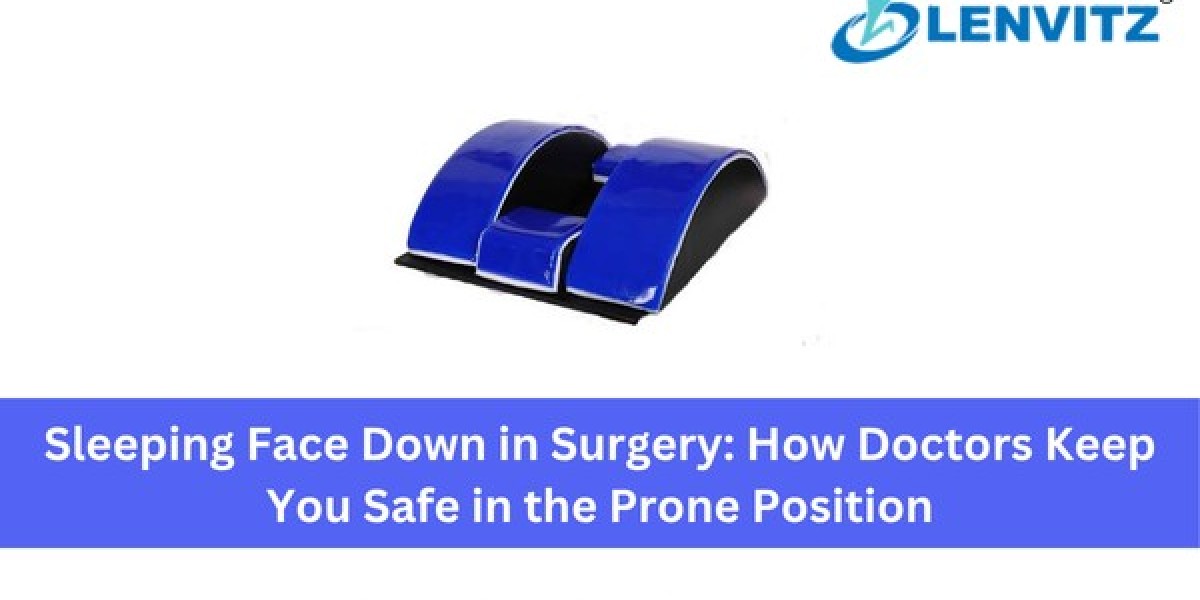
To solve this, hospitals use a dedicated prone head rest. This specialized gel cushion features an open, ergonomic center that cradles the forehead and jawline while completely suspending the eyes, nose, and mouth. This design ensures that there is zero direct pressure applied to the eyeballs—safeguarding your vision—while giving the anesthesiologist clear, unobstructed access to manage your breathing tubes throughout the entire procedure.
Safety Redefined
Patient care in the operating room extends far beyond the surgical incision. When a procedure requires the Prone Position, the meticulous combination of an ot table mat, targeted prone position gel pads, and an engineered prone head rest ensures your body remains perfectly aligned and fully protected. It is this hidden layer of advanced care that allows you to wake up healing, comfortable, and safe.