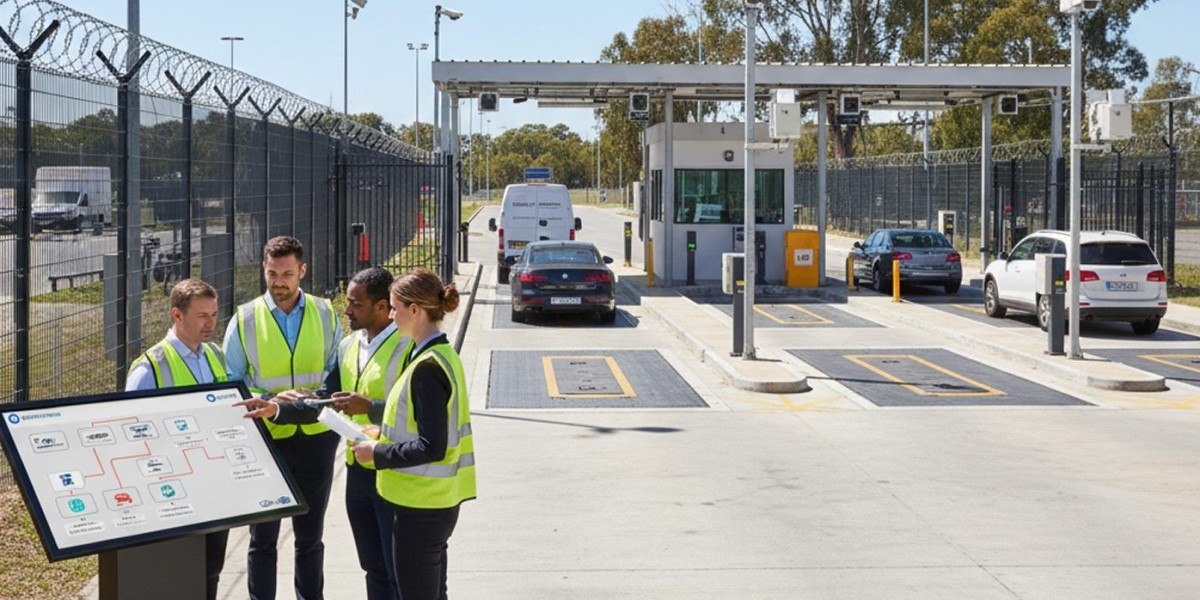

High-traffic entry points are among the most challenging areas for security teams to manage. Government facilities, airports, logistics centers, industrial complexes, military installations, corporate campuses, and critical infrastructure sites often process hundreds or even thousands of vehicles every day. While maintaining smooth traffic flow is essential for operational efficiency, security teams must also ensure that every vehicle entering the facility is properly screened.
Traditional inspection methods can struggle to meet these demands. Manual checks often create long queues, depend heavily on human observation, and may fail to identify concealed threats hidden beneath vehicles. As traffic volumes continue to increase and security risks become more sophisticated, organizations are searching for smarter ways to protect their entry points without disrupting daily operations.
One of the most effective solutions is the integration of License Plate Recognition (LPR) technology with advanced under vehicle inspection systems. Together, these technologies provide faster screening, improved visibility, and stronger threat detection capabilities for modern high-traffic environments.
The Growing Challenge of High-Traffic Entry Points
Facilities with large numbers of incoming vehicles face a unique set of security challenges. Security personnel must process:
Employee vehicles
Visitor vehicles
Contractor transportation
Delivery trucks
Service vehicles
Commercial fleet vehicles
At the same time, they must remain alert to potential risks such as:
Unauthorized access attempts
Concealed objects
Suspicious vehicle modifications
Contraband transportation
Vehicle tampering
Vehicle-borne security threats
Balancing security and efficiency becomes increasingly difficult when large volumes of vehicles must be inspected quickly.
Why Traditional Vehicle Inspections Create Bottlenecks
Many organizations still rely on conventional inspection methods, including:
Visual vehicle inspections
Manual identity verification
Security officer observations
Handwritten vehicle logs
Mirror-based undercarriage inspections
Although these methods provide a basic level of screening, they often introduce several operational and security limitations.
Human Error Can Affect Accuracy
Manual inspections depend heavily on the attentiveness and experience of individual personnel.
Limited Visibility Creates Blind Spots
Certain vehicle areas, particularly the undercarriage, are difficult to inspect thoroughly using traditional tools.
Inconsistent Procedures Reduce Reliability
Different security officers may apply inspection procedures differently, leading to variations in inspection quality.
Traffic Delays Impact Operations
Manual inspections often slow vehicle processing, creating congestion and reducing operational efficiency.
These challenges make it difficult for high-traffic facilities to maintain both strong security and smooth access control.
Why Hidden Threats Beneath Vehicles Are a Major Concern
One of the most overlooked security risks at entry points is the underside of a vehicle.
Potential threats hidden beneath vehicles may include:
Suspicious packages
Unauthorized attachments
Concealed devices
Contraband
Structural modifications
Evidence of tampering
Traditional mirror inspections often provide only partial visibility and require additional time to perform effectively. In busy environments, security personnel may be forced to inspect vehicles quickly, increasing the possibility that concealed threats remain undetected.
The Need for Smarter Vehicle Screening
Modern facilities require technologies capable of improving both security and operational efficiency. Organizations increasingly seek solutions that can:
Improve inspection accuracy
Enhance visibility
Reduce human error
Accelerate vehicle processing
Support real-time threat detection
Maintain digital inspection records
Automated vehicle screening technologies help facilities achieve these objectives while strengthening perimeter protection.
How Under Vehicle Inspection Improves Security
Advanced under vehicle inspection systems use high-resolution imaging technology to automatically capture detailed images of vehicle undercarriages as vehicles pass through designated inspection zones.
This automated process offers several important advantages.
Enhanced Visibility
Security personnel gain access to detailed images of hard-to-inspect areas beneath vehicles.
Faster Screening
Vehicles can be inspected without lengthy stops, helping maintain efficient traffic flow.
Consistent Inspection Standards
Every vehicle undergoes the same inspection process regardless of traffic conditions.
Improved Threat Detection
Suspicious objects and abnormalities become easier to identify and evaluate.
Digital Documentation
Inspection images can be stored for audits, investigations, and future comparisons.
These capabilities significantly improve the effectiveness of vehicle screening operations.
Why LPR Technology Is Essential for High-Traffic Facilities
Physical inspection is only one part of an effective security strategy. Facilities must also identify vehicles quickly and accurately.
License Plate Recognition technology automates this process by capturing vehicle registration information in real time.
Key benefits include:
Automatic vehicle identification
Faster access decisions
Improved vehicle tracking
Enhanced security monitoring through watchlist integration
Reduced administrative workload
LPR technology adds an important layer of intelligence that strengthens access control and supports faster decision-making.
The Power of Integration
The smartest approach to securing high-traffic entry points is to integrate LPR technology with advanced under vehicle inspection systems.
Integrated solutions allow organizations to:
Automatically identify incoming vehicles
Capture detailed undercarriage images
Link inspection records with vehicle identities
Compare current scans with historical records
Generate alerts for suspicious findings
Improve overall situational awareness
This combination enables security teams to detect and respond to potential threats more quickly while keeping traffic moving efficiently.
A Smarter Solution for Modern Entry Point Security
As vehicle traffic continues to grow, organizations need security solutions that provide both speed and accuracy.
An advanced under vehicle scanning system enables facilities to automatically capture detailed images of vehicle undercarriages, helping identify concealed objects, suspicious modifications, and potential threats more effectively than traditional inspection methods. When integrated with LPR technology and intelligent under vehicle inspection systems, organizations gain a comprehensive vehicle screening solution that strengthens access control, accelerates threat detection, and improves overall perimeter security without creating operational bottlenecks.
This integrated approach helps facilities maintain high security standards while supporting uninterrupted vehicle movement through busy entry points.
Benefits for High-Traffic Facilities
Organizations implementing intelligent vehicle screening technologies often experience measurable improvements.
Stronger Threat Detection
Enhanced imaging improves visibility and helps identify hidden risks earlier.
Reduced Vehicle Queues
Automation accelerates screening and reduces checkpoint congestion.
Greater Inspection Consistency
Every vehicle receives standardized screening procedures.
Better Compliance Support
Digital records simplify audits, investigations, and reporting.
Improved Operational Efficiency
Security personnel can focus on evaluating threats rather than performing repetitive manual inspections.
These advantages help facilities strengthen security while maintaining efficient daily operations.
Commport Technologies: Supporting Smarter Entry Point Security
Commport Technologies is a trusted supplier of advanced LPR systems and intelligent vehicle inspection solutions designed for modern high-security environments.
By integrating license plate recognition technology with advanced under vehicle inspection systems, Commport Technologies helps organizations improve screening accuracy, strengthen access control, and enhance perimeter protection.
Its solutions support a wide range of applications, including:
Government facilities
Airports
Military installations
Industrial complexes
Logistics centers
Ports and border crossings
Critical infrastructure sites
Through intelligent technology integration, organizations can create safer, faster, and more efficient vehicle screening operations.
Conclusion
High-traffic entry points present significant security challenges, especially when organizations rely solely on traditional inspection methods. Manual procedures can create delays, inconsistencies, and blind spots that increase the risk of concealed threats entering secure areas.
By integrating LPR systems with advanced under vehicle inspection technologies, facilities can improve threat detection, streamline vehicle processing, and strengthen perimeter security. Intelligent vehicle screening solutions provide the visibility, automation, and efficiency needed to secure modern entry points without sacrificing operational performance.
For organizations seeking a smarter way to protect busy entry gates, automated vehicle screening technology has become an essential part of a modern security strategy.