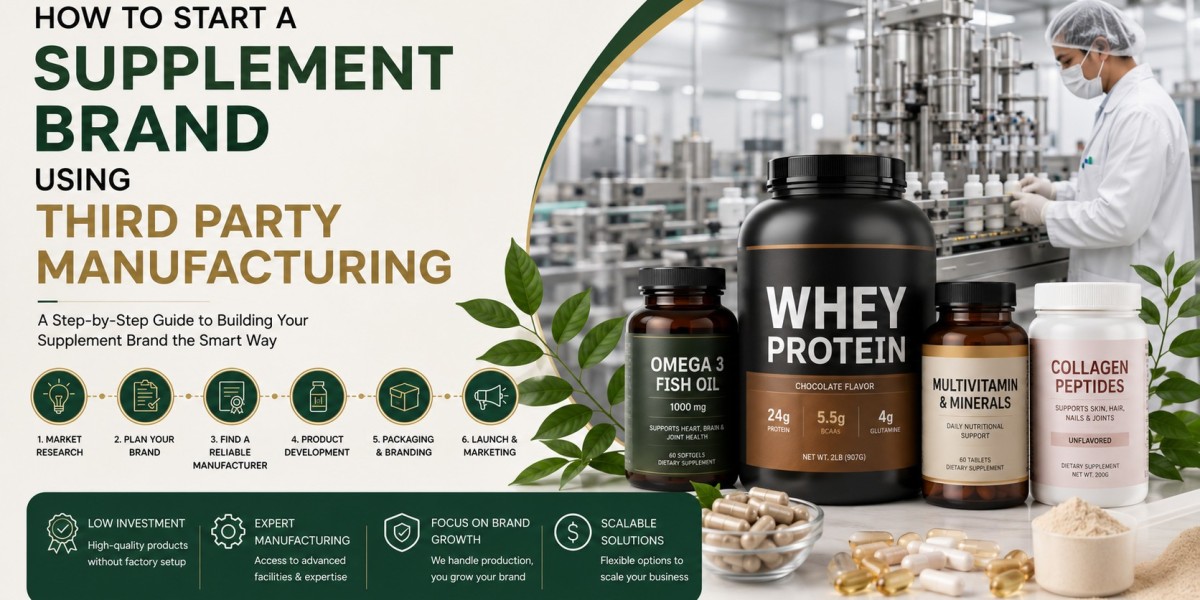

The supplement industry has grown exponentially over the past decade, with the global market reaching $163.9 billion in 2023 according to Grand View Research. This remarkable growth has opened doors for entrepreneurs who want to launch their own supplement brands without investing millions in manufacturing facilities. Third party nutraceutical manufacturing, also known as contract manufacturing, offers a practical solution for those ready to enter this lucrative market.
Understanding Third Party Manufacturing
Third party nutraceutical manufacturer means partnering with established facilities that produce supplements according to your specifications. Nutraceutical manufacturers handle everything from sourcing raw materials to packaging your final product. This arrangement allows you to focus on brand development, marketing, and customer relationships while experts handle production. The model significantly reduces startup costs since you avoid purchasing expensive equipment and hiring specialized staff.
Developing Your Product Concept
Before approaching manufacturers, you need a clear product vision. Research your target market thoroughly to identify gaps and opportunities. The National Institutes of Health reports that 58% of American adults use dietary supplements regularly, but preferences vary widely across demographics. Decide whether you'll focus on vitamins, protein powders, herbal supplements, or specialized formulations. Your product should solve a specific problem or meet an unfulfilled need in the market.
Finding the Right Manufacturing Partner
Selecting a reliable manufacturer is crucial for your brand's success. Start by verifying that potential partners hold current Good Manufacturing Practice certification from the FDA. This certification ensures they follow strict quality control standards. Request facility tours when possible and ask for client references. Examine their minimum order quantities, as these typically range from 1,000 to 5,000 units depending on the product type and manufacturer.
Budgeting Your Startup Costs
Financial planning determines whether your venture succeeds or fails. According to industry experts, starting a supplement brand through third party nutraceutical manufacturing typically requires $25,000 to $50,000 initially. This includes product development, manufacturing minimums, packaging design, legal fees, and initial marketing expenses. Manufacturing costs vary widely based on ingredients and complexity, ranging from $5 to $30 per unit. Factor in additional expenses for website development, trademark registration, and inventory storage.
Navigating Legal Requirements
The supplement industry operates under strict regulations enforced by the FDA. Your products must comply with the Dietary Supplement Health and Education Act of 1994. Register your facility with the FDA and ensure all labeling meets federal requirements. Labels must include a supplement facts panel, ingredient list, and appropriate disclaimers. Avoid making disease treatment claims, as these require drug approval. Consider consulting with a regulatory expert to ensure full compliance and avoid costly violations.
Creating Your Brand Identity
Your brand distinguishes you from thousands of competitors in the supplement market. Develop a compelling brand story that resonates with your target audience. Design professional packaging that communicates quality and trustworthiness. Research shows that 72% of consumers say packaging design influences their purchasing decisions. Invest in a memorable logo, cohesive color scheme, and clear messaging that highlights your unique value proposition.
Quality Control and Testing
Never compromise on product quality, as your reputation depends on it. Reputable third party manufacturers conduct regular testing, but you should implement additional verification measures. Request certificates of analysis for each batch produced. Consider hiring independent laboratories to perform random quality checks. Third party testing costs between $200 and $800 per product but provides invaluable assurance. Transparency about testing builds customer trust and differentiates your brand.
Building Your Distribution Strategy
Decide how you'll sell your supplements before manufacturing begins. E-commerce platforms like Shopify make direct-to-consumer sales accessible, with lower overhead than traditional retail. Amazon represents another major channel, accounting for approximately 30% of online supplement sales according to recent industry data. Alternatively, approach health food stores, gyms, and specialty retailers for wholesale opportunities. Each channel requires different pricing strategies and profit margins.
Marketing Your Supplement Brand
Effective marketing transforms your product from unknown to must-have. Digital marketing offers cost-effective reach, particularly through social media platforms where health-conscious consumers gather. Instagram and Facebook advertising allow precise targeting based on interests and demographics. Content marketing through blogs and videos establishes your expertise and builds organic traffic. Influencer partnerships can accelerate brand awareness, though costs vary from $100 to $10,000 depending on follower counts.
Scaling Your Business
As sales grow, maintain strong relationships with your manufacturing partner. Communicate regularly about inventory needs and product performance feedback. Most manufacturers offer volume discounts once you reach higher order quantities. Reinvest profits into expanding your product line, improving formulations, and strengthening marketing efforts. Track key metrics like customer acquisition cost, lifetime value, and repeat purchase rates to guide growth decisions.
Starting a supplement brand through third party nutraceutical manufacturing offers an accessible entry point into a thriving industry. Success requires thorough research, regulatory compliance, quality focus, and strategic marketing. With dedication and smart planning, you can build a profitable supplement business without massive capital investment.