
Many manufacturing companies face unexpected machine failures that stop production and create costly delays. One common reason behind these problems is the wear and tear of timing belt systems. When a timing belt fails, the entire operation can be affected, leading to lost productivity and increased repair expenses.
Industrial buyers and maintenance managers often focus on replacing damaged parts individually. However, this approach may not solve the root cause of the problem. Related components such as tensioners, pulleys, and bearings may also be worn out, creating future risks even after the belt is replaced.
This is where timing belt kits provide a practical solution. A complete kit includes all essential components needed for proper system performance, helping businesses reduce downtime and improve equipment reliability.
The Problem: Unexpected Equipment Failures
In industrial environments, equipment runs continuously for long hours. Over time, timing belts experience stress from heat, load changes, dust, and vibration. When only the belt is replaced, worn supporting components can still cause system failure.
Common issues include:
- Frequent machine stoppages
- Reduced production efficiency
- Increased maintenance costs
- Unexpected repair expenses
- Shorter equipment lifespan
For procurement teams, repeated replacement cycles can also increase purchasing costs and create supply chain challenges.
What Are Timing Belt Kits?
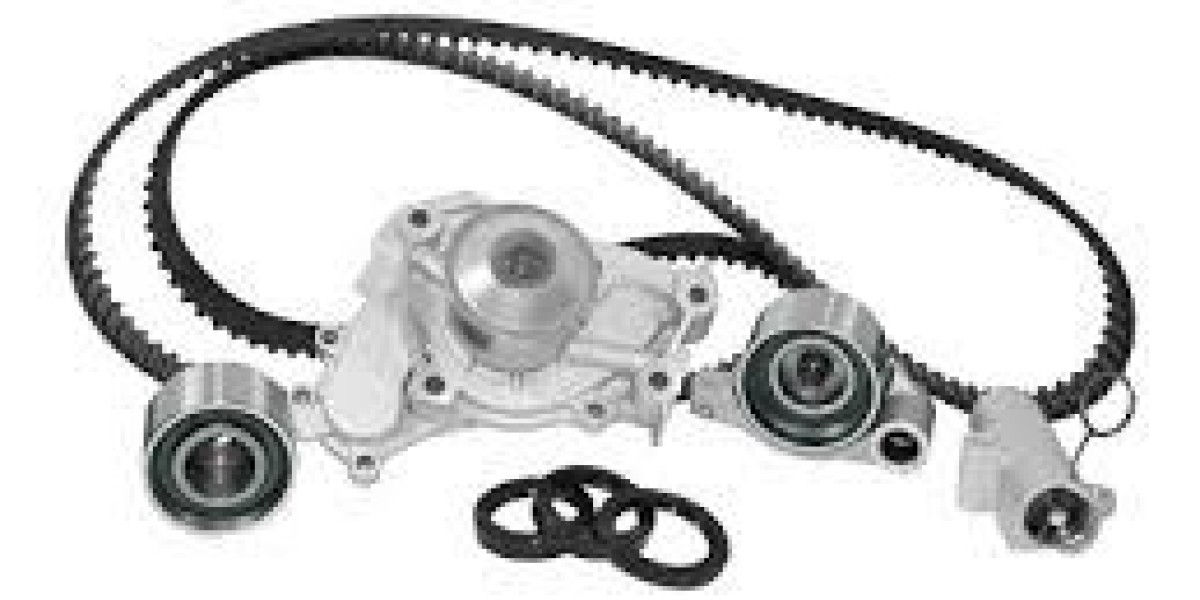
Timing belt kits are complete maintenance packages designed to replace multiple timing system components at the same time.
A typical timing belt kit may include:
- Timing belt
- Tensioner assembly
- Idler pulleys
- Bearings
- Mounting hardware
- Related accessories
By replacing all critical parts together, businesses can restore the entire timing system rather than fixing only one component.
Why Replacing Only the Belt Can Be a Costly Mistake
Many maintenance teams choose the lowest-cost option and replace only the damaged belt. While this may seem economical initially, it often leads to repeated breakdowns.
For example, a worn pulley bearing can create misalignment. Even a brand-new timing belt may wear out quickly if the pulley is not functioning correctly.
This results in:
- Additional labor costs
- More maintenance downtime
- Higher replacement frequency
- Increased operational risk
A complete timing belt kit helps prevent these issues by addressing all major wear points simultaneously.
How Timing Belt Kits Improve Operational Efficiency
Industrial companies continuously seek ways to improve equipment performance and reduce maintenance interruptions.
Timing belt kits contribute by:
Improving System Reliability
All connected components work together as a complete system. Replacing them at the same time reduces the chance of premature failures.
Reducing Maintenance Intervals
New belts, bearings, and pulleys operate more efficiently, allowing equipment to run longer between service periods.
Supporting Consistent Production
Reliable machinery helps maintain production schedules and customer delivery commitments.
Lowering Total Maintenance Costs
Although a timing belt kit may have a higher initial purchase price than a single belt, it often reduces long-term repair and replacement expenses.
Important Factors When Selecting Timing Belt Kits
Not all timing belt kits are the same. Industrial buyers should evaluate several factors before purchasing.
Material Quality
High-quality belts and bearings provide better durability and performance in demanding environments.
Application Compatibility
The kit should match the machine specifications and operating requirements.
Manufacturer Reputation
Choosing products from experienced manufacturers helps ensure consistent quality and technical support.
Load Capacity
Industrial applications often require components capable of handling heavy loads and continuous operation.
Maintenance Support
Reliable suppliers can provide technical guidance and replacement recommendations when needed.
Benefits for B2B Buyers
For distributors, OEMs, maintenance providers, and industrial procurement teams, timing belt kits offer several advantages.
Simplified Purchasing
Buying a complete kit reduces the need to source individual components from multiple suppliers.
Inventory Management
Stocking complete kits can simplify warehouse management and improve spare-part availability.
Improved Customer Satisfaction
Distributors and service providers can deliver more reliable maintenance solutions to their customers.
Better Cost Control
Predictable maintenance planning helps businesses manage budgets more effectively.
The Role of Bearings in Timing Belt Systems
Bearings play a critical role in the performance of timing belt assemblies. Tensioners and idler pulleys rely on precision bearings to ensure smooth operation.
Poor-quality bearings can cause:
- Excessive vibration
- Noise generation
- Belt misalignment
- Premature component failure
For this reason, selecting timing belt kits that include high-quality bearings is essential for achieving long-term reliability.
Conclusion
Unexpected machine downtime remains one of the biggest challenges for manufacturing and industrial operations. Replacing individual components may provide a temporary fix, but it often fails to address underlying system wear.
Timing belt kits offer a comprehensive solution by combining belts, pulleys, tensioners, and bearings into one maintenance package. This approach improves reliability, reduces downtime, lowers long-term costs, and supports efficient production.
For B2B buyers seeking dependable maintenance solutions, investing in quality timing belt kits can be a smart strategy for maximizing equipment performance and protecting operational productivity.