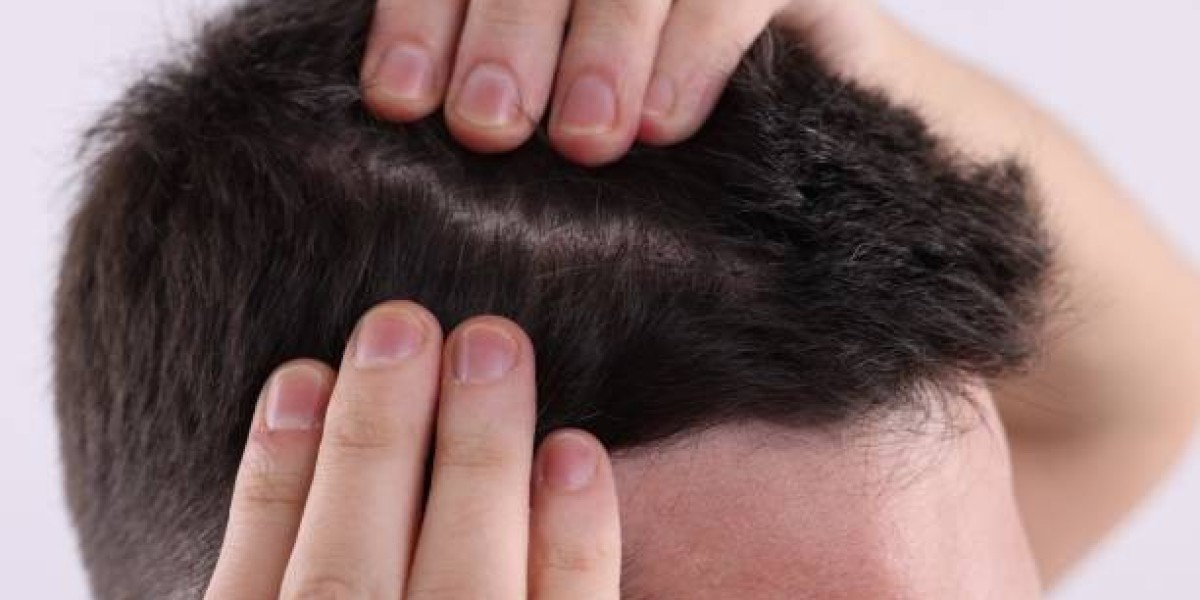

Hair loss affects people in different ways, ranging from mild thinning to advanced baldness. One of the most common questions patients ask before undergoing treatment is how many grafts are needed for a successful FUE Hair Transplant. The answer is not the same for everyone because the number of grafts depends on the extent of hair loss, hair characteristics, and the desired density.
The FUE Hair Transplant procedure works by extracting healthy hair follicles from a donor area and implanting them into thinning or bald regions. Each follicular unit is counted as a graft, and the total number required varies from person to person. A proper evaluation is essential to determine the exact graft requirement for natural and balanced results.
Understanding graft numbers helps patients set realistic expectations about coverage, density, and overall outcomes. With careful planning, the FUE Hair Transplant can deliver a natural appearance using an appropriate number of grafts tailored to individual needs.
What Is a Graft in Hair Transplant?
Understanding the Basic Unit
A graft refers to a small group of hair follicles taken from the donor area. Each graft may contain:
- 1 hair follicle
- 2–3 hair follicles
- Occasionally more in a single unit
These grafts are implanted into areas affected by hair loss to restore natural growth.
Why Graft Count Matters
The number of grafts determines:
- Hair density
- Coverage area
- Final appearance
- Overall natural look
More grafts usually mean better coverage, but balance is important for natural results.
Factors That Determine Graft Requirement
Extent of Hair Loss
The most important factor is how much hair loss a person has experienced.
Common patterns include:
- Mild recession
- Moderate thinning
- Advanced baldness
- Complete frontal or crown loss
Each level requires a different number of grafts.
Size of the Treatment Area
Larger bald areas require more grafts to achieve visible coverage.
Hair Thickness
Thicker hair provides better coverage, meaning fewer grafts may be needed for the same visual density.
Donor Hair Availability
The number of healthy follicles available in the donor area limits how many grafts can be used.
Desired Density
Some patients prefer a natural light density, while others want a fuller appearance.
Average Graft Requirements by Hair Loss Level
Mild Hair Loss
For early-stage hair thinning or receding hairline:
- Approximately 800 to 1500 grafts may be needed
- Focus is usually on restoring the front hairline
Moderate Hair Loss
For noticeable thinning at the front or crown:
- Around 1500 to 3000 grafts may be required
- Both hairline and mid-scalp may be treated
Advanced Hair Loss
For significant bald areas:
- Between 3000 to 5000+ grafts may be needed
- Full scalp restoration may be planned in stages
These are general estimates and vary from person to person.
How Grafts Are Calculated in FUE Hair Transplant
Step 1: Scalp Evaluation
A specialist examines:
- Hair density
- Bald areas
- Donor region strength
Step 2: Density Planning
Natural hair density is measured to determine how many grafts are needed per square centimeter.
Step 3: Treatment Design
A customized plan is created based on:
- Hairline design
- Coverage goals
- Available donor hair
Step 4: Final Graft Estimation
The total graft count is calculated for balanced and natural results.
Can More Grafts Give Better Results?
Not Always Necessary
More grafts do not always mean better results. Overpacking an area can reduce blood supply and affect graft survival.
Natural Density Is Key
A well-planned moderate density often looks more natural than excessive density.
Balance Matters
The goal of FUE Hair Transplant is to create a natural appearance, not artificial thickness.
Donor Area Limitations
Finite Hair Supply
The donor area has a limited number of usable follicles.
Importance of Preservation
Surgeons must carefully manage graft extraction to avoid overharvesting.
Strategic Planning
Grafts are distributed wisely to ensure long-term hair coverage.
Single Session vs Multiple Sessions
Smaller Sessions
For mild to moderate hair loss, one session is usually enough.
Larger Cases
Advanced hair loss may require multiple sessions for full coverage.
Staged Approach
This ensures better density distribution and healthier results.
What Happens If Graft Numbers Are Insufficient?
Partial Coverage
Only priority areas like the hairline may be restored.
Future Sessions
Additional grafts can be added later if needed.
Conservative Planning
Surgeons often plan carefully to preserve donor hair for future use.
Results Based on Graft Count
Lower Graft Count
- Focused improvement in specific areas
- Natural but lighter density
Medium Graft Count
- Balanced coverage
- Noticeable improvement in appearance
Higher Graft Count
- Fuller restoration
- More dramatic transformation
Conclusion
The number of grafts needed for an FUE Hair Transplant depends on individual hair loss patterns, donor hair availability, and desired results. While mild cases may require fewer grafts, advanced hair loss may need several thousand. The key to successful hair restoration is not just the number of grafts but their careful planning and placement to achieve a natural appearance. With proper evaluation and expert planning, FUE can deliver balanced, long-lasting, and natural-looking results tailored to each patient.
Book Your Appointment at Royal Clinic Saudia
If you want to know how many grafts you need for your hair restoration journey, Royal Clinic Saudia offers detailed consultations and advanced FUE hair transplant planning. Our expert team evaluates your hair condition and designs a personalized treatment plan for natural and effective results. Book your appointment today and take the first step toward restoring your hair confidence.