
Sweeper vs. Scrubber: Why Using the Wrong Floor Cleaner Destroys Your Equipment
Most facilities treat floor cleaning machines as interchangeable. If it cleans the floor, it's a floor machine — right? Wrong. Reaching for the wrong sweeper floor cleaner, or using it in the wrong sequence, quietly destroys equipment, damages floor surfaces, and inflates your maintenance budget in ways that are entirely avoidable.
This article explains the real differences between sweepers and scrubbers, shows what goes wrong when facilities mix them up, and gives you a practical framework for matching the right machine to every job — from a compact walk behind sweeper in a tight retail storeroom to a heavy-duty industrial ride on floor sweeper covering a 50,000 sq ft production hall.
Sweeper Floor Cleaner vs Scrubber – The Core Difference
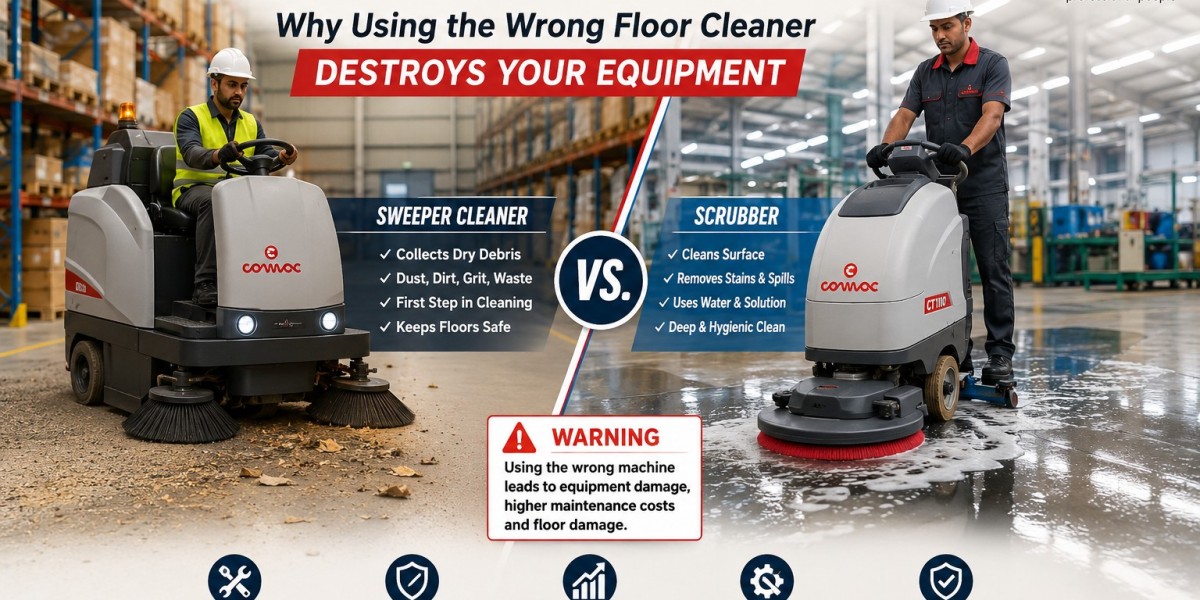
Here is the short answer worth bookmarking: a sweeper collects dry loose debris; a scrubber cleans the floor surface itself.
A sweeper floor cleaner uses rotating brooms or brushes to sweep debris into a collection hopper, assisted by a vacuum system that captures fine dust. It is designed for dry conditions. Think grit, dust, sand, paper scraps, wood chips, and light packaging waste. Sweepers are your first pass before wet cleaning, or the only machine you need in dry-debris environments.
A scrubber is built for an entirely different job. It dispenses cleaning solution, agitates it with scrubbing brushes or pads, and then recovers the dirty water into a separate tank. Scrubbers tackle embedded grime, tyre marks, spills, sticky residues, and surface contamination that sweeping cannot remove.
The critical rule: a Sweeper Cleaner is not a wet scrubber, and a scrubber is not a rubbish collector. Treating them as the same machine is where the real damage begins.
What Happens When You Use the Wrong Machine
Using a Sweeper on Wet or Sticky Soils
Picture a food processing facility where operators use a sweeper floor cleaner to clean up a liquid spill mixed with fine powder residue. Within a few cycles, the broom brushes become matted and lose their sweeping action. Wet debris packs into the hopper and filter, blocking airflow and overloading the vacuum motor. Moisture inside the hopper promotes corrosion, particularly in machines not rated for wet use.
The cost is real: replacement filters, broom systems, and motor repairs — plus unplanned downtime. In many cases, using a sweeper on wet soils also voids the manufacturer warranty, leaving you with a repair bill and no recourse.
Skipping Sweeping and Going Straight to Scrubbing
In a busy logistics centre with significant tyre dust and pallet debris, some teams skip the sweep cycle to save time and go straight to scrubbing. This is one of the most damaging shortcuts in industrial cleaning.
Large debris particles grind between the scrub pad and the floor, scratching polished concrete or epoxy coatings. Bolts, strapping clips, and packaging waste jam the squeegee blades, tearing the rubber and causing streaky, water-logged floors. Debris overloads the recovery tank filtration, clogs suction channels, and forces the recovery system to work far beyond its rated capacity.
Even a robust industrial ride on floor sweeper cannot undo this damage after the fact. The sequence matters: sweep first, then scrub.
Misusing Walk-Behind and Ride-On Machines
A walk behind sweeper rated for indoor commercial use is not built to handle the debris volumes of an outdoor yard or a heavy manufacturing floor with metal swarf. Forcing it into those conditions overloads the broom motors, strains the battery, and accelerates wear on every moving component.
The same logic applies in reverse. Using a large-format scrubber in a narrow server room aisle because "it's the only machine available" creates mechanical stress on the chassis, risks floor damage from improper pad pressure, and usually means the job is done poorly anyway.
Matching machine size and capacity to soil load is not optional — it is the foundation of equipment longevity.
Matching Machine to Debris, Floor, and Space
Before you select any machine, run through three filters:
Debris type: Is it dry dust, fine powder, grit, packaging waste, wood chips, oily residue, liquid spills, or a combination? Dry debris points to a sweeper; wet contamination or surface residue points to a scrubber — often both in sequence.
Floor material and finish: Polished concrete, epoxy coatings, ceramic tiles, and unfinished concrete all have different tolerances. Using the wrong brush type or pad abrasiveness on a sealed floor causes permanent surface damage.
Area size and access: Tight aisles, doorways, and confined spaces suit a walk behind sweeper. Open warehouse floors, parking structures, and large production halls are where an industrial ride on floor sweeper proves its value — covering ground faster with consistent results and less operator fatigue.
In most industrial and commercial settings, the right answer is both machines used in sequence. A Sweeper Cleaner removes the loose debris load first. Then a scrubber delivers the deep clean. Neither machine performs well when asked to do the other's job.
Protecting Your Investment – Best Practices
Operational Best Practices
Always identify your debris type before selecting the machine. Make sweeping a mandatory step before scrubbing in any facility with regular heavy soiling — warehouses, production halls, malls with high foot traffic, and logistics centres with tyre dust all qualify.
Train operators to recognise the warning signs: unusual motor noise, reduced suction, brush drag, and streaking after scrubbing. Stopping to clear a blockage costs minutes; ignoring it costs components.
Working With Suppliers and Manufacturers
Consult your dealer or OEM before changing the application of any machine. The right brush type, filter grade, and squeegee configuration depend on your specific floor finish and soil conditions. A Sweeper Cleaner configured for fine dust collection in a pharmaceutical facility is not the same machine as one configured for coarse grit in a concrete-floored warehouse — even if they look identical.
Dealers can also help you right-size your fleet, so a walk behind sweeper handles the right zones and your industrial ride on floor sweeper isn't wasted on areas it's too large to service effectively.
Maintenance Habits That Prevent Damage
Inspect brushes, filters, hoppers, squeegees, and recovery tanks daily.
Remove wrapped plastic, wire, string, and strapping from broom systems immediately — these wrap around axles and destroy bearings fast.
Follow the manufacturer's scheduled maintenance intervals and document every service.
Replace filters on schedule, not just when performance drops.
Keep service records; they protect your warranty and support resale value when it's time to upgrade.
Conclusion
Choosing the right machine is not just a cleaning decision — it's a financial and operational one. The wrong sweeper floor cleaner used in the wrong conditions, or the wrong sequence, damages floors, burns out components, voids warranties, and creates safety risks that nobody budgets for.
Match your debris type to the right machine. Use a Sweeper Cleaner before you scrub. Right-size between a walk behind sweeper and an industrial ride on floor sweeper based on your space and soil load. Consult your suppliers, train your operators, and stick to your maintenance schedule.
Do that consistently, and your equipment works longer, your floors look better, and your repair bills stay manageable.
FAQs
1. What is the main difference between a sweeper floor cleaner and a scrubber?
A sweeper floor cleaner collects dry loose debris — dust, grit, and light waste — using brooms and a vacuum hopper system. A scrubber applies cleaning solution, agitates it with brushes or pads, and recovers dirty water to remove embedded dirt, spills, and residues. They are designed for different tasks and work best when used in sequence: sweep first, then scrub.
2. Can a Sweeper Cleaner pick up wet spills or oily residues?
No — a Sweeper Cleaner is not designed for wet or sticky soils. Wet debris clogs brushes, blocks filters, and can cause internal corrosion, overloading the vacuum motor and damaging components not rated for moisture exposure. Using a sweeper on wet or oily surfaces often leads to costly repairs and may void your machine warranty.
3. When should I choose a walk behind sweeper instead of a ride-on machine?
A walk behind sweeper is the right choice for smaller areas, narrow aisles, confined spaces, and spot-cleaning tasks where a larger machine cannot maneuver safely. It gives operators close control and is well-suited to retail environments, smaller warehouses, and facilities with frequent layout obstacles. For high-volume open spaces, a ride-on model is usually more efficient.
4. Where does an industrial ride on floor sweeper make the most sense?
An industrial ride on floor sweeper delivers the most value in large, open spaces: distribution centres, production halls, parking structures, and logistics facilities with long unobstructed runs. It covers ground faster, reduces operator fatigue over large areas, and maintains consistent cleaning performance on high-traffic floors where a walk behind sweeper would take significantly longer.
5. What damage happens if I skip sweeping and go straight to scrubbing?
Scrubbing over loose debris causes several types of damage at once. Abrasive particles grind against the floor and scratch the surface finish, particularly on polished concrete or epoxy coatings. Large debris tears squeegee blades and blocks recovery channels. The scrubber's filtration and recovery system becomes overloaded, accelerating wear and potentially causing the machine to overheat or fail mid-shift.
6. How do I decide whether my facility needs both a sweeper floor cleaner and a scrubber?
If your facility generates dry debris — dust, grit, packaging waste, or light particulate — and also has soiling that requires wet cleaning, you almost certainly need both. Use the sweeper floor cleaner to remove the dry debris load first, then follow with a scrubber for deep surface cleaning. Running a scrubber alone in a high-debris environment shortens its service life significantly and rarely produces a clean result.