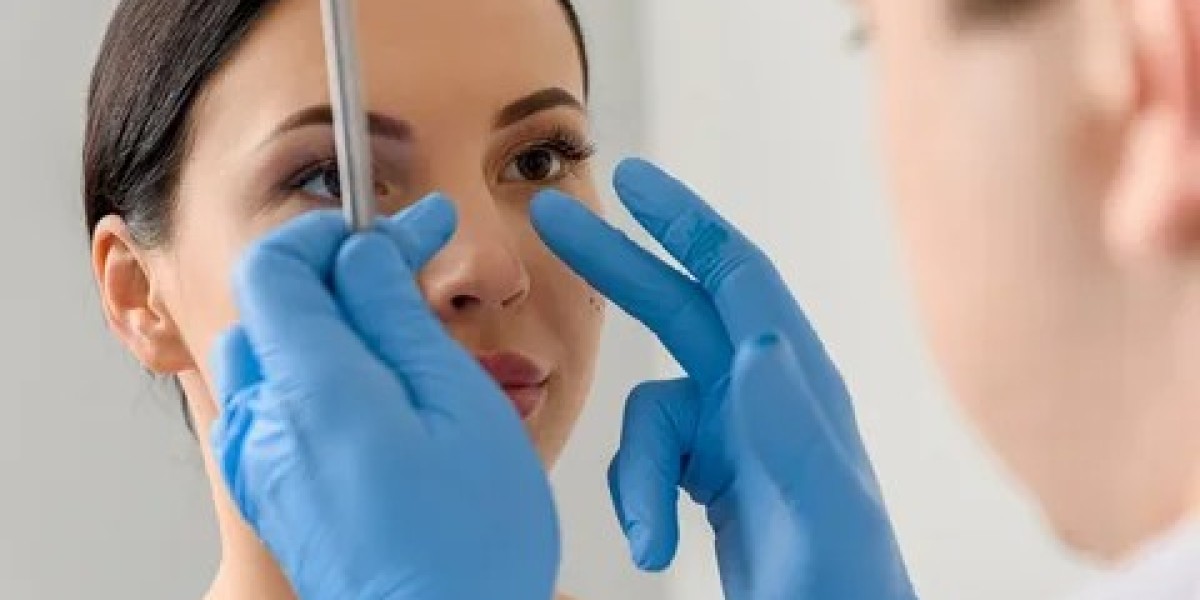

In the rapidly advancing medical landscape of 2026, the success of a surgical transformation is no longer left to imagination or hand-drawn sketches. For patients considering Rhinoplasty in Dubai, the integration of 3D planning and virtual simulation has turned a complex medical procedure into a predictable, data-driven journey. This technological evolution allows patients to "see" their results before the first incision is made, bridging the gap between surgical possibility and patient expectation. At Tajmeels Clinic, we utilize these high-definition tools to ensure that every transformation is a shared vision between the patient and the specialist.
What is 3D Planning in Rhinoplasty in Dubai?
Clinically, 3D planning is the use of volumetric imaging and specialized software to create a digital twin of a patient's face. Unlike 2D photographs, which offer a flat perspective, a 3D simulation captures the nose from every possible angle, including the crucial "basal view" and the profile transition from the forehead to the chin. This allows for a comprehensive analysis of the nasal anatomy, identifying internal deviations and external asymmetries that might be invisible to the naked eye.
In our clinical practice, we find that this phase is essential for medical transparency. By manipulating the digital model, we can show a patient how reducing a hump will affect the projection of their tip or how narrowing the bridge will impact the overall width of their face. This level of detail ensures that the patient is an active participant in their own surgical design, leading to higher satisfaction and a more confident approach to the procedure.
How 3D Simulation Works: The Clinical Mechanism
The mechanism of 3D planning involves a series of high-resolution cameras that capture the patient’s face in a fraction of a second. The software then converts these images into a three-dimensional mesh.
Topographic Analysis: The software measures the exact height, width, and length of the nose down to the millimeter.
Vector Modification: The surgeon applies virtual "surgical steps"—such as rotating the tip or smoothing the bridge—and the software calculates how the skin and soft tissue will react to those changes.
Functional Overlay: In 2026, advanced systems can even simulate how changes to the external shape might affect the internal airway, ensuring that aesthetic goals never compromise respiratory health.
This digital blueprint is then brought into the operating room. When combined with piezoelectric (ultrasonic) tools, the surgeon can execute the digital plan with extreme precision, essentially "tracing" the 3D model onto the patient’s actual anatomy.
Why 3D Simulation is Used: Purpose and Patient Safety
The primary purpose of virtual simulation in Rhinoplasty in Dubai is to eliminate the "surprise factor." Rhinoplasty is a surgery of millimeters, and even small discrepancies can lead to dissatisfaction.
Aligning Expectations: It provides a realistic "common ground" for the patient and surgeon to agree on the final aesthetic.
Surgical Strategy: It allows the surgeon to identify structural challenges, such as a lack of septal cartilage, and plan for grafts (ear or rib) well in advance.
Educational Value: Patients gain a deeper understanding of their own anatomy, learning why certain changes are recommended for their specific facial type.
Safety Net: By identifying potential issues in the virtual environment, the surgeon can refine the approach to minimize operative time and trauma.
Benefits of a Tech-Driven Consultation
Visual Precision: Seeing your potential profile from 360 degrees.
Collaborative Design: Adjusting the "virtual nose" until it fits your personal aesthetic.
Medically Sound Proportions: The software uses the "Golden Ratio" to suggest balance with the chin and forehead.
Reduced Anxiety: Knowing exactly what the surgical goal is before entering the operating room.
Documented Goals: The simulation acts as a permanent record of the intended surgical outcome.
Ideal Candidates for 3D Simulated Rhinoplasty
Almost every patient seeking a nasal transformation is an ideal candidate for 3D planning. It is particularly beneficial for complex "Revision" cases, where the original anatomy has been altered and the surgeon needs to plan a reconstructive path. It is also invaluable for patients seeking "Ethnic Rhinoplasty," as the software can help maintain cultural identity while achieving refinement.
During your consultation at Tajmeels Clinic, we perform a live simulation. We encourage patients to bring "inspiration" images, which we then compare against their 3D model to see what is anatomically possible. This honest, data-driven conversation is the foundation of a safe and successful clinical relationship.
Procedure: From Virtual Model to Physical Result
The transition from digital planning to surgical execution follows a strict 2026 clinical protocol:
Data Capture: HD cameras create the 3D mesh of the face and nose.
Morphing Session: The surgeon and patient refine the virtual model in real-time.
Final Blueprint: The software generates a "surgical guide" based on the approved simulation.
General Anesthesia: Ensuring a safe and comfortable environment for the actual procedure.
Guided Execution: The surgeon uses the blueprint and ultrasonic tools to reshape the bone and cartilage.
Intra-operative Validation: Comparing the physical result to the 3D plan before closure.
Final Splinting: Protecting the precision work during the early stages of healing.
Comparison: Traditional Consultation vs. 3D Simulation
| Feature | Traditional Consultation | 3D Simulation (2026) |
| Visualization | 2D photos or hand-drawn sketches. | Interactive 360-degree 3D digital twin. |
| Measurement | Visual estimation and calipers. | Volumetric and topographic digital data. |
| Communication | Verbal descriptions (e.g., "a bit higher"). | Visual confirmation of millimetric changes. |
| Predictability | Relies solely on the surgeon's memory. | Guided by a digital surgical blueprint. |
| Planning | Reactive (decisions made in surgery). | Proactive (decisions made pre-operatively). |
Recovery and Comparing the Simulation to Reality
One of the most rewarding aspects of 3D planning is the "Reveal" during recovery. While the simulation represents the final healed result (usually at one year), patients can often see the structural resemblance as early as the first week.
Week 1: The splint is removed; the profile matches the "primary angles" of the simulation.
Month 3: As swelling subsides, the "secondary details" of the simulation begin to emerge.
Year 1: The biological healing is complete, and the physical nose typically aligns very closely with the virtual blueprint created months prior.
Safety and Ethical Considerations
At Tajmeels Clinic, we maintain the highest ethical standards when using simulation software. We emphasize that 3D mapping is a goal, not a guarantee, as individual biology and healing capacity play a role in the final outcome. However, by using this technology, we maximize the statistical probability of achieving that goal while maintaining the highest safety standards.
Our 2026 clinical protocols ensure that the software is used responsibly to enhance patient understanding and surgical precision. By investing in this technology, we are investing in your peace of mind and the long-term success of your transformation.
Conclusion
The future of Rhinoplasty in Dubai is one where art and technology coexist in perfect harmony. We believe that every patient deserves the clarity and precision that 3D planning provides. At Tajmeels Clinic, we are proud to offer these advanced 2026 simulation tools to guide you through your transformation journey. Our commitment to medical excellence, paired with this high-definition insight, ensures that your result is not just a change, but a carefully planned improvement that respects your anatomy and fulfills your vision. Your journey to a refined profile starts with a digital conversation, and we are here to turn that virtual plan into a beautiful, functional reality.