
Egypt's infrastructure is undergoing rapid transformation, driven by urban expansion, population growth, and increased economic activity. Major cities like Cairo, Giza, and Alexandria are experiencing a sharp rise in vehicle movement, placing immense pressure on roads, facilities, and security systems.
With more vehicles entering commercial zones, industrial facilities, residential communities, and government sites every day, the need for fast and accurate vehicle verification has become critical. However, traditional systems are struggling to keep up, creating delays, inefficiencies, and serious security vulnerabilities.
The Problem: Why Slow Vehicle Verification Is a Growing Risk
Rapid Increase in Vehicle Numbers
Egypt's vehicle population continues to grow steadily, with over 11 million licensed vehicles registered in 2025 alone.
This rapid increase means more vehicles are passing through checkpoints daily, making manual verification processes increasingly impractical.
Severe Traffic Congestion Slows Down Verification
Urban areas in Egypt face heavy congestion, with average speeds dropping as low as 16–20 km/h in major cities.
In such conditions, entry and exit points become bottlenecks. Slow verification processes only worsen congestion, creating long queues and operational delays.
Manual Verification Cannot Match Traffic Volume
Many facilities still rely on guards to check vehicle details and log entries manually. In high-traffic environments, this approach simply cannot keep up.
As the number of vehicles increases, the chances of missed entries, incorrect data, and incomplete records increase significantly.
Delayed Verification Creates Security Gaps
When verification takes too long, vehicles may be allowed to enter before proper checks are completed.
This delay creates a critical security gap where unauthorized or suspicious vehicles can gain access to restricted areas.
Human Error Under Pressure Weakens Security
High traffic volumes place immense pressure on security personnel. Under such conditions, errors become inevitable whether it's misreading a plate number, skipping checks, or entering incorrect data.
These mistakes compromise the reliability of the entire security system.
Hidden Threats Go Unnoticed
Traditional verification methods focus only on visible checks and lack the ability to inspect vehicles thoroughly.
Without advanced inspection technologies, hidden threats such as explosives or contraband can pass through entry points undetected.
Lack of Integrated and Real-Time Systems
Many facilities operate disconnected systems for access control, monitoring, and data management. This lack of integration slows down verification and limits visibility.
Without real-time data, security teams cannot make quick or informed decisions.
The Impact on Egyptian Infrastructure
Slow vehicle verification leads to:
Increased risk of unauthorized vehicle access
Traffic congestion at entry points
Reduced operational efficiency
Inaccurate and incomplete vehicle records
Delayed response to security incidents
As Egypt continues to invest in modern infrastructure and smart city projects, these challenges are becoming more critical.
The Solution: Intelligent and Integrated Vehicle Verification Systems
Real-Time Identification for Instant Verification
To overcome delays, modern facilities are adopting automated technologies that provide instant results.
The Automatic License Plate Recognition system enables real-time capture and processing of vehicle license plates, allowing immediate verification without manual intervention. This ensures that only authorized vehicles are granted access while maintaining fast traffic flow.
Integration with Under Vehicle Inspection Systems for Complete Security
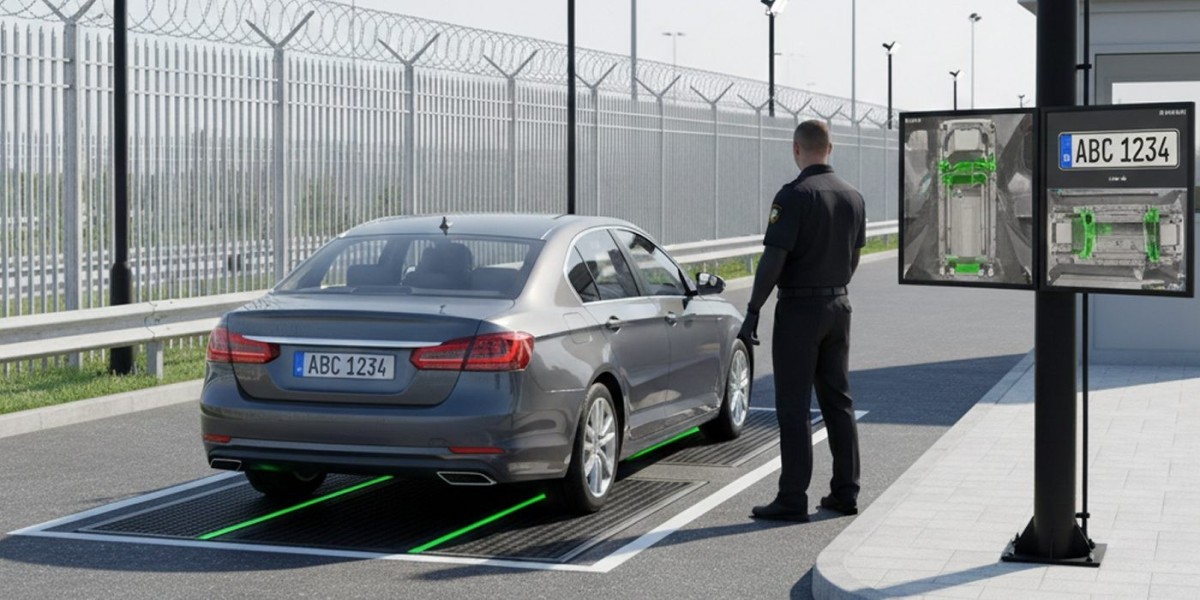
A more advanced and reliable approach combines vehicle identification with under vehicle inspection systems. While recognition systems instantly capture and verify vehicle data, under vehicle inspection systems scan the underside of vehicles to detect hidden threats such as explosives or contraband. This integrated solution ensures both speed and depth in security, making it highly effective for modern infrastructure.
Real-Time Monitoring and Instant Alerts
Advanced systems continuously monitor vehicle activity and generate real-time alerts when suspicious or unauthorized vehicles are detected.
This allows security teams to take immediate action and prevent potential threats.
Centralized Data Management for Better Control
All vehicle data is stored in a centralized digital platform, making it easy to access, analyze, and retrieve information.
This improves decision-making, supports investigations, and enhances overall security management.
Automated Access Control for Seamless Operations
Integrated systems automate entry and exit processes based on predefined rules.
Authorized vehicles are granted access instantly, while unauthorized vehicles are denied without manual intervention, reducing congestion and improving efficiency.
Advanced Analytics for Proactive Security
Modern systems use intelligent analytics to identify patterns, detect anomalies, and predict potential risks.
This approach helps facilities prevent incidents rather than proactively reacting after they occur.
Benefits of Faster Vehicle Verification Systems
Improved Speed and Efficiency
Automation eliminates delays and ensures smooth vehicle flow.
Enhanced Security and Accuracy
Real-time verification reduces errors and prevents unauthorized access.
Better Data Visibility and Control
Centralized systems provide reliable and accessible records.
Future-Ready Infrastructure
Modern solutions can scale with increasing traffic and evolving security needs.
Trusted Technology Partner
Commport Technologies delivers advanced LPR-driven solutions that help Egyptian facilities achieve faster and more accurate vehicle verification, while seamlessly integrating with under vehicle inspection systems to create a comprehensive and intelligent security framework.
Conclusion
As vehicle numbers continue to rise and infrastructure expands, slow verification processes are becoming a major challenge for Egypt. Traditional methods cannot keep up with the demand for speed, accuracy, and security.
By adopting intelligent and integrated technologies, organizations can eliminate delays, improve efficiency, and strengthen overall security. Faster vehicle verification is no longer optional it is essential for building safe, efficient, and future-ready infrastructure across Egypt.