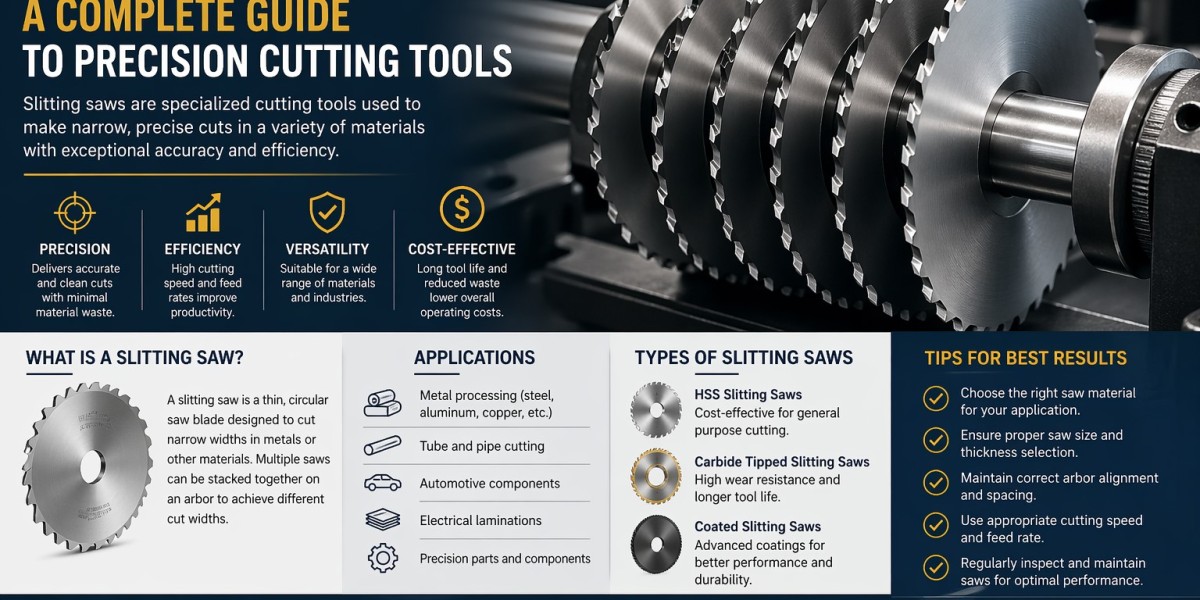

In modern machining and manufacturing, precision is everything. Whether you're working with metal, plastic, or composite materials, achieving clean and accurate cuts is essential for quality output. One tool that plays a critical role in precision cutting is the slitting saw . Known for its thin profile and high accuracy, a slitting saw is widely used in various industrial applications where fine, narrow cuts are required.
This complete guide will help you understand what a slitting saw is, its types, applications, benefits, and how to choose the right one for your needs.
What is a Slitting Saw?
A slitting saw is a circular cutting tool designed to create narrow slots or grooves in a workpiece. It is typically mounted on a milling machine or arbor and rotates at high speeds to cut through materials with exceptional precision.
Unlike standard saw blades, slitting saws are thinner and more specialized, making them ideal for delicate cutting operations. They are commonly made from high-speed steel (HSS) or carbide, ensuring durability and long-lasting performance.
Types of Slitting Saws
Slitting saws come in various types depending on their design and intended application. Some of the most common types include:
1. Plain Slitting Saw
This is the most basic type, featuring straight teeth around the edge. It is used for simple slotting and cutting tasks.
2. Staggered Tooth Slitting Saw
These saws have alternating teeth that improve chip clearance and reduce heat buildup. They are ideal for cutting thicker materials.
3. Side Tooth Slitting Saw
Designed with teeth on the sides as well as the circumference, these saws are useful for cutting deeper grooves and slots.
4. Carbide Slitting Saw
Made from carbide material, these saws offer superior hardness and are perfect for high-speed cutting and tough materials.
Applications of Slitting Saw
Slitting saws are widely used across multiple industries due to their precision and efficiency. Some key applications include:
- Metalworking: Used for cutting steel, aluminum, brass, and other metals with accuracy.
- Slotting and Grooving: Ideal for creating narrow slots in machine components.
- Cut-Off Operations: Used to separate parts from a larger workpiece.
- Jewelry Making: Perfect for delicate and intricate cuts.
- Automotive Industry: Used in manufacturing engine parts and components.
Their versatility makes them an essential tool in both small workshops and large-scale manufacturing units.
Benefits of Using a Slitting Saw
Using a slitting saw offers several advantages over traditional cutting tools:
High Precision
Slitting saws are designed for fine cutting, ensuring clean edges and minimal material wastage.
Thin Cutting Width
The thin blade allows for narrow cuts, which is especially useful in applications where space and accuracy are critical.
Efficient Performance
With proper setup, slitting saws can perform fast and efficient cutting operations, saving time and effort.
Versatility
They can be used on a wide range of materials, including metals, plastics, and composites.
Reduced Material Waste
Because of their thin profile, slitting saws remove less material, making them cost-effective.
How to Choose the Right Slitting Saw
Selecting the right slitting saw is crucial for achieving the best results. Here are some factors to consider:
Material
Choose a blade material based on your application. High-speed steel is suitable for general use, while carbide is better for harder materials.
Diameter and Thickness
The size of the saw should match your cutting requirements. Thinner blades are ideal for precision work, while thicker ones provide more strength.
Tooth Design
Different tooth designs offer varying levels of performance. Staggered teeth are better for heavy-duty cutting, while plain teeth are suitable for lighter tasks.
Coating
Some slitting saws come with coatings that enhance durability and reduce friction. These are beneficial for high-speed operations.
Machine Compatibility
Ensure that the slitting saw is compatible with your milling machine or cutting equipment.
Maintenance Tips for Slitting Saw
Proper maintenance is essential to extend the life of your slitting saw and maintain its performance. Here are some useful tips:
- Regular Cleaning: Remove debris and chips after each use.
- Proper Storage: Store the saw in a dry and safe place to prevent rust and damage.
- Sharpening: Keep the teeth sharp for optimal performance.
- Lubrication: Use appropriate cutting fluids to reduce heat and friction.
- Inspection: Check for wear and damage regularly to avoid accidents.
Safety Tips When Using a Slitting Saw
Safety should always be a priority when working with cutting tools. Follow these precautions:
- Wear protective gear such as gloves and safety glasses.
- Ensure the saw is properly mounted before use.
- Avoid excessive force while cutting.
- Keep hands away from the cutting area.
- Turn off the machine before making adjustments.
Conclusion
A slitting saw is an indispensable tool for precision cutting in various industries. Its ability to deliver clean, accurate, and efficient cuts makes it a preferred choice for professionals. By understanding its types, applications, and proper usage, you can maximize its performance and achieve superior results in your machining projects.
Whether you are a machinist, manufacturer, or hobbyist, investing in the right slitting saw can significantly improve your work quality and productivity. Always choose a high-quality blade, maintain it properly, and follow safety guidelines to get the best out of this powerful cutting tool.