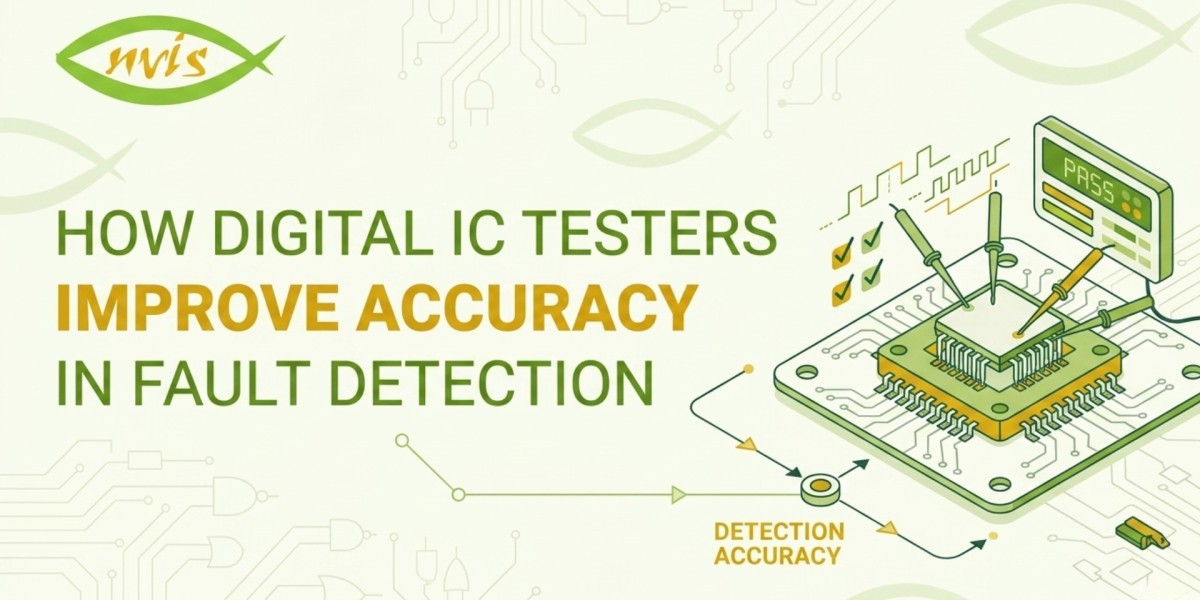

In modern electronics manufacturing and repair, precision is everything. A minor fault in an integrated circuit (IC) can lead to complete system failure, costly recalls, or unreliable performance. This is where a digital IC tester becomes an essential tool. Designed to identify faults quickly and accurately, these testers have transformed how engineers, technicians, and manufacturers approach circuit diagnostics.
Understanding the Role of a Digital IC Tester
A digital IC tester is a specialized device used to test and verify the functionality of digital integrated circuits such as logic gates, flip-flops, counters, and microcontrollers. Instead of relying on manual inspection or trial-and-error methods, technicians can use these testers to automatically detect issues like short circuits, open connections, or incorrect logic outputs.
The key advantage lies in automation and consistency. Human error is minimized, and the testing process becomes faster and more reliable, especially when dealing with complex circuit boards.
How Accuracy in Fault Detection Is Improved
Accuracy in fault detection is critical because even a small oversight can lead to larger system failures. A digital IC tester enhances accuracy through advanced testing methodologies and built-in intelligence. These devices apply predefined logic patterns to ICs and analyze the output against expected results, ensuring even the smallest discrepancies are identified.
Modern testers are equipped with microprocessor-based systems that can run multiple test sequences within seconds. This ensures that faults are not only detected but also precisely located within the circuit. As a result, technicians can fix issues faster without unnecessary guesswork.
Another factor that improves accuracy is repeatability. A digital IC tester can perform the same test multiple times under identical conditions, ensuring consistent results. This is particularly important in manufacturing environments where quality control must meet strict standards.
Key Features That Enhance Fault Detection
Automated test pattern generation for consistent results
High-speed testing to detect faults in real time
Built-in databases for different IC types
Error indication systems for precise fault localization
Compatibility with a wide range of digital ICs
Real-World Applications
In production lines, a digital IC tester plays a crucial role in quality assurance. Manufacturers use it to verify every IC before assembly, reducing the risk of defective products reaching customers. This not only improves product reliability but also protects brand reputation.
In repair and maintenance, technicians rely on digital IC testers to diagnose faulty components on printed circuit boards (PCBs). Instead of replacing entire boards, they can pinpoint the defective IC and replace only that part, saving both time and cost.
Educational institutions and research labs also benefit from these testers. Students and engineers can experiment with circuits while ensuring their designs function correctly, making learning more practical and error-free.
Why Businesses Are Adopting Digital IC Testers
The shift toward automation and precision in electronics has made the digital IC tester a necessity rather than a luxury. Businesses are adopting these tools to reduce downtime, improve product quality, and streamline troubleshooting processes.
By integrating a digital IC tester into their workflow, companies can significantly cut down on manual inspection efforts while increasing testing efficiency. This leads to faster production cycles and better overall performance of electronic systems.
Conclusion
Accuracy in fault detection is no longer optional in today’s fast-paced electronics industry it is essential. A digital IC tester provides the precision, speed, and reliability needed to identify faults effectively. Whether in manufacturing, repair, or education, these devices are redefining how electronic circuits are tested and maintained.
As technology continues to evolve, the importance of using advanced tools like a digital IC tester will only grow, ensuring higher standards of quality and performance across the industry.
Improve fault detection accuracy with a digital IC tester. Ensure precise, fast, and reliable testing for better performance and quality control.