
Yoga Elastic Band and Jacquard Elastic Band are increasingly shaped by material innovation, especially as users pay closer attention to durability, comfort, and long-term usability. Many fitness users encounter issues such as band deformation, loss of elasticity, or discomfort during repeated use. These challenges highlight the importance of material selection in determining overall product performance.
As the fitness industry grows, manufacturers are investing more in material research to improve resistance bands. The goal is not only to extend product lifespan but also to ensure consistent training performance under different conditions.
Material composition and elasticity control
Elasticity is the core function of any resistance band. Traditional yoga elastic bands are often made from natural latex or synthetic rubber blends. These materials provide high stretchability, which is useful for flexibility training and rehabilitation exercises.
However, elasticity alone is not enough. Over time, repeated stretching can cause uneven tension distribution, leading to deformation. To address this, manufacturers adjust the ratio of elastic polymers and reinforcing agents during production. This helps maintain consistent resistance even after extended use.
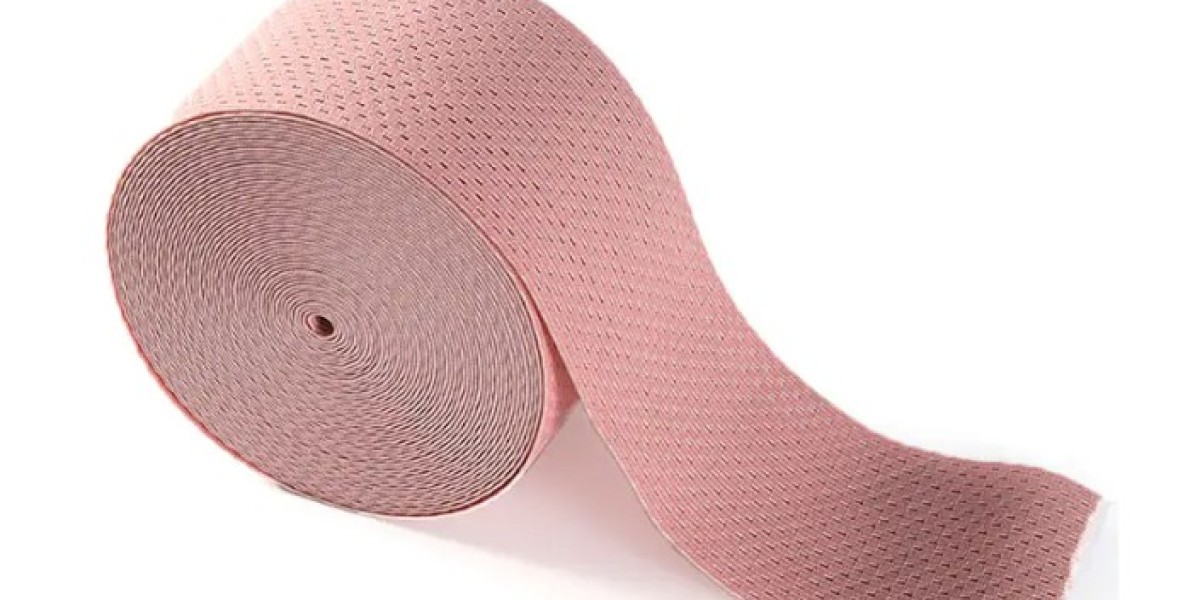
Jacquard elastic bands approach this differently. Instead of relying solely on stretchable materials, they combine elastic fibers with woven textile structures. This layered design distributes force across a broader surface, reducing localized stress and improving overall durability.
Fabric weaving and structural stability
The jacquard weaving technique plays a significant role in the performance of fabric resistance bands. Unlike simple knitted fabrics, jacquard weaving allows for more complex patterns and tighter fiber integration. This results in a band that is less likely to curl or roll during use.
From a structural perspective, woven bands maintain their shape better under tension. This is particularly useful in strength training exercises where stability is essential. For example, during lateral leg movements, a stable band ensures that resistance remains evenly distributed across the movement path.
Yoga elastic bands, while more flexible, may require more careful handling to maintain shape consistency. Advances in edge reinforcement and thickness control have improved this aspect, but the difference in structure still influences performance in certain applications.
Environmental factors and material lifespan
External conditions such as temperature, humidity, and exposure to light can affect resistance bands over time. Latex-based yoga elastic bands may degrade when exposed to direct sunlight or extreme heat. This can lead to reduced elasticity and potential cracking.
Jacquard elastic bands, due to their fabric composition, are generally less sensitive to these environmental factors. The woven structure protects the internal elastic fibers, extending the usable life of the product under varied conditions.
Manufacturers often conduct environmental testing to evaluate how materials perform over time. This includes repeated stretching cycles, temperature exposure tests, and humidity simulations to ensure reliability across different usage scenarios.
Balancing comfort and performance
Material selection also affects user comfort. Smooth rubber bands may feel tighter against the skin, while fabric bands provide a softer contact surface. This difference becomes noticeable during longer workout sessions.
Yoga elastic bands are often designed with a focus on smooth elasticity, which supports controlled stretching movements. Jacquard bands, on the other hand, emphasize stability and comfort during resistance exercises.
Choosing between the two depends on the intended use. Many users combine both types to create a more balanced workout routine, taking advantage of the strengths of each material.